
Reviewed · HILL TRIBE VILLAGES AND HOMESTAYS
Tribal Cooking Class in Luang Prabang Forest and visit
The kitchen begins with a machete. This five-hour private outing from Luang Prabang combines a short forest walk, local food gathering, bamboo craft, and a cooked Lao lunch with a Khmu guide. I like the hands-on format, especially making your own chopsticks and drinking cup. I also like that the meal is built around ingredients and methods tied to local life, not simply a standard cooking demonstration.
The main point to consider is that the setting may not match the most romantic version of the description. Some of the activity takes place on a farm or near a village rather than entirely in untouched forest. You should also be comfortable with a simple outdoor setup, machete work, and walking for about 10 minutes.
In This Review
- Key points to know before booking
- From Naga Lodge to a very different kind of kitchen
- A short walk with a practical purpose
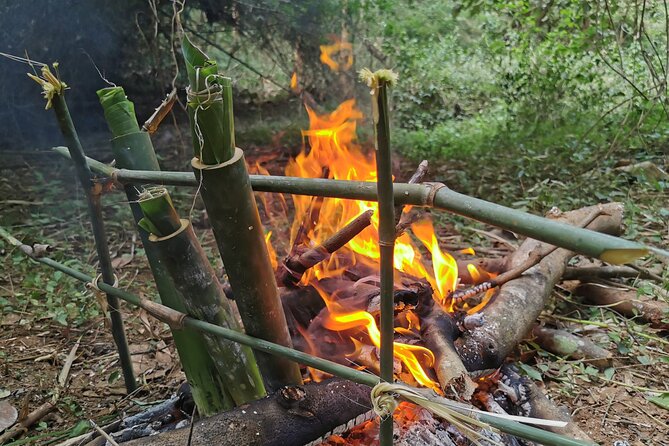
- The bamboo shelter and the outdoor kitchen
- Cooking Lao food with what is available
- Lunch is the payoff, but not the whole point
- What the Khmu connection adds
- The price and the private format
- Who will enjoy this most
- Timing, cancellation, and simple preparation
- Should you book the Luang Prabang forest cooking class?
- FAQ
- Where does the cooking class start?
- Does the tour offer pickup?
- How long does the experience last?
- Is the activity private?
- How far do you walk into the forest?
- Is lunch included?
- Are cooking tools provided?
- Can I take anything home?
- What is the cancellation policy?
Key points to know before booking
- A Khmu guide leads the cooking: You learn about local plants, food preparation, and forest cooking from a native facilitator connected to the Khmu community.
- The forest walk is short: The walk to the cooking shelter takes about 10 minutes, so this is more of a food and cultural outing than a serious trek.
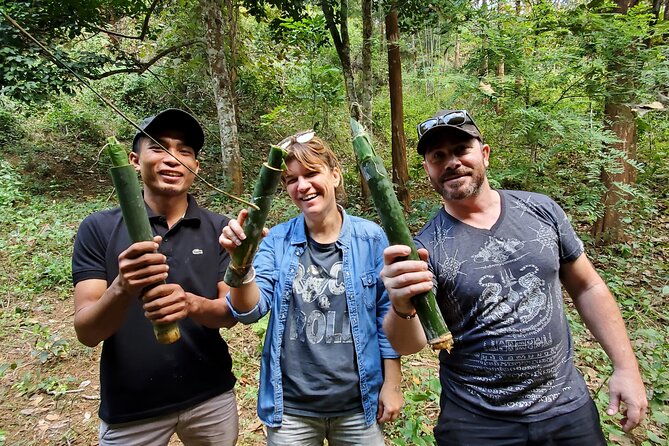
- Bamboo is the main kitchen material: You make cooking, eating, and drinking utensils from bamboo, and can take them home.
- The meal is cooked outdoors: Expect fire, bamboo, stone, machetes, and other basic materials rather than a modern kitchen.
- The experience is private: Only your own group takes part, with private transportation from Naga Lodge Eco Resort.
- The setting can vary: The food-gathering portion may include farms and village areas, not only primary forest.
From Naga Lodge to a very different kind of kitchen
The meeting point is Naga Lodge Eco Resort in Ban Xieng Mouark, Luang Prabang. Pickup is offered, and private transportation is included, which makes the morning easier if you are staying elsewhere in town. The activity lasts about five hours and returns to the same meeting point.
The drive is part of the transition. You leave the familiar tourist center and head toward a more rural setting, with stops connected to collecting ingredients. One account describes arriving in a zebra-striped Jeep, which gives you a good sense of the outing’s informal character. Do not expect a polished cooking studio or a tightly timed sightseeing circuit.
That is exactly why I find the experience appealing. Lao food is often discussed through finished dishes, but this outing shows the work behind the meal. You see where useful plants come from, how basic materials become kitchen tools, and how food can be prepared with very little equipment.
The private format matters here. You can ask questions without holding up a large group, and the guide can adjust the pace of the walk and cooking lesson to your group. It also makes the experience more personal than a standard class with several dozen participants.
More Cooking Classes in Luang Prabang:
- Luang Prabang: Evening Cooking Class & Local Baci Ceremony
★ 4.9 · 151 reviews - Luang Prabang: Bamboo Weaving Workshop & Cooking Class
★ 5.0 · 96 reviews - Luang Prabang: Cooking Class at the Former Royal Palace
★ 4.9 · 51 reviews
A short walk with a practical purpose
The walk into the forest takes roughly 10 minutes. That is short enough for most people who can manage an ordinary uneven path, but you should still wear shoes suited to dirt, roots, and outdoor conditions. The activity is not sold as a long hike, so the forest section is about learning and collecting rather than covering distance.
Along the way, you learn to identify edible plants that may be used in the meal. The guide may also take you through farms and village areas while gathering ingredients. This distinction is important. If you expect every herb and vegetable to come from untouched primary forest, you may find the description too grand. If you want to see how local food connects the forest, farms, and village, the mix makes sense.
A good guide is central to this part of the morning. Peng is praised for his farming background and his ability to explain local food sources. Another guide is named Pheng in the tour feedback. The spelling may vary, but the useful point is clear: ask questions as you go. This is not a self-guided plant walk, and the value comes from the local explanation.
Do not pick anything on your own. Wait for the guide to identify the plant and show you how it is handled. That is both safer and more respectful.
The bamboo shelter and the outdoor kitchen
After the walk, you reach a small clearing and a simple bamboo platform or shelter, described as a carbet. This is where the cooking lesson takes shape. The setup uses bamboo, stone, fire, and basic tools rather than electric appliances.
In wet weather, the shelter may need extra cover. One account describes using machetes to cut bamboo and fashion protection from rain. That detail tells you what sort of class this is. You are not just watching someone cook while seated at a counter. You are helping build the place where the cooking happens.
The machete work is one of the most memorable parts, but it also deserves caution. The tools are practical and sharp. Listen closely to the guide, keep your hands clear, and do not treat this as a novelty photo opportunity. The class is suitable for people who enjoy active, hands-on tasks, but less appealing if you want a calm demonstration with no physical work.
You also make your own eating chopsticks and bamboo drinking glass. These are useful souvenirs because they carry a direct connection to the day. You may make other simple cooking tools as well, depending on the group and the guide. The craft element gives the class more substance than a meal alone.
Cooking Lao food with what is available
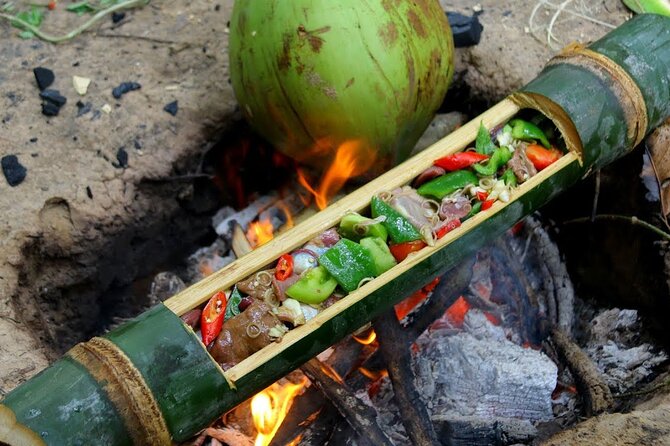
The central lesson is traditional Lao cooking using materials found around the forest and farm. You gather ingredients, prepare them, build a fire, and cook lunch in the outdoor shelter. Exact dishes are not specified, so you should not book this expecting a named menu such as a particular noodle dish or curry.
That uncertainty is part of the point. The meal depends on seasonal ingredients and the local setting. You may work with banana leaves, fresh plants, and other ingredients collected along the route. One account describes harvesting banana leaves, starting a fire from scratch, and cooking a full meal outdoors.
The guide’s role is more than showing a recipe. You learn how local people use bamboo and natural materials to solve ordinary kitchen problems. That might mean preparing a surface, shaping utensils, wrapping food, or cooking without the equipment you take for granted at home.
I like this approach because it makes Lao food feel connected to place. You are not only memorizing ingredients and steps. You are seeing how a meal grows from plants, tools, fire, and local knowledge.
Still, keep your expectations sensible. This is not likely to produce a polished restaurant-style lunch or a recipe book with precise measurements. The attraction is the process and the setting. If you need detailed written recipes, ask the guide during the session, but they are not listed as an included item.
More village stays and hill tribe treks:
- Luang Prabang: Hmong Batik Art Workshop
★ 5.0 · 27 reviews - Laos Elephant Sanctuary keeper+ Kuangsi waterfall +Hmong village
★ 5.0 · 25 reviews - Luang Prabang: 3-Day Cultural Remote Trek With Homestay
★ 4.9 · 9 reviews - The Wild Explorer – 3 days forest trek with homestay and camping
★ 4.5 · 22 reviews
Lunch is the payoff, but not the whole point
Lunch is included, along with bottled water and snacks. The meal gives you a chance to taste the food you have helped gather and prepare. That makes it more satisfying than simply being served a dish at the end of a class.
The food also reflects the practical limits of an outdoor kitchen. You may eat from the bamboo utensils you made, perhaps using banana leaves or other simple serving materials. The point is not fine dining. It is a meal shaped by local ingredients and basic methods.
I would view lunch as the reward for taking part rather than the main reason to book. If your priority is learning several restaurant-ready Lao recipes in a comfortable kitchen, another cooking class may suit you better. If you enjoy seeing how food is prepared with what is close at hand, this lunch carries much more meaning.
The tour includes the equipment and utensils needed for the cooking class, so you do not need to bring kitchen gear. Bring your own water only if you prefer a particular drink, since bottled water is supplied.
What the Khmu connection adds
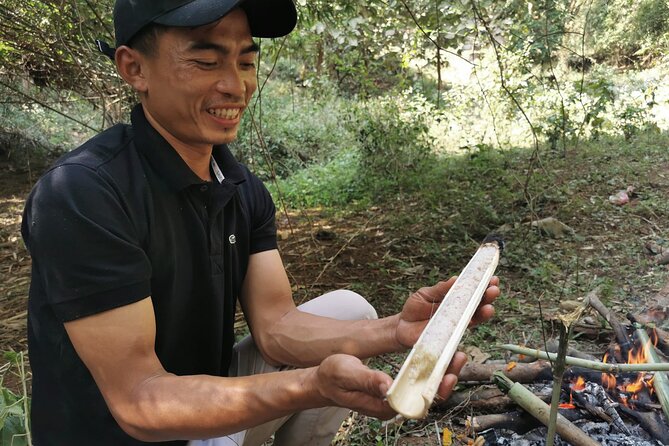
The experience is led by a facilitator from the Khmu tribe, one of Laos’s ethnic communities. That local connection gives the day a cultural dimension that a generic cooking class may not offer. You learn not only what to cook, but how plants, bamboo, farms, and village life fit together.
The strongest praise is directed at the guide’s warmth, patience, and practical skill. Peng is described as a farmer with a strong grasp of local crops and village life. That background matters because the outing depends on more than cooking technique. You need someone who can explain which plants are useful, where food comes from, and how to work safely with simple tools.
The village component can be just as meaningful as the forest portion. You may see the places where food is grown and meet the setting that supports the meal. This is a good choice if you want an experience connected to daily life rather than a staged cultural show.
At the same time, approach the word tribal with care. The value is not in treating local culture as a performance. It is in listening to the guide, following instructions, and recognizing that these skills come from lived practice.
The price and the private format
At $78.08 per person, the experience is not the cheapest food activity in Luang Prabang. The price includes private transportation, lunch, snacks, bottled water, cooking equipment, and a private guide for your group.
That package can be good value for two or more people who want a half-day activity with transport and a meal built into the schedule. You are paying for much more than food instruction. The fee also covers time in the countryside, ingredient gathering, tool making, cultural explanation, and a private format.
Solo visitors should check the booking terms carefully. One solo participant had to pay for two places because there was no one-person booking option. That can make the cost hard to justify if you are traveling alone. For a couple, family, or small group, the private arrangement is easier to appreciate.
The experience is booked, on average, 23 days ahead. That does not guarantee that every date sells out, but it is a useful planning signal. If you have limited time in Luang Prabang, reserve before arrival rather than leaving it to the last morning.
Who will enjoy this most
I would recommend this outing to you if you enjoy:
- Active cooking rather than a sit-down demonstration
- Local food gathered from farms or forest areas
- Rural settings and village connections
- Simple outdoor skills
- Making a physical souvenir
- Private activities with your own companions
- Learning from a guide with farming experience
It can suit families, but the adults should supervise children around machetes, fire, and uneven ground. The information does not give a formal age policy, so confirm suitability before booking if you are traveling with young children.
You will probably enjoy it less if you want air conditioning, a fixed menu, a long list of measured recipes, or a completely predictable schedule. The ingredients and setting are connected to nature and local availability, so flexibility is part of the deal.
The forest walk is short, but the overall experience is active. You should be ready to walk, gather, cut bamboo, help with the fire, and cook outdoors for several hours.
Timing, cancellation, and simple preparation
The tour begins and ends at Naga Lodge Eco Resort. Pickup is offered, and the activity includes private transportation. Confirmation usually arrives at booking, but bookings made within one day of departure are confirmed as soon as possible, subject to availability.
Free cancellation applies up to 24 hours before the start time for a full refund. Cancellations or changes made inside that 24-hour period are not refunded. The activity also requires a minimum number of participants, and if the provider cancels because that minimum is not met, you are offered another date or experience, or a full refund.
For preparation, wear clothes and shoes you do not mind using outdoors. The provided information does not list a dress code or special equipment, but sensible walking shoes and sun or rain protection are practical choices. Since weather affects an open-air cooking area, ask about conditions when you confirm your pickup.
Most importantly, arrive ready to participate. The more willing you are to gather, shape, chop, and cook, the more you will get from the morning.
Should you book the Luang Prabang forest cooking class?
Book it if you want food with a story behind it. The best parts are the short walk with a Khmu guide, the farm and forest ingredients, the bamboo tools, and the chance to cook lunch in a basic outdoor shelter. The guides, especially Peng and Pheng, add the local touch that makes the activity feel personal.
Think twice if you are booking for one person and must pay for two, or if you expect every moment to take place in untouched forest. This is a rural cooking and culture outing, with some farm-based activity and a simple setup.
For couples, families with older children, and small groups who want an active half-day outside Luang Prabang, I consider the $78.08 price reasonable. You leave with lunch in your stomach, bamboo utensils in your bag, and a much clearer idea of how local ingredients become a Lao meal.
FAQ
Where does the cooking class start?
The experience starts at Naga Lodge Eco Resort, Ban Xieng Mouark, Luang Prabang 06000, Laos.
Does the tour offer pickup?
Yes. Pickup is offered, and private transportation is included.
How long does the experience last?
The experience lasts approximately five hours.
Is the activity private?
Yes. Only your group participates in the activity.
How far do you walk into the forest?
The walk to the cooking shelter takes approximately 10 minutes.
Is lunch included?
Yes. Lunch, snacks, and bottled water are included.
Are cooking tools provided?
Yes. The tools and utensils needed for the cooking class are provided.
Can I take anything home?
Yes. You make bamboo eating chopsticks and a bamboo drinking glass that you can take home as souvenirs.
What is the cancellation policy?
You can cancel at least 24 hours before the start time for a full refund. Cancellations or changes made less than 24 hours before the start time are not refunded.
Just added in Luang Prabang
- The Namkhan – Traditional Lao Bamboo Weaving★ 5.0 · 4 reviews
- Unwind with a Sunset Cruise on the Mekong River★ 5.0 · 4 reviews
- Night Bus to Huay Xai, Chiang Rai, Thailand – Hotel pickup★ 3.0 · 2 reviews
- Sunset Cruise in Luang Prabang with Live Performance★ 4.5 · 3 reviews
- The Namkhan – 90 Minutes Private Signature Scrub and Massage★ 5.0 · 2 reviews
- Private Tour: Half-Day City Tour of Luang Prabang★ 4.5 · 4 reviews
- Trek to Tad Sae Waterfalls, Local Village★ 4.5 · 2 reviews
- Private Luang Prabang City Tour★ 5.0 · 3 reviews
Hill Tribe Villages and Homestays, compared.


Laos Elephant Sanctuary keeper+ Kuangsi waterfall +Hmong village
Read our review →
The Wild Explorer – 3 days forest trek with homestay and camping
Read our review →
Nalan Trail Kmu Ethnic Experience – 2days forest trek with homestay.
Read our review →
Hunter Trails, 3 days difficult trekking with Camping & Homestay
Read our review →
Nam Ha NPA 3 Day Wildlife Jungle Camp and Village Homestay Trek
Read our review →Browse the lists this tour appears in