
Reviewed · LAO COOKING CLASSES
Laos Cooking Class in Luang Prabang
Food can explain Laos faster than a museum can. This four-hour Lao cooking class takes you from local ingredients to a full meal, with help from local chefs and a recipe book to continue at home. You may begin at Phosy Market, then cook in a picturesque open kitchen outside the center of Luang Prabang.
I especially like the market visit and ingredient selection, which give the dishes a clear local setting instead of treating Lao food as a list of recipes. I also like the small maximum group of 12, plus the chance to prepare and eat your own meal. The main concern is that the class can be cancelled if too few people book, so confirm your plans and understand the refund timing before setting aside the morning.
In This Review
- What makes this Luang Prabang cooking class worth your time
- Starting at Tamarind at 8:30 in the morning
- Phosy Market and the ingredients behind Lao cooking
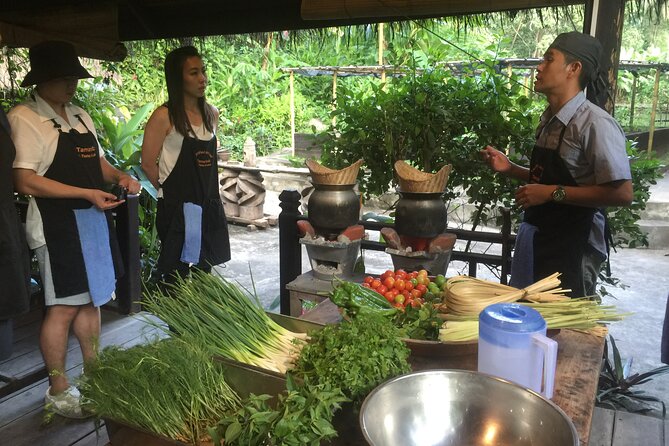
- A rural open kitchen with room to learn
- Cooking Laap, Mok Pa, and lemongrass with chicken
- Chef Sit’s teaching style and the hands-on format
- Eating the meal you prepared
- The recipe book is useful after Luang Prabang
- Is $58 a fair price?
- Who should book this class?
- Practical details before you book
- Should you book the Luang Prabang cooking class?
- FAQ
- Where does the cooking class start?
- What time does the class begin?
- How long does the experience last?
- Does the morning class visit a market?
- What dishes might I learn to cook?
- Is a meal included?
- Can I cancel for a full refund?
What makes this Luang Prabang cooking class worth your time
- Phosy Market comes first on the morning option: You can see local ingredients up close and select some of what goes into your meal.
- You cook a full Lao spread: The menu includes spicy dipping sauces, Mok Pa, lemongrass stuffed with chicken and herbs, Laap, and more.
- Chef Sit leads the class: His instruction has been praised for making the cooking steps simple and manageable.
- The setting is part of the experience: After the market, you head to a picturesque open kitchen in a rural setting.
- Your meal is included: You do not just watch a demonstration. You eat the food you prepare.
- A recipe book comes home with you: It gives the class value beyond the four hours in Luang Prabang.
Starting at Tamarind at 8:30 in the morning
The class begins at 8:30 am at Tamarind, located at V4VR+VMF, Kingkitsarath Road, Luang Prabang. The activity ends back at the same meeting point, which makes the morning easier to plan around other sightseeing.
The early start matters because the morning version includes a visit to the local market. You should arrive ready for an active morning rather than a relaxed restaurant lesson. The market visit is not simply a shopping stop. It helps you see the herbs, produce, and other ingredients before they are cleaned, chopped, seasoned, and turned into lunch.
The meeting point is useful for travelers staying in or near central Luang Prabang, but the tour details do not promise hotel pickup. Plan to make your own way to Tamarind and allow enough time to find the meeting point. You receive confirmation when you book, so keep those details available on the day.
The class lasts about four hours. That is long enough for a proper introduction to Lao food without taking your entire day. You can still leave the afternoon open for temples, the old town, or a slower meal elsewhere.
More Cooking Classes in Luang Prabang:
- Luang Prabang: Evening Cooking Class & Local Baci Ceremony
★ 4.9 · 151 reviews - Luang Prabang: Bamboo Weaving Workshop & Cooking Class
★ 5.0 · 96 reviews - Luang Prabang: Cooking Class at the Former Royal Palace
★ 4.9 · 51 reviews
Phosy Market and the ingredients behind Lao cooking
The morning market is one of the most valuable parts of the experience. Lao cooking relies on fresh herbs, produce, sauces, and aromatic ingredients, but a restaurant menu rarely explains where those ingredients come from. At Phosy Market, the instructor helps connect the food on display with the dishes you will later prepare.
For many people, the market may feel chaotic at first. That is part of its usefulness. Instead of simply being told that an ingredient is important, you see it among the everyday foods used in Luang Prabang. The chef can explain unfamiliar items and help you understand what you are choosing.
The class allows you to select ingredients for the dishes you will make. This small responsibility changes the tone of the morning. You are not just watching a guide gather supplies. You become part of the process before the cooking even begins.
Keep your expectations practical. This is not described as a long food tour with many tasting stops. It is a market introduction connected directly to the cooking lesson. You should value context and hands-on work more than a long list of samples.
One account of the experience describes sampling strange and exotic market foods. That can be a fun bonus, but the main purpose remains learning about Lao ingredients. If you are cautious with unfamiliar foods, you can still benefit from seeing and discussing them without making the market the center of your morning.
A rural open kitchen with room to learn
After the market, the group goes to the cooking location. The setting has been praised as a picturesque open kitchen in a rural area, with an authentic cooking setup and the equipment needed for the class.
This setting gives the lesson more character than a standard indoor demonstration. You can see the cooking area as a working place, not just a classroom fitted with rows of appliances. The surroundings also help separate the class from the busy pace of central Luang Prabang.
The details about transport are limited, though the experience has been described as involving a short drive after the market. Since the activity starts and ends at Tamarind, you should use the meeting point as your planning anchor rather than assume a hotel transfer.
An open kitchen may appeal to you if you want the class to feel connected to daily Lao cooking. It may be less appealing if you expect a polished culinary school with formal stations and restaurant-style service. The available information points to a hands-on, local setting instead.
The group is capped at 12 people. That is a useful size for a cooking lesson because the instructor has a better chance to watch each person work. It is still large enough that you will share attention, so do not expect a private lesson.
Cooking Laap, Mok Pa, and lemongrass with chicken
Once you reach the cooking area, the instructor explains how to prepare a range of traditional dishes. The class includes Lao spicy dipping sauces, Mok Pa, lemongrass stuffed with chicken and herbs, Laap, and additional dishes that together form a complete meal.
The menu gives you a broad introduction to Lao flavors. You are not learning only one signature recipe. You work with sauces, herbs, meat, and different cooking methods, which helps you understand how separate dishes fit together at the table.
Mok Pa is a useful example of the class’s focus on traditional food rather than generic Southeast Asian recipes. Laap is another important inclusion, since it is one of Laos’s best-known dishes. The class lets you approach both with an instructor beside you, which is far more helpful than trying to decode a recipe at home.
The exact number of dishes may vary in how the lesson is organized, but one class included one dip, one dessert, and three other dishes. That is a generous amount for a four-hour session. It also means you should expect a busy lesson with several steps rather than a single slow demonstration.
Some participants with strong cooking skills may find parts of the class basic. One particularly important point is that the class is designed for all skill levels. If you cook often, you may already know how to chop, mix, or season. The value for you will be the Lao ingredients, recipes, and setting rather than basic kitchen technique.
If you have little experience, the format is more welcoming. The instructor demonstrates the dishes, then helps you prepare them. One account describes Chef Sit as making the process simple, which is exactly what you want when several unfamiliar recipes appear at once.
More things to do in Luang Prabang:
- Luang Prabang: Cruise to Pak Ou Caves & Kuang Si Waterfalls
★ 5.0 · 1,769 reviews - Luang Prabang: Cruise to Pak Ou Caves & Kuang Si Waterfalls
★ 4.8 · 1,360 reviews - Half Day Mekong Cruise to Pak Ou Caves (Morning / Afternoon)
★ 4.6 · 290 reviews - Luang Prabang: UNESCO World Heritage City Highlights Tour
★ 4.6 · 201 reviews
Chef Sit’s teaching style and the hands-on format
Chef Sit is the named instructor associated with the strongest praise for the class. His teaching is described as clear and effective, especially in the open-kitchen setting.
The class appears to combine demonstration and participation. In one version of the lesson, the chef first made all the dishes, then each person cooked one dish with guidance. The group also ate the meal with help from the chef. This approach gives you a model to follow before you take over a task.
That structure works well for mixed groups. A confident cook can focus on technique and seasoning, while a beginner can watch each step before trying it. You are unlikely to be left alone with a recipe and a pile of ingredients.
Still, a shared lesson means you may not personally prepare every dish from start to finish. If your main goal is to master each recipe independently, ask how the cooking assignments are divided when you arrive. The benefit is variety and a full meal. The trade-off is that the group shares the work.
The small group limit of 12 supports the teaching style. It does not guarantee constant one-to-one attention, but it should make it easier to ask questions and get corrections. For a first lesson in Lao cooking, that support is more useful than a large class with a lower price.
Eating the meal you prepared
The class includes a meal, and you eat the dishes you have made. This is one of the best reasons to choose a cooking lesson over a simple food demonstration.
Tasting your own work helps you understand the balance of herbs, sauces, and seasonings. You can also compare the finished dishes as a full Lao meal rather than judging one recipe on its own. The meal turns the lesson into a shared table experience without adding a separate restaurant bill.
The food is not presented as a tasting menu prepared entirely by someone else. You take part in making it, then see how the separate dishes work together. That connection between market, kitchen, and table gives the morning a clear shape.
The menu includes a dessert according to one detailed account, along with the dipping sauce and several savory dishes. The exact menu can depend on ingredients and the class plan, so do not book if you need a specific dish or strict menu guarantee.
Personal expenses are not included. The included meal and cooking ingredients cover the central activity, but you should budget separately for anything else you buy during the day.
The recipe book is useful after Luang Prabang
The recipe book is an important part of the value. Many cooking classes are enjoyable for a few hours, then fade once you leave. Written recipes give you a chance to recreate at least some of the dishes later.
The book includes the recipes taught during the class. That makes it more useful than a general souvenir cookbook because you will already have handled the ingredients and practiced the steps.
You can use it as a reminder of the class, but it also helps solve a common problem with cooking lessons: remembering what happened after a busy morning. With several dishes, sauces, herbs, and preparation methods, written instructions are a practical aid.
Do not expect the book to replace the instructor. Lao ingredients may be easier to find in Luang Prabang than at home, and substitutions may require judgment. Still, having the recipes gives you a starting point and extends the experience beyond the included meal.
Is $58 a fair price?
At $58 per person, the price is not the lowest way to eat in Luang Prabang. You can find inexpensive meals in Laos, so you should judge this as a combined market visit, cooking lesson, meal, ingredients, instruction, and recipe book.
For me, the price makes sense if you care about how Lao food is made. You receive several hours of structured activity, access to local ingredients, help from a chef, and food to eat at the end. A meal alone would cost less, but it would not teach you how to prepare Laap, Mok Pa, sauces, or stuffed lemongrass.
The value is also stronger for people who will use the recipe book. If you enjoy cooking at home, the class gives you practical ideas to carry forward. If you only want a quick meal or a short market visit, the price may feel high.
The maximum group size of 12 helps protect the value. You are paying for instruction, not only admission to a kitchen. Just remember that the class has had a cancellation when too few people signed up. The operator processed that refund request, but the payment took an additional two to seven business days to appear. That is worth considering if your budget is tight or your departure is close.
Who should book this class?
I would recommend this experience to you if you enjoy food, local markets, and hands-on activities. It suits beginners because the instructor demonstrates the dishes and provides guidance. It also suits capable home cooks who want to learn Lao recipes in their local setting.
Families may find the class appealing because it is listed as suitable for all ages and skill levels. The four-hour length is substantial, so younger children may need patience and supervision, but the activity offers more variety than a short demonstration.
The class is a good choice for a first visit to Luang Prabang if you want an activity that connects food with place. The market shows the ingredients, the open kitchen shows the preparation, and the meal lets you taste the result.
You may want to skip it if you dislike group activities, have strict dietary requirements that have not been confirmed, or want a private chef-led lesson. The available details do not promise menu changes, private instruction, or special dietary arrangements.
The class is unavailable from April 13 through April 16 during Lao New Year. Check your date carefully before booking, especially during a holiday visit.
Practical details before you book
You receive confirmation at the time of booking, and the tour uses a mobile ticket. Keep the confirmation accessible when you meet at Tamarind.
Free cancellation is available up to 24 hours before the 8:30 am start time for a full refund. If you cancel less than 24 hours ahead, the payment is not refunded, and changes inside that window are not accepted. The cut-off follows Luang Prabang local time.
The activity returns to the starting point. That is convenient if you plan lunch or afternoon sightseeing in town, but allow for the full four-hour duration rather than assuming you will finish quickly.
The provider is Grayline Vietnam Threeland Travel. The experience has a rating of 4.3 from seven submitted ratings, with strong praise for the setting, market visit, recipes, and Chef Sit’s instruction, alongside a complaint about a cancellation and delayed refund.
Should you book the Luang Prabang cooking class?
Book it if you want more than a meal. The market, rural open kitchen, Chef Sit’s guidance, full menu, included lunch, and take-home recipes make this a useful introduction to Lao food for $58.
I would give it extra weight in your plans if you cook at home or want a memorable activity that involves doing rather than watching. The biggest cautions are the shared format, the possibility of cancellation if enrollment is too low, and the strict 24-hour cancellation rule.
For most food-focused visitors, this is a good half-day choice. Arrive at Tamarind on time, keep your schedule flexible, and treat the class as a lesson in how Lao food comes together from market to table.
FAQ
Where does the cooking class start?
The class starts at Tamarind, at V4VR+VMF, Kingkitsarath Road, Luang Prabang, Laos.
What time does the class begin?
The listed start time is 8:30 am.
How long does the experience last?
The cooking class lasts approximately four hours.
Does the morning class visit a market?
Yes. The morning option includes a visit to the local market, where you learn about Lao ingredients and may select ingredients for the dishes you prepare.
What dishes might I learn to cook?
The class includes Lao spicy dipping sauces, Mok Pa, lemongrass stuffed with chicken and herbs, Laap, and other dishes. One class format also included a dessert.
Is a meal included?
Yes. Cooking ingredients and the meal are included in the price. Personal expenses are not included.
Can I cancel for a full refund?
Yes, if you cancel at least 24 hours before the experience start time. Cancellations or changes made less than 24 hours before the start are not accepted for a refund.
Just added in Luang Prabang
- The Namkhan – Traditional Lao Bamboo Weaving★ 5.0 · 4 reviews
- Unwind with a Sunset Cruise on the Mekong River★ 5.0 · 4 reviews
- Night Bus to Huay Xai, Chiang Rai, Thailand – Hotel pickup★ 3.0 · 2 reviews
- Sunset Cruise in Luang Prabang with Live Performance★ 4.5 · 3 reviews
- The Namkhan – 90 Minutes Private Signature Scrub and Massage★ 5.0 · 2 reviews
- Private Tour: Half-Day City Tour of Luang Prabang★ 4.5 · 4 reviews
- Trek to Tad Sae Waterfalls, Local Village★ 4.5 · 2 reviews
- Private Full-Day Luang Prabang City Tour★ 5.0 · 1 review
Lao Cooking Classes, compared.
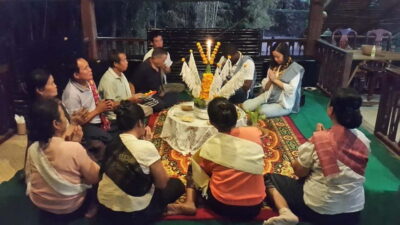
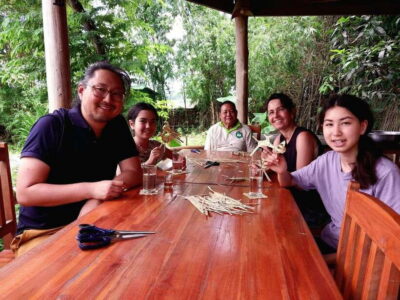
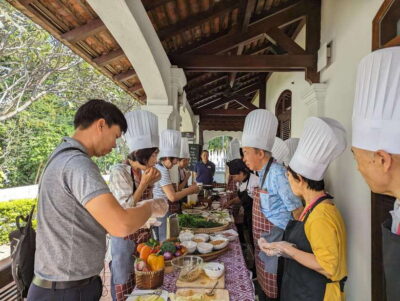
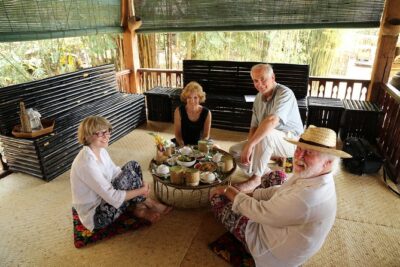
Day-time Bamboo weaving & Cooking Classes join-in
Read our review →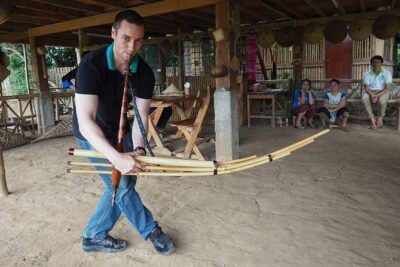
Evening Bamboo weaving & Cooking classes join-in
Read our review →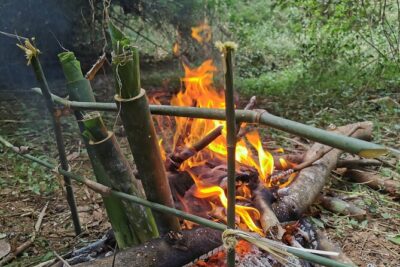
Tribal Cooking Class in Luang Prabang Forest and visit
Read our review →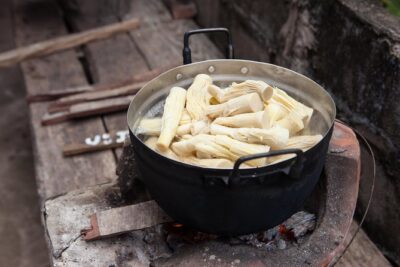
Traditional Market Tour and Private Laotian Cooking Class with a Local
Read our review →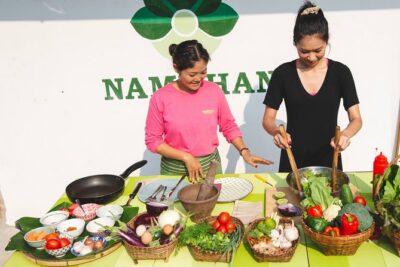
Browse the lists this tour appears in