
Reviewed · CITY TOURS
Vientiane Half-Day City Tour
Vientiane rewards a slower first look. This four-hour city tour gives you hotel pickup and drop-off, an English-speaking guide, and a small group capped at seven people. I like the smart route through the capital, from Wat Sisaket and Wat Phra Keo to Patuxay and That Luang. I also like the chance to visit COPE, where the tour moves beyond pretty temples and explains Laos’ painful wartime legacy. The main catch is timing: some bookings have lasted closer to two or three hours than a full half-day.
This is a good fit if you have only a day or two in Vientiane and want help getting oriented. Guides such as Mr. Go, Parn, Lotty, and Xaiixana Mahavong have earned praise for their kindness, clear explanations, and care with guests. Still, the tour’s value depends heavily on your guide’s English, and one experience felt expensive because communication was limited.
In This Review
- Key points at a glance
- A calm introduction to Vientiane
- Wat Sisaket and the quiet beauty of old Vientiane
- Wat Phra Keo and the French colonial past
- COPE gives the tour its moral weight
- Patuxay, Vientiane’s rooftop view
- That Luang and the golden heart of Laos
- Ending beside the Mekong River
- Guides make the biggest difference
- Does four hours mean four hours?
- Who gets the best value from the $89 price?
- Should you book the Vientiane Half-Day City Tour?
- FAQ
- What is included in the Vientiane Half-Day City Tour?
- What time does the tour start?
- How long does the tour last?
- How many people can join the tour?
- What attractions are visited?
- Is food included?
- Can I cancel for a full refund?
Key points at a glance
- Wat Sisaket’s thousands of Buddha figures: See Vientiane’s only temple left intact after the 1828 Siamese invasion.
- COPE adds serious context: Learn how unexploded ordnance from the American-Vietnam War still affects Laos.
- Patuxay brings the best city view: Climb to the roof of Laos’ Arc de Triomphe for a broad view over Vientiane.
- Small groups keep the pace personal: A maximum of seven people makes it easier to ask questions and move between stops.
- Morning or afternoon departures: Choose 9:00 am or 2:00 pm, a useful option for fitting the tour around flights or other plans.
- Timing can vary: The advertised duration is about four hours, but some outings have finished earlier.
A calm introduction to Vientiane
Vientiane is not a capital that shouts for attention. Its appeal comes from the mix of Buddhist temples, French colonial traces, broad streets, river life, and an easygoing pace. This tour gives you a useful first framework for the city without asking you to spend a full day in a vehicle.
Pickup is scheduled for 9:00 am for the morning tour or 2:00 pm for the afternoon tour. The included transport is in an air-conditioned vehicle, and hotel return is part of the package. That matters in Vientiane’s heat, especially when you are moving between outdoor monuments and temple grounds.
The small-group format is one of the strongest features. With no more than seven people, you are not lost in a large crowd, and a good guide can respond to individual questions. The experience is still structured, but it should feel more like a guided introduction than a procession.
The advertised price is $89 per person. That is not a bargain for a four-hour sightseeing tour in Laos, so I would book it mainly for convenience and interpretation, not simply for transport. You are paying for hotel transfers, a private-feeling small group, an air-conditioned vehicle, and a guide who can connect the sites to Lao culture and national history.
More things to do in Vientiane:
- Vientiane Cultural Tour with Private Guide
★ 5.0 · 80 reviews - Vientiane: Cultural Tour with Buddha Park and Patuxay
★ 4.6 · 74 reviews - Vientiane: Half-Day City Tour with Patuxai and Buddha Park
★ 4.5 · 57 reviews
Wat Sisaket and the quiet beauty of old Vientiane
The tour begins at Wat Sisaket, one of the most rewarding stops. It is described as the only temple in Vientiane left intact after the Siamese invasion of 1828. That fact gives the site unusual weight: you are not just visiting an attractive religious building, but one of the few survivors of a destructive period.
The temple’s teak-covered hallways are lined with thousands of small Buddha statues. The setting is serene, and the covered galleries offer some shade from the sun. This is a place where a guide can make a real difference by explaining what you are seeing rather than simply pointing out the statues.
I would pay attention to the details here: the repeated Buddha figures, the old woodwork, and the way the structure frames the inner space. You may spend less time at the site than you expect if the group is moving on, so ask questions early if religious art and temple design interest you.
Wat Sisaket is also a useful introduction to Vientiane’s tone. It is beautiful without feeling showy. The quiet atmosphere helps explain why the capital often feels more like a relaxed provincial town than a major Asian city.
Wat Phra Keo and the French colonial past
Nearby Wat Phra Keo serves as a religious museum. Its collection includes Lao and Khmer works of art, giving you another chance to look at the region’s artistic traditions through objects rather than only architecture.
This stop works best when your guide provides context. A short visit can otherwise feel like a quick room of artifacts. Guides who explain the links between Lao and Khmer art, religion, and royal culture can turn it into a more useful stop.
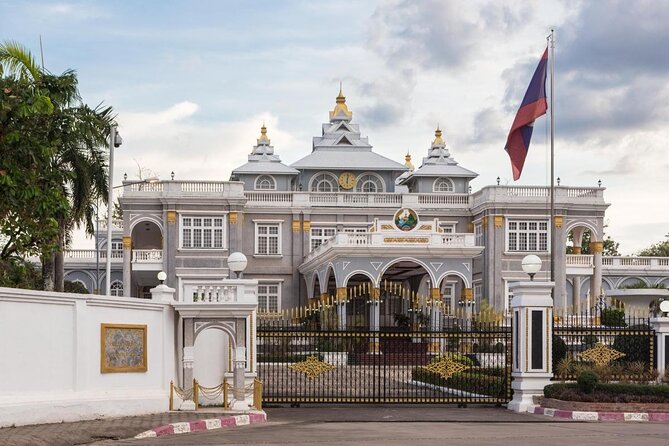
The Presidential Palace is close by. You cannot visit inside, but the exterior offers a glimpse of Vientiane’s colonial past. The building once served as the French governor’s palace, so it helps connect the modern capital with the period of French rule.
Do not expect a palace tour. This is an exterior viewing stop, and its value comes from the story attached to the building. If you enjoy architecture and political history, it gives you a helpful visual marker. If you need every stop to include an interior visit, this part may feel brief.
COPE gives the tour its moral weight
The visit to COPE is what makes this experience more than a standard temple circuit. The association works to help people affected by landmines, and its exhibits explain the history of the American-Vietnam War and the lasting effects of unexploded ordnance in Laos.
The subject is difficult, but it belongs in any serious introduction to the country. The material shows that wartime damage did not end when the fighting stopped. Unexploded ordnance remains part of Laos’ national story, and COPE also explains the work being done to clear it and support victims.
I value this stop because it changes the rhythm of the tour. After ancient temples and royal buildings, you are asked to think about modern Laos and the human cost of conflict. It gives the rest of the sightseeing a fuller setting.
Allow yourself time to absorb the information. The stop may be especially important if you know little about the war’s impact on Laos. A guide with strong English can add useful context, but the center itself provides the core information.
More city tours in Vientiane:
- Vientiane City Highlights Tour with Buddha Park & Lunch
★ 4.7 · 38 reviews - Private Tour: Vientiane City Tour Full Day with Buddha Park
★ 4.5 · 32 reviews - Guided Vientiane City and Buddha Park Full-Day Tour
★ 3.5 · 12 reviews - Vientiane City Day Tour and Buddha Park Visit with Lunch | Laos
★ 4.5 · 10 reviews
Patuxay, Vientiane’s rooftop view
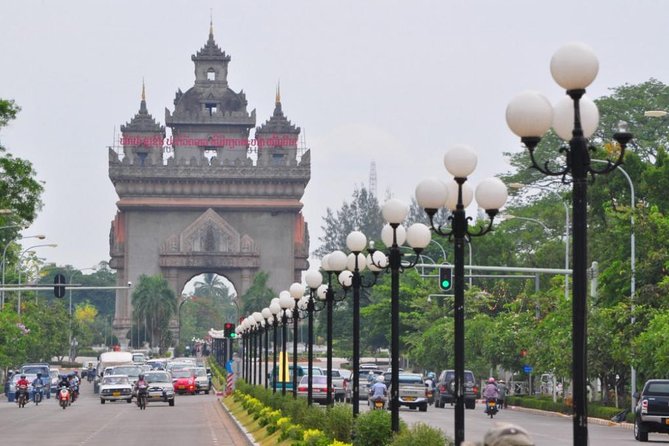
Patuxay is often called Laos’ version of the Arc de Triomphe. The comparison is easy to understand from the shape, but the monument carries its own Lao decorative style. It is one of the tour’s more visual stops and a good change from the enclosed temple courtyards.
You can climb the stairs to the roof for panoramic views of the capital. This is one of the clearest reasons to wear comfortable shoes and be ready for steps. The view gives you a sense of Vientiane’s low-rise form and broad streets, even if the visit is relatively short.
The monument is more than a photo stop. It reflects the city’s complicated relationship with French influence and Lao national identity. Ask your guide about the building if you want more than the simple Arc de Triomphe comparison.
The climb may not suit everyone, but the tour information says most people can participate. If stairs are a concern, check with the provider before booking rather than assuming the rooftop visit can be skipped without changing the pace.
That Luang and the golden heart of Laos
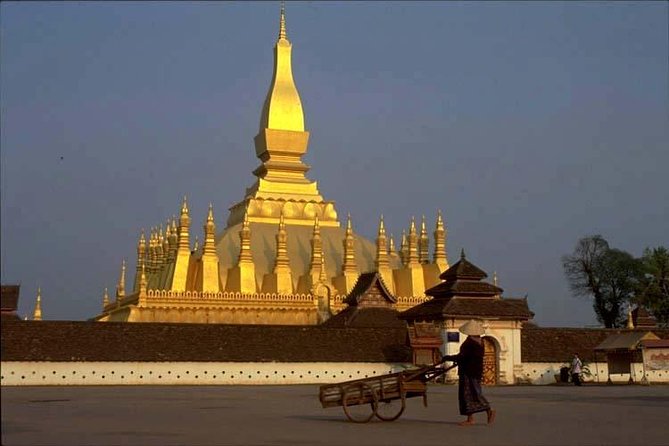
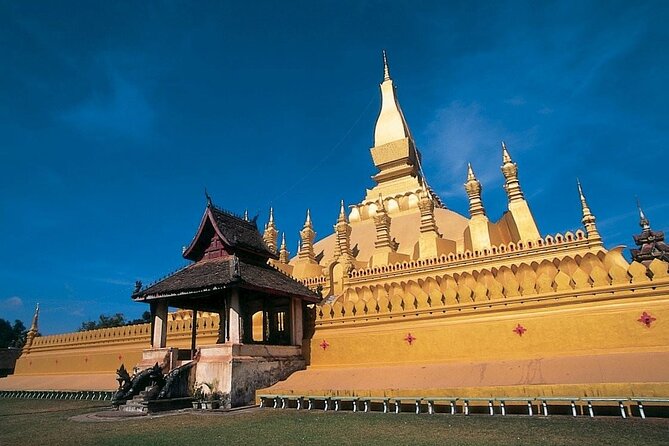
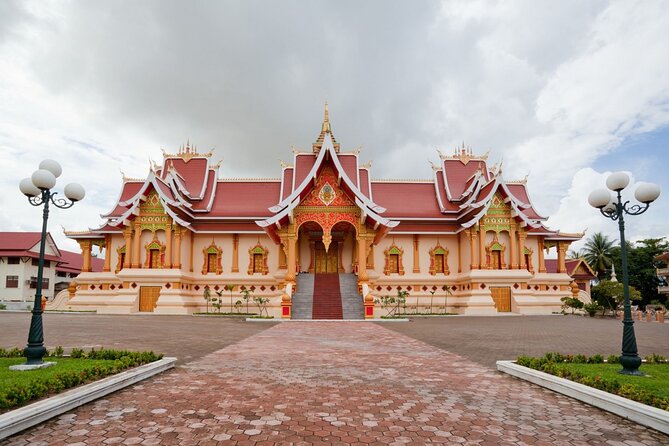
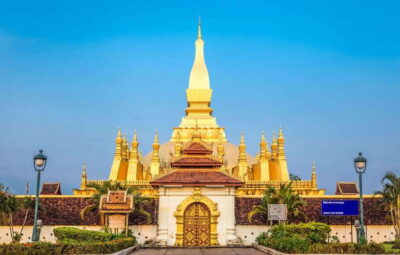
That Luang is the holiest site in Laos and one of the country’s defining monuments. King Setthethirat constructed it in the 16th century, and its tall golden spire catches the sun in a way that makes the site immediately memorable.
This is the grandest religious stop on the route. Wat Sisaket feels intimate and layered, while That Luang feels ceremonial and national. Even a short visit helps you understand why the monument has such importance in Lao identity.
The gold surface can be intense in the afternoon light, so bring water and protect yourself from the sun. Food and drinks are not included, and the tour does not promise a meal break. You may want to eat before the afternoon departure or carry what you need, within the provider’s rules.
That Luang is also a place where a guide’s explanation adds value. The architecture, royal connection, and religious meaning are not always obvious from the outside. A clear guide can help you see the monument as part of Laos’ story rather than just another golden temple.
Ending beside the Mekong River
The final part of the tour takes you to the Mekong River. You can stroll along the bank, stop for a cold drink, or try a snack from one of the local food stalls.
This is a welcome ending because it gives you room to slow down after several formal sightseeing stops. It is not presented as a full food tour, and food and drinks are extra, but the riverfront offers a chance to make the outing feel less scripted.
I would use this time to ask your guide for practical ideas about Vientiane. The official tour ends with a transfer back to your hotel, so this is your last easy chance to ask about the city’s streets, culture, and places you may want to visit later.
The river stop also reinforces the character of Vientiane. The tour begins with temples and history, then ends with ordinary city life, snacks, walking, and a view along the water.
Guides make the biggest difference
The strongest praise for this experience centers on the guides. Mr. Go has been described as fun, well informed, and strong on Lao culture and history. Parn was praised for being friendly, flexible, and attentive throughout the morning. Lotty was noted for answering many questions and caring about the overall experience.
Xaiixana Mahavong also received especially warm praise for arranging a last-minute booking and explaining the sites well. Several guides have been credited with helping visitors see more than the basic route and making the day easier from start to finish.
That consistency is encouraging, but you should keep one qualification in mind. One outing was weakened by limited English, leaving the visitor with less information and making the $89 price feel high. Since interpretation is a major part of what you are buying, guide quality matters here more than it would on a simple transfer.
The driver also matters. One experience included a comfortable electric car and careful driving, while another praised both the guide and driver for watching out for safety and offering extra help. Those details are not flashy, but they can shape how relaxed the afternoon feels.
Does four hours mean four hours?
The official duration is approximately four hours. In practice, the reported outings have varied. One lasted about three and a half hours, while another finished in a little more than two hours.
That difference is important. If you are booking this to fill a strict four-hour gap, leave extra time around the scheduled end. The early finish may result from traffic, time spent at each site, group preferences, or the guide’s pacing, but the exact reason is not provided.
The morning and afternoon options are practical. The 9:00 am start gives you cooler conditions for some outdoor walking, while the 2:00 pm departure may work better if you have a late morning commitment. That Luang and Patuxay can be bright in either time slot, so carry water and dress for heat.
Who gets the best value from the $89 price?
I think this tour makes the most sense for a first visit, a short stay, or anyone who prefers not to arrange several temple visits and transfers alone. The route covers major sights in one compact outing, and hotel pickup removes much of the day’s friction.
It is also a good choice if you want more than photographs. The combination of temples, French colonial history, COPE, a national monument, and the Mekong gives you a broad first look at the capital.
The price is harder to justify if you already know Vientiane well or mainly want transportation. Food and drinks are not included, and the tour can finish early. In that case, you may prefer exploring at your own pace.
The maximum group size of seven helps protect the personal feel. You are not guaranteed a private tour, but the size is small enough that questions should be possible. The minimum age is 12, so this is aimed more at older children and adults than families with very young children.
Free cancellation is available if you cancel at least 24 hours before the start time. Changes or cancellations inside that window are not accepted for a refund, and the experience requires a minimum number of participants. Provide a contact phone number when booking, since the operator may need to reach you.
Should you book the Vientiane Half-Day City Tour?
Book it if you want a well-planned first look at Vientiane and value a guide who can explain both Buddhist culture and the country’s modern past. Wat Sisaket, COPE, Patuxay, That Luang, and the Mekong make a sensible route, and hotel transfers are useful in a hot city.
I would be more cautious if your schedule depends on a full four hours or if you expect a private tour for $89. Confirm the pickup details and ask about the expected duration if your day is tightly arranged. Also remember that the quality of the experience depends heavily on the guide’s English.
For a short stay, I would book this tour early, especially since it is often reserved weeks ahead. It gives you the city’s essential landmarks, a serious dose of context, and enough free time afterward to decide what deserves a second visit.
FAQ
What is included in the Vientiane Half-Day City Tour?
The tour includes hotel pickup and drop-off in Vientiane, transport in an air-conditioned vehicle, and a professional English-speaking guide.
What time does the tour start?
The morning departure is scheduled for 9:00 am. The afternoon departure is scheduled for 2:00 pm.
How long does the tour last?
The stated duration is approximately four hours. Some outings have lasted about three and a half hours, while another finished after a little more than two hours.
How many people can join the tour?
The maximum is seven people per booking, and the activity also has a maximum of seven participants overall.
What attractions are visited?
The route includes Wat Sisaket, Wat Phra Keo, the Presidential Palace exterior, COPE, Patuxay, That Luang, and the Mekong River area.
Is food included?
No. Food and drinks are not included, though you can stop for a drink or a snack near the Mekong River.
Can I cancel for a full refund?
Yes, if you cancel at least 24 hours before the experience begins. Cancellations or changes made less than 24 hours before the start time are not refunded.
Just added in Vientiane
- Vientiane Private Lao Cooking Class with Market Tour★ 4.0 · 3 reviews
- Vientiane: Lao Cultural Attire Rental Experience★ 5.0 · 3 reviews
- Vientiane: Half-Day City Tour – Morning or Afternoon★ 4.0 · 3 reviews
- Vientiane: Art, Culture, & Inspiration Guided Day Tour★ 5.0 · 3 reviews
- Vientiane Day Trip By Bike To Tad Moon Waterfall★ 4.5 · 3 reviews
- Vientiane Private Lao Cooking Class with Market Tour and Lunch★ 5.0 · 1 review
- Vientiane City Private Car and Minivan for Rent★ 5.0 · 2 reviews
- Vientiane Cuisine and Culture with Tuk Tuk Private Tour★ 5.0 · 1 review
City Tours, compared.
Vientiane City Highlights Tour with Buddha Park & Lunch
Read our review →
Private Tour: Vientiane City Tour Full Day with Buddha Park
Read our review →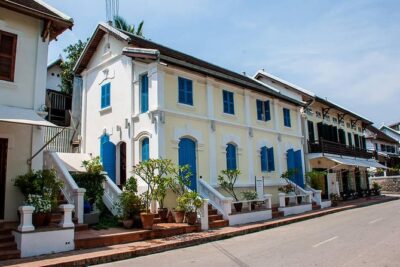
Browse the lists this tour appears in