Reviewed · TOURS
The Old capital tour combined with Plain off jars
History sits in the open here. This private Phonsavan tour links all three main Plain of Jars sites with the old capital of Muang Khoun, village crafts, noodle making, and a sunset finish. I like the mix of major sights and everyday local work, especially the chance to see bomb metal turned into useful objects. I also like that the group can include up to eight people for $150 total, not $150 per person.
The main thing to consider is the long day. The tour runs from about 8:30 a.m. to 5:30 p.m., and the non-refundable booking policy leaves little room for last-minute changes. If you want a relaxed morning or only care about the jars, this may feel like too much ground to cover. If you want a broad look at Phonsavan in one day, it offers strong value.
In This Review
- Key points at a glance
- Why this full-day Phonsavan route works
- Sites 1, 2, and 3 on the Plain of Jars
- Muang Khoun, the old capital and its Buddhist monuments
- Bomb metal made into local handicrafts
- How noodles are made in the village
- Ending with sunset photographs
- The $150 group price and private format
- What to know before booking
- Is the Plain of Jars and Muang Khoun tour worth booking?
- FAQ
- Where does the tour take place?
- How long does the tour last?
- Which Plain of Jars sites are included?
- Is pickup offered?
- Is this a private tour?
- What does the tour cost?
- What happens if bad weather cancels the tour?
Key points at a glance
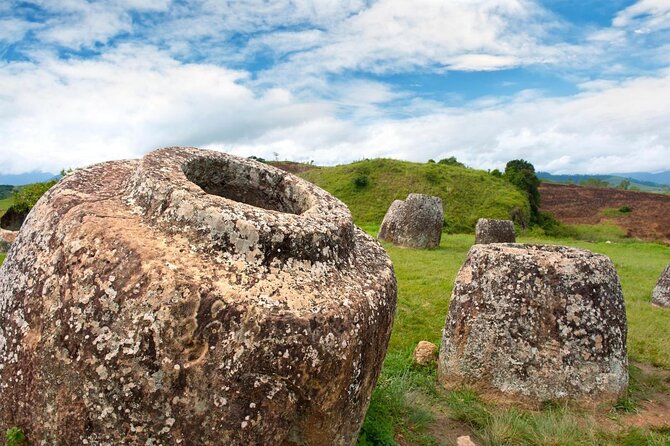
- Three Plain of Jars sites: Visit sites 1, 2, and 3 during one full day.
- Muang Khoun’s old capital: See the Buddha statue and stupa connected with the former capital.
- Bomb-scar handicrafts: Stop at a spoon village where bomb metal becomes jewelry, spoons, and other crafts.
- Noodle-making demonstration: Watch how a local village processes noodles by hand.
- Private group format: The $150 price covers up to eight people, with only your group taking part.
- Sunset finish: The day ends with time for photos, weather permitting.
Why this full-day Phonsavan route works
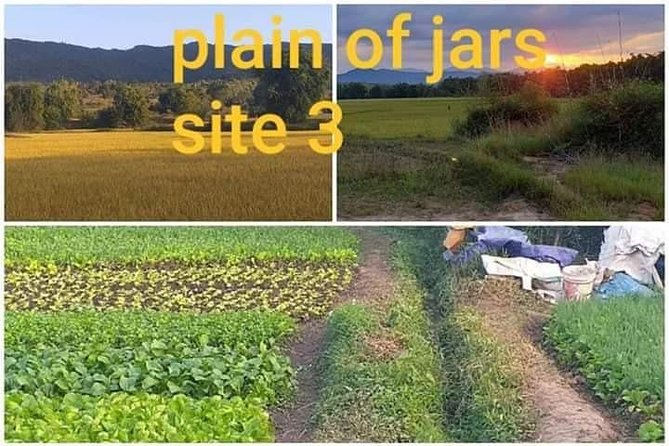
Phonsavan is best understood through several layers at once. The Plain of Jars gives you the area’s most famous archaeological sight. Muang Khoun adds religious and political history. The craft stops show how people live with the effects of the region’s wartime past.
I like that this is not just a drive from one photo stop to another. You move from ancient stone jars to Buddhist monuments, then to workshops where local people make practical goods. That range gives the day a clearer shape.
The tour begins at approximately 8:30 a.m. and finishes around 5:30 p.m. The final stop is planned around sunset, so you should have time for photographs before the day ends. Exact light and weather will affect the view, but the timing gives the outing a natural finish instead of simply ending when the last attraction closes.
This is a private activity, and your group is the only group taking part. That matters if you want to stop for photos, ask questions, or keep the pace suited to your party. The listed capacity is up to eight people, making the price especially appealing for families or a group of friends.
Other trips worth a look in Laos:
- Luang Prabang: Cruise to Pak Ou Caves & Kuang Si Waterfalls
★ 5.0 · 1,769 reviews - Luang Prabang: Cruise to Pak Ou Caves & Kuang Si Waterfalls
★ 4.8 · 1,360 reviews - Vang Vieng: Kayaking & Cave Tubing with Zip Line/Blue Lagoon
★ 4.5 · 410 reviews
Sites 1, 2, and 3 on the Plain of Jars
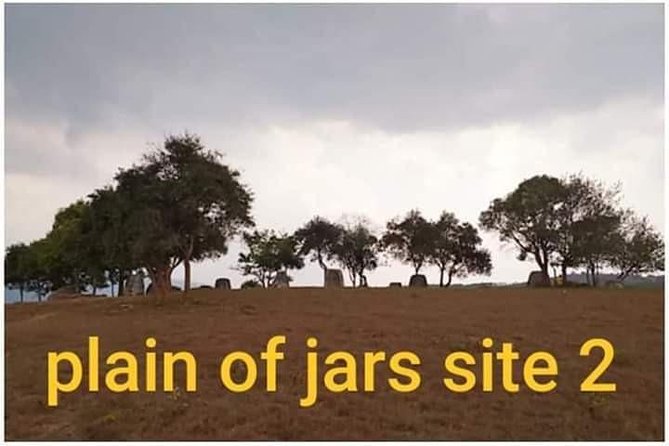
The Plain of Jars is the center of the day. This tour visits sites 1, 2, and 3, giving you a broader look than a short visit to only one location.
Each site offers another chance to see the stone jars in their setting. The appeal is not just the objects themselves. It is the open setting, the distance between the sites, and the unanswered questions surrounding their original use. You can take your time looking at the size, shape, and placement of the jars rather than treating them as a quick roadside stop.
Site 1 is generally the best-known location in the area, while sites 2 and 3 add variety to the visit. The supplied tour details do not give exact walking distances or the amount of time at each site, so you should ask about the day’s pacing if mobility or walking time is important to you.
Admission is included. That keeps the price simple and means you do not need to budget separate entrance fees for the listed stop. Bring a camera, but give yourself time to look beyond the obvious photograph. The open setting and the scale of the jars are the main reward.
The Plain of Jars sites are also part of a UNESCO heritage story, which adds importance to the visit. Still, do not expect a museum-style presentation at every stop. The power of the place comes from seeing the stones where they were found, with interpretation provided as part of the tour rather than through a large indoor display.
Muang Khoun, the old capital and its Buddhist monuments
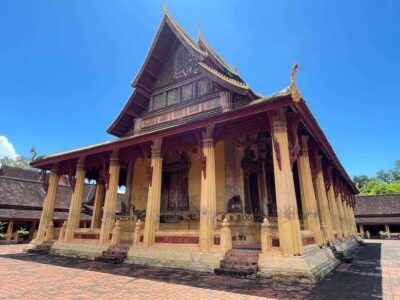
The route also visits Muang Khoun, described as the old capital. Here, the focus is on the Buddha statue and the stupa.
This stop gives the day a different mood. After the wide archaeological sites, you shift toward religious architecture and the remains connected with an earlier center of power. The Buddha statue offers a visual focal point, while the stupa adds another layer to the visit.
I like this part because it prevents the tour from becoming a single-subject outing. You are not only seeing ancient jars. You are also getting a glimpse of the area’s Buddhist traditions and former capital.
The information provided does not specify the exact age, name, or condition of the Buddha statue and stupa. That means you should avoid arriving with a fixed picture of a large royal complex. The value is in the historical contrast and in seeing these monuments as part of the wider Phonsavan area.
Bomb metal made into local handicrafts
One of the most unusual stops is the spoon village. Local people use bomb metal, described as bomb scars in the tour information, to make jewelry, spoons, and other objects.
This is a small but meaningful part of the day. The material connects ordinary household goods with the difficult wartime history of Laos. A spoon or piece of jewelry becomes more than a souvenir when you understand what the metal once represented.
You may find this stop more memorable than a standard craft shop because the story is tied directly to the region. It also gives you a chance to see local handcrafts rather than only looking at archaeological sites.
The tour description does not state what items are available for purchase or how long the visit lasts. If you are interested in buying something, ask about prices, payment, and whether your purchase supports the people making the goods. You should also remember that the value here is both practical and symbolic. A small handmade item can carry a story, but you should buy only what you genuinely want.
A completely different kind of day:
- Half Day Mekong Cruise to Pak Ou Caves (Morning / Afternoon)
★ 4.6 · 290 reviews - Luang Prabang: UNESCO World Heritage City Highlights Tour
★ 4.6 · 201 reviews - Vang Vieng: Namxay Viewpoint, Blue Lagoon 1 & Phoukham Cave
★ 4.6 · 188 reviews - Luang Prabang: Afternoon Kuang Si Waterfalls & Sunset Cruise
★ 4.6 · 158 reviews
How noodles are made in the village
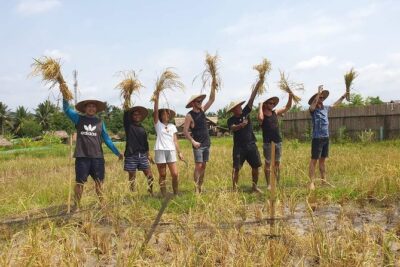
The noodle village provides another hands-on look at local work. You will see how the villagers process noodles, giving you a look at a food tradition rather than a formal monument.
I like this kind of stop because it puts daily life beside the major sights. Ancient jars and old religious monuments can feel distant from your own routine. Watching noodles being processed brings the day back to something familiar: food, work, and skills passed between generations.
The supplied details do not say if you will sample the noodles or take part in the process. Treat it as a demonstration unless the guide tells you otherwise. If food matters to you, ask before the tour begins so you know what is included and what is not.
Together, the spoon village and noodle village make the tour feel more connected to Phonsavan. You see what people make, how they work, and how the area’s past still shapes ordinary objects.
Ending with sunset photographs
The tour finishes with sunset, leaving you time to take photographs. This is a smart way to close a long day because the light can give the final views a softer look.
The exact sunset location is not specified, so you should ask where the final photo stop will be. The weather requirement also matters. If conditions are poor, the experience may be moved to another date or canceled with a full refund.
Do not treat the sunset as a guaranteed postcard moment. Clouds, rain, and seasonal conditions can change the view. Still, the planned timing gives you a final chance to slow down after the day’s many stops.
If you want good pictures, keep your camera ready before the final stop and avoid filling every minute with photographs earlier in the day. The best image may be a wide view, a jar in the evening light, or a simple record of your group at the end of the route.
The $150 group price and private format
At $150 per group for up to eight people, this tour can be good value. A full group would pay less per person than a couple or solo visitor, so the price works best when shared.
The private format also gives the price practical value. You are not joining a large mixed group, and only your party takes part. That can make it easier to keep your own pace and focus on the stops that interest you most.
For one or two people, the cost is less of a bargain. You are paying for a full day and a private experience, not simply admission to the Plain of Jars. If you are traveling alone, compare the price with other local transport and guiding options before booking.
Pickup is offered, and the tour is near public transportation. The details do not specify the pickup area, vehicle, or whether fuel and meals are included, so confirm those points before you pay.
The tour is booked, on average, 29 days ahead. That is a useful planning signal. If your dates are fixed, reserve early rather than assuming you can arrange it at the last minute.
What to know before booking
The day is long, but the schedule is clear: approximately 8:30 a.m. to 5:30 p.m. You should be comfortable spending most of the day moving between archaeological, religious, and village stops.
Most people can take part, according to the supplied information. Exact walking conditions and accessibility details are not provided, so anyone with mobility concerns should ask for more information before booking.
The booking is non-refundable and cannot be changed for any reason. If you cancel or request an amendment, the money paid will not be returned. Weather is the exception: if poor conditions cause the tour to be canceled, you will be offered another date or a full refund.
Food is not listed as an included feature. One person who spent the day with Sakhone also described getting great food and later staying at her bed and breakfast, but that does not mean meals or accommodation are part of this tour. Treat those as separate arrangements unless you confirm otherwise.
Is the Plain of Jars and Muang Khoun tour worth booking?
I would recommend this tour if you want to see the main Plain of Jars sites and add cultural stops in one organized day. It suits couples, families, and groups of friends who can share the $150 cost and prefer a private outing.
The strongest points are the three jar sites, the unusual bomb-metal handicrafts, and the balance between historic places and village life. The day with Sakhone was praised for its beautiful and interesting mix, good food, and warm personal care, which suggests the human side of the tour can be as important as the route itself.
I would think twice if you dislike full-day schedules, need flexible cancellation terms, or want detailed information about walking, meals, and transport before committing. Ask those questions first. For the right group, though, this is a well-rounded way to see Phonsavan, with a useful mix of ancient sites, local work, and a sunset ending.
FAQ
Where does the tour take place?
The tour takes place in Phonsavan, Laos, and includes the Plain of Jars, Muang Khoun, a spoon village, and a noodle village.
How long does the tour last?
The tour lasts approximately 8 hours and 30 minutes. It starts at about 8:30 a.m. and finishes around 5:30 p.m.
Which Plain of Jars sites are included?
The route includes Plain of Jars sites 1, 2, and 3.
Is pickup offered?
Yes, pickup is offered. The supplied information does not specify the exact pickup area or vehicle details.
Is this a private tour?
Yes. This is a private activity, and only your group will take part. The group can include up to eight people.
What does the tour cost?
The price is $150 per group of up to eight people.
What happens if bad weather cancels the tour?
If poor weather causes the tour to be canceled, you will be offered a different date or a full refund. The experience is otherwise non-refundable and cannot be changed.
Just added in Laos
- Vientiane Private Lao Cooking Class with Market Tour★ 4.0 · 3 reviews
- Vientiane: Lao Cultural Attire Rental Experience★ 5.0 · 3 reviews
- Vientiane: Half-Day City Tour – Morning or Afternoon★ 4.0 · 3 reviews
- Vang Vieng: Zipline&Water Cave&Tham Chang&Blue Lagoon 1★ 5.0 · 3 reviews
- Vangvieng a beauty and incredible things to do.★ 5.0 · 2 reviews
- Vientiane: Art, Culture, & Inspiration Guided Day Tour★ 5.0 · 3 reviews
- Vang Vieng: Zipline&Kayaking&BlueLagoon 1★ 3.7 · 3 reviews
- Vang Vieng: Paragliding Experience with Hotel Pickup★ 5.0 · 3 reviews
Tours, compared.

Tham Nangfar and Tham Nam Day Tour with Kayaking
Read our review →