
Reviewed · LUANG PRABANG TOURS
Luang prabang: Survival course in the primary forest.
Trade comfort for useful skills. Near Luang Prabang, Laos SPIRIT takes you into the forest for a 2-day, 1-night course led by a Khmu instructor. You learn to make fire without matches, build a basic camp from bamboo and vines, find water, cook with forest plants, and read signs of wildlife. I like the hands-on format, and I especially like the link to Khmu traditions rather than a generic outdoor skills class. The main thing to consider is simple: you sleep in a basic forest camp, so this is not a soft adventure with hotel comforts.
I also like the range of the program. You are not only tying knots beside a shelter. You visit a rice field, local village, and old cave, then finish with basic wilderness first aid. The course suits curious, reasonably fit adults who want practical contact with rural Laos. If you prefer a short walk, a polished camp, or a predictable sightseeing day, this may feel demanding.
In This Review
- Key points before you book
- Leaving Luang Prabang at 8:00 AM
- Cooking rice and preparing a jungle meal
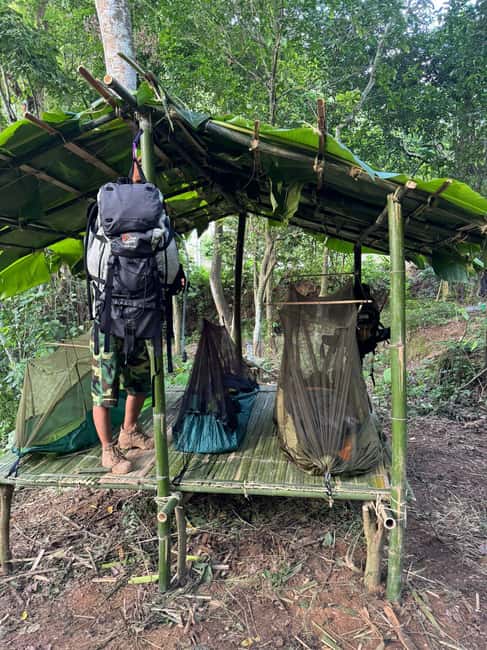
- Building a camp from bamboo, vines, and leaves
- Fire-making without a lighter
- Finding water and reading signs of wildlife
- Knots, weaving, traps, and navigation
- Rice fields, a village, and an ancient cave
- Wild plants and traditional Khmu knowledge
- Wilderness first aid before returning
- What $123 includes, and where costs can grow
- Who should book this forest course?
- Should you book the Luang Prabang survival course?
- FAQ
- How long is the survival course?
- Where does the course start?
- Is transportation included?
- What time does pickup begin?
- How long is the drive into the forest?
- Do I need previous survival experience?
- Which languages are available?
- What survival skills will I learn?
- What cultural places are included?
- What is included in the price?
Key points before you book
- Two days and one forest night: Pickup begins at 8:00 AM in Luang Prabang, with a return after the second day.
- Khmu-led instruction: Your guide shares traditional forest skills, including plants, shelter materials, cooking, and survival methods.
- Real hands-on work: You collect bamboo, vines, and leaves, then use them for camp building, tools, utensils, and weaving.
- Useful survival lessons: Fire-making, water purification, animal tracks, knots, navigation, traps, and first aid are all part of the course.
- A wider cultural visit: Rice fields, a nearby village, and an ancient cave add local context to the forest work.
- $123 value question: The price covers hotel transport, lunch, educational materials, taxes, and entrance fees, but drinks, extra food, souvenirs, and gratuity cost extra.
Leaving Luang Prabang at 8:00 AM
Your day starts with pickup from your hotel and a drive of about 45 minutes into the mountains. The starting point is the Laos SPIRIT showroom, and the return is also listed there, with hotel transport included for the outing.
That drive matters because the course moves quickly from town life to rural surroundings. Along the way, your guide points out edible plants, medicinal herbs, and fruit trees. This is not just scenery for the road. You begin learning how people identify useful plants before you reach the camp.
I would pay close attention during this part. The names and uses of plants can be easy to forget, especially when many are new to you. A small notebook might help, though the tour includes educational materials for the course.
The schedule begins early and continues into the next day, so plan for a full physical outing. The description calls it a 2-day, 1-night course, although the booking information also labels the activity as valid for 1 day. The practical interpretation is clear: expect an overnight program, and confirm the exact departure and return times when you reserve.
More things to do in Luang Prabang:
- Luang Prabang: Cruise to Pak Ou Caves & Kuang Si Waterfalls
★ 5.0 · 1,769 reviews - Luang Prabang: Cruise to Pak Ou Caves & Kuang Si Waterfalls
★ 4.8 · 1,360 reviews - Half Day Mekong Cruise to Pak Ou Caves (Morning / Afternoon)
★ 4.6 · 290 reviews
Cooking rice and preparing a jungle meal
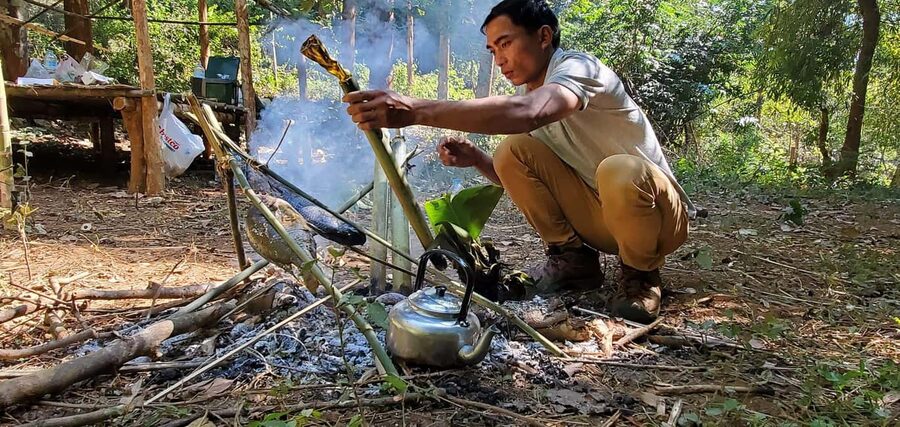
One of the first lessons is traditional Lao cooking. You learn to steam rice in a bamboo basket and prepare a meal using ingredients found or identified along the route.
This is one of the strongest parts of the course because food gives the skills a clear purpose. Fire-making and shelter construction can feel like games when taught in isolation. Cooking shows how those skills support daily life. Bamboo is not only a plant you pass on the trail. It can become part of your kitchen, your cooking equipment, and your camp.
The food focus also connects the course to Lao life. You are not simply practicing wilderness techniques imported from another country. You are seeing how local materials and traditional methods fit together.
Lunch is included, while additional drinks and extra food are not. The program also refers to forest meals and a forest breakfast, but the exact food provided is not spelled out. I would ask Laos SPIRIT what meals are included beyond the listed lunch, especially if you have dietary needs.
Building a camp from bamboo, vines, and leaves
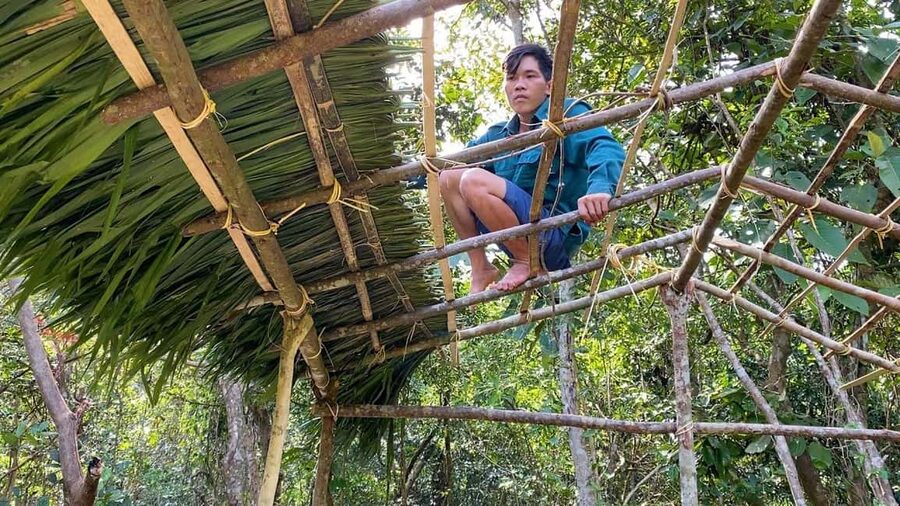
At the forest site, you collect natural materials for a basic camp. Bamboo, vines, and leaves become building supplies, cooking tools, simple utensils, and shelter components.
This work will likely be more physical than the brochure-style wording suggests. You are carrying materials, handling natural fibers, tying knots, and working with the group under instruction. Good general physical condition is required, but no previous outdoor experience is needed.
The shelter lesson is useful because it teaches you to notice what the forest offers. Vines can hold materials together. Leaves can provide cover. Bamboo can serve several purposes. You begin to see the forest as a source of practical materials rather than a wall of trees.
Still, keep your expectations grounded. A shelter made from natural materials is part of the lesson, not a replacement for a comfortable room. You should be ready for a basic overnight camp and the ordinary discomfort that comes with outdoor living.
Fire-making without a lighter
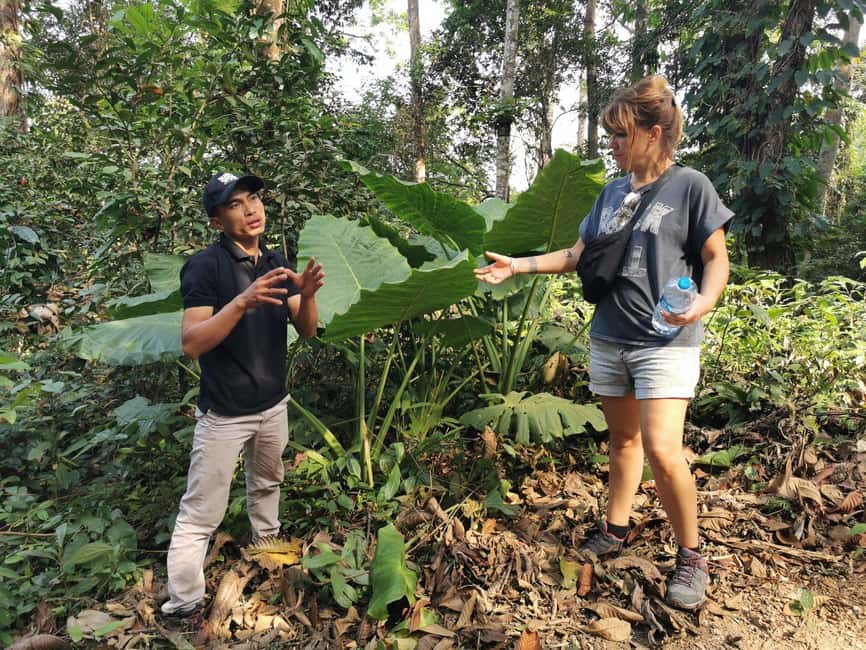
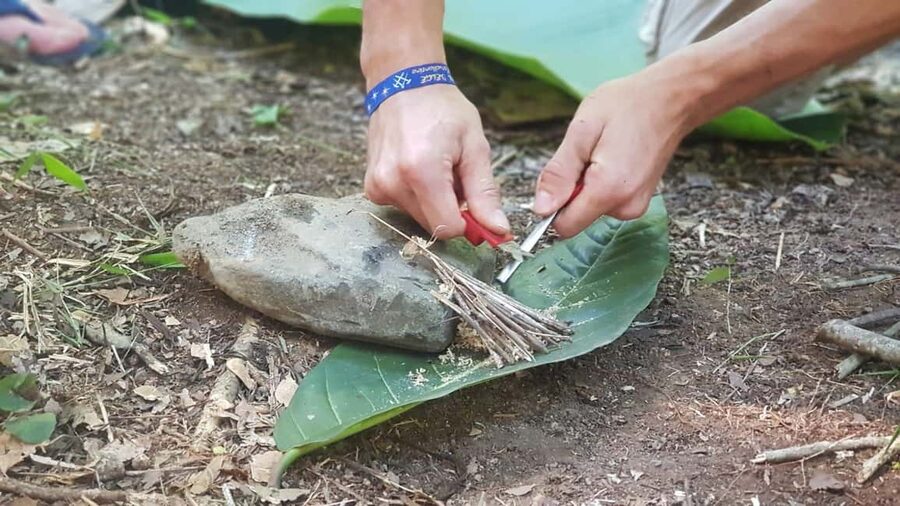
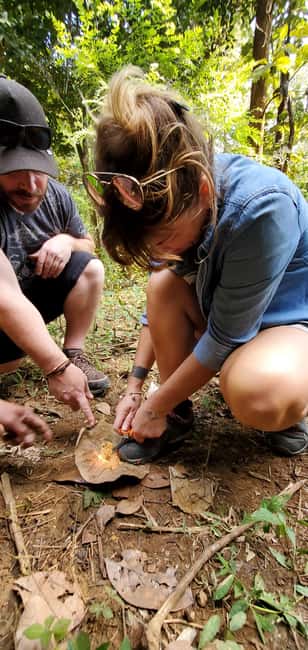
The second day focuses on core survival skills, starting with fire-making without matches or lighters. This is a classic test of patience. It also teaches an important point: having materials is not the same as knowing how to use them.
Your Khmu instructor guides the process, so you do not need prior experience. The value is in learning the sequence: preparing materials, creating a spark or flame, and building it into a useful fire. The supplied information does not specify the exact fire-making method, so I would treat this as a practical demonstration and supervised exercise rather than assume one particular technique.
Fire supports more than warmth. It helps with cooking and can make a remote camp more workable. Tying this lesson to the cooking class gives the skill a clear place in the day.
A completely different kind of day:
- Luang Prabang: UNESCO World Heritage City Highlights Tour
★ 4.6 · 201 reviews - Luang Prabang: Afternoon Kuang Si Waterfalls & Sunset Cruise
★ 4.6 · 158 reviews - Luang Prabang: Evening Cooking Class & Local Baci Ceremony
★ 4.9 · 151 reviews - Luang Prabang: Kayak Tour to Pak Ou Caves
★ 4.4 · 115 reviews
Finding water and reading signs of wildlife
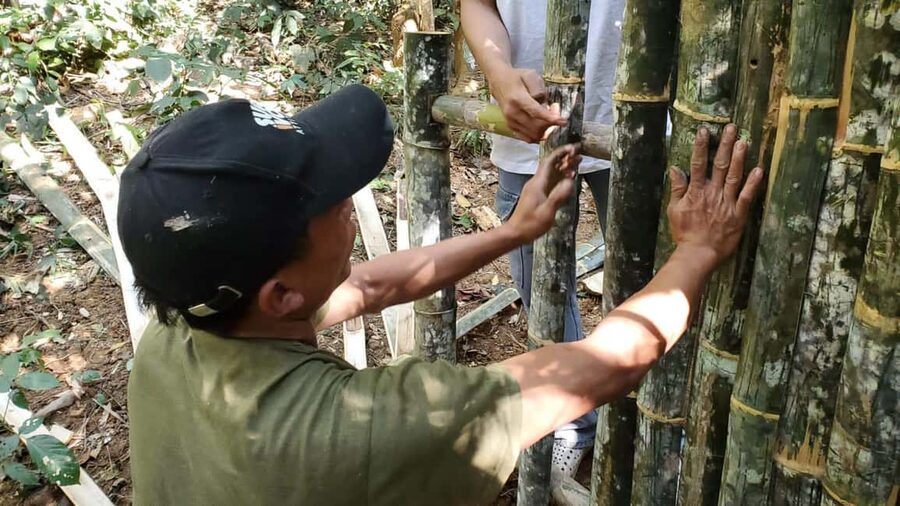
You also learn how to find and purify drinking water in the jungle. Water lessons are among the most practical parts of any survival course, but the description does not state which purification equipment or method is used.
That means you should listen carefully and avoid treating the lesson as permission to drink from an untested stream on your own. The purpose is to understand how water sources are assessed and made safer under guidance.
Animal tracks and signs of wildlife are another part of the course. You learn to look for evidence rather than expect a wildlife show. This can sharpen your attention to the forest floor, trees, and nearby materials. The program does not promise sightings of specific animals, so think of this as tracking instruction, not a safari.
Knots, weaving, traps, and navigation
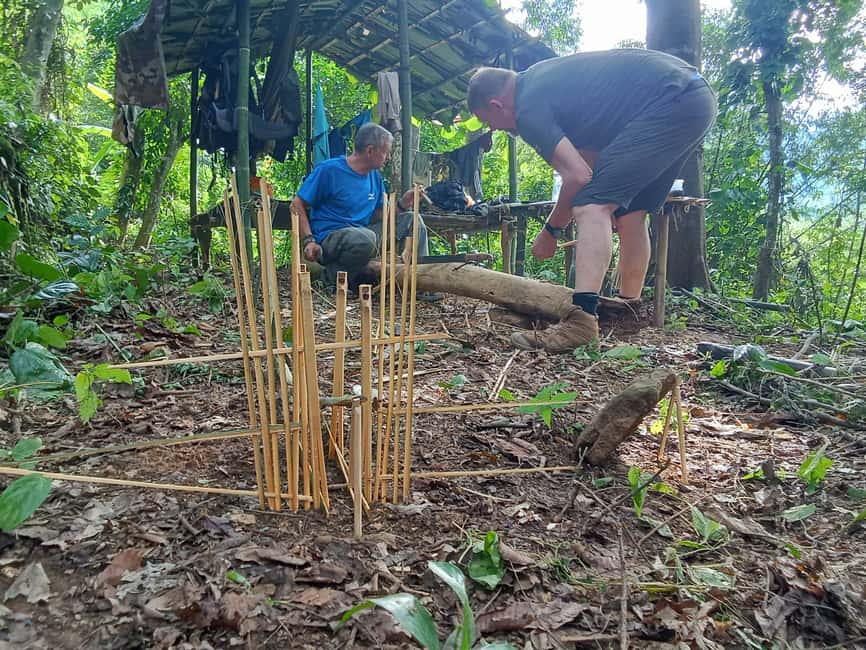
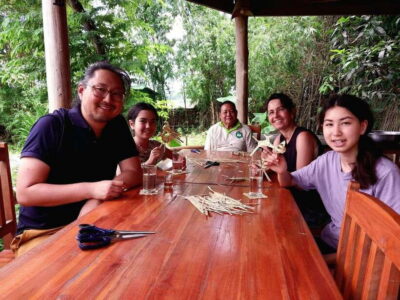
The course adds several small skills that become useful when combined. You practice knots for shelter and tools, weave with natural leaves and fibers, and build simple traps for food.
The trap lesson needs a sensible reading. It is presented as an educational survival exercise, not a guarantee that you will catch something or a promise of hunting. The aim is to understand how traditional forest skills work and how natural materials can be adapted.
Navigation uses a map and natural landmarks. This gives the course a welcome practical edge. You are not only following a guide through the forest. You learn the basics of finding your way with both a map and the features around you.
The level of navigation is not specified, so I would not expect advanced route-finding or technical wilderness navigation. Still, for a beginner, learning to compare a map with natural landmarks is a useful starting point.
Rice fields, a village, and an ancient cave
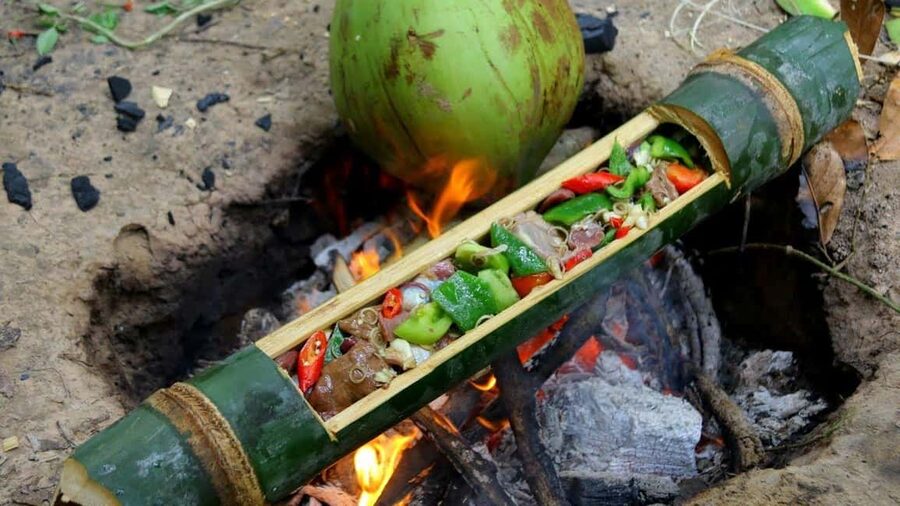
The second day is not spent entirely at camp. You visit a rice field, a nearby village, and an ancient cave once used as a home by local people.
These stops help place the survival skills in a human setting. Rice fields show an important part of rural life, while the village offers a chance to see the connection between community life and the surrounding forest. The cave adds a historical element, though the information provided does not give a date or detailed background.
The cultural side is strongest when your guide explains how Khmu people use forest materials and understand the local environment. You are not just learning generic knots or camp building. You are getting a look at traditional knowledge shaped by the area.
Village visits can be sensitive, so approach them with respect. Follow your guide’s advice about photography and behavior, and remember that a village is a home, not a staged attraction.
Wild plants and traditional Khmu knowledge
The course places strong attention on edible plants, medicinal herbs, and fruit trees. Your guide introduces these on the drive and continues the lesson during the forest work and cooking activities.
This is where the course offers something a standard hiking trip cannot. A walk can show you trees and plants. A local instructor can explain how people identify and use them. The Khmu focus gives the activity a cultural layer without removing its practical purpose.
Do not assume that every plant you see is safe to eat. Use only what the instructor identifies and prepares. Plant recognition depends on details that may not come across in a quick explanation, particularly if your language skills are limited.
Instruction is offered in English, with French available on request. That is helpful, but plant names and medical uses can still be hard to follow. Ask questions, repeat the names, and use the educational materials provided.
Wilderness first aid before returning
Before the course ends, you take part in a basic wilderness first aid workshop. It covers practical steps for treating injuries and evacuation procedures in remote places.
This is a smart way to finish. First aid connects every other lesson to safety. A fire, shelter, or navigation skill matters most when it helps you manage a problem far from a road or clinic.
The workshop is described as basic, so you should not expect professional medical certification or advanced rescue training. Its value is more direct: you learn how to respond, stay organized, and think about evacuation when help is not close.
The course then returns you to Luang Prabang and the Laos SPIRIT starting point. The program includes taxes and entrance fees, so you are not left calculating those costs during the day.
What $123 includes, and where costs can grow
At $123 per person, the course is not a cheap half-day activity. It is priced as a 2-day, 1-night program with instruction, transport, outdoor materials, and cultural visits.
The included value is strongest if you would otherwise need to arrange several separate activities. Round-trip hotel transport removes the need to organize a mountain transfer. Educational materials support the lessons. Taxes and entrance fees are covered, and lunch is included.
Additional drinks, extra food, souvenirs, and gratuity are not included. Bring a little spending money, and clarify the meal plan before departure. The course includes cooking activities and refers to a forest breakfast, but the provided details do not fully explain which food is supplied and which ingredients you may need to pay for.
I see the price as reasonable for someone who wants instruction rather than just a guided walk. It is less attractive if your main goal is a village visit or a short forest outing. You are paying for time, teaching, equipment or materials, and the chance to practice skills under supervision.
Free cancellation up to 24 hours before the activity and a reserve-now, pay-later option make planning easier. Starting times should still be confirmed because the booking details describe availability rather than one fixed schedule.
Who should book this forest course?
I would recommend it to you if you enjoy active learning, rural culture, and practical outdoor tasks. It is a good fit for first-time campers who want guidance, as well as experienced hikers who want to compare their skills with local methods.
You do not need previous survival training. You do need reasonable fitness and a willingness to work with natural materials, spend a night in a basic camp, and follow instructions in the forest.
Families with young children may find the length and overnight setup difficult, but no age policy is provided, so ask Laos SPIRIT before booking. The same applies to dietary restrictions, medical concerns, and any mobility issue. The course includes hiking and camp activities, but the exact walking distance and terrain are not stated.
I would skip it if you want air conditioning, a fixed meal schedule, or a polished resort-style activity. I would also avoid booking it as a rushed add-on between other fixed plans. The early pickup and overnight format need room in your schedule.
Should you book the Luang Prabang survival course?
Book this course if you want to do more than look at the Lao forest. You will build, cook, tie, track, navigate, and learn how local Khmu traditions make use of the natural world.
The best value comes from the combination of skills and culture. Fire-making alone is not enough to justify two days for everyone, but fire-making plus shelter building, plant knowledge, village and cave visits, cooking, and first aid creates a full outdoor experience.
My main advice is to confirm the exact schedule, overnight arrangements, and food inclusions before paying. If those details suit you, $123 buys a rare chance to spend meaningful time in the forest near Luang Prabang, with a guide who can connect practical survival lessons to local life.
FAQ
How long is the survival course?
The experience is described as a 2-day, 1-night course, with activities taking place over about 24 hours.
Where does the course start?
It starts at the Laos SPIRIT showroom, with pickup from your hotel in Luang Prabang listed as included.
Is transportation included?
Yes. Round-trip transport from your hotel is included.
What time does pickup begin?
Pickup begins at 8:00 AM.
How long is the drive into the forest?
The drive from Luang Prabang to the mountain forest area takes about 45 minutes.
Do I need previous survival experience?
No. Previous experience is not required, but you should be in good general physical condition.
Which languages are available?
Instruction is available in English. French can be requested.
What survival skills will I learn?
You learn fire-making, water finding and purification, animal-track recognition, useful knots, leaf and fiber weaving, simple traps, map and landmark navigation, shelter building, and basic wilderness first aid.
What cultural places are included?
The course includes visits to a rice field, a nearby village, and an ancient cave that was once used as a home.
What is included in the price?
The $123 price includes round-trip hotel transport, lunch, educational materials on loan, taxes, and entrance fees. Drinks, extra food, souvenirs, and gratuity are not included.
Just added in Luang Prabang
- The Namkhan – Traditional Lao Bamboo Weaving★ 5.0 · 4 reviews
- Unwind with a Sunset Cruise on the Mekong River★ 5.0 · 4 reviews
- Night Bus to Huay Xai, Chiang Rai, Thailand – Hotel pickup★ 3.0 · 2 reviews
- Sunset Cruise in Luang Prabang with Live Performance★ 4.5 · 3 reviews
- The Namkhan – 90 Minutes Private Signature Scrub and Massage★ 5.0 · 2 reviews
- Private Tour: Half-Day City Tour of Luang Prabang★ 4.5 · 4 reviews
- Trek to Tad Sae Waterfalls, Local Village★ 4.5 · 2 reviews
- Private Full-Day Luang Prabang City Tour★ 5.0 · 1 review
Luang Prabang Tours, compared.


Half Day Mekong Cruise to Pak Ou Caves (Morning / Afternoon)
Read our review →
Browse the lists this tour appears in