
Reviewed · WEAVING AND HANDICRAFT WORKSHOPS
Luang Prabang Street Food Culture, Paper Handicraft Village Tour
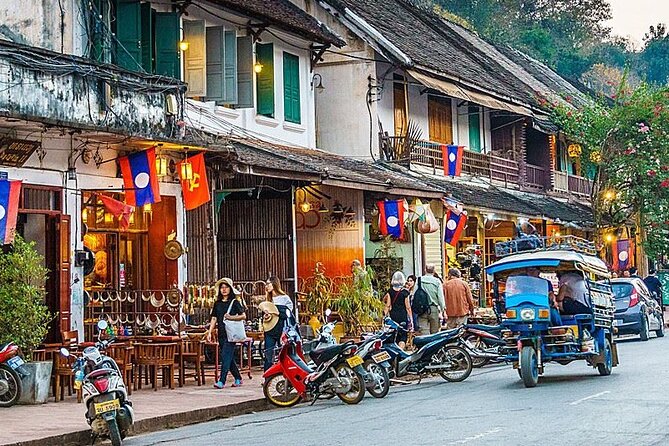
Come hungry, leave curious. This four-hour Luang Prabang outing mixes the morning market, Lao snacks, a Mekong-side coffee stop, local meals, and paper craft workshops in a compact half-day route. I like the way it connects food with everyday life, rather than limiting the experience to restaurant dishes. I also like the choice between an easy bike tour and a walking version.
The main drawback is the fixed, non-refundable booking policy, so you need to be sure of your plans before paying. You should also budget for drinks and food at the final petanque stop, since those costs are not included.
In This Review
- Key points at a glance
- Why this four-hour tour feels different
- Starting at the morning market
- Coffee and Khanom beside the Mekong
- The walking option and its local dishes
- Choosing between bikes, walking, and a tuk-tuk
- Paper craft and the village atmosphere
- Ending with petanque
- Is $46.90 good value?
- What to know before you book
- Who will enjoy this Luang Prabang outing?
- Should you book this tour?
- FAQ
- How long does the tour last?
- Where does the tour begin and end?
- Is biking required?
- What food is included?
- Is water provided?
- What is the maximum group size?
Key points at a glance
- Morning market tasting: See meats, fruit, herbs, spices, and countryside produce while your guide explains how they fit into Lao cooking.
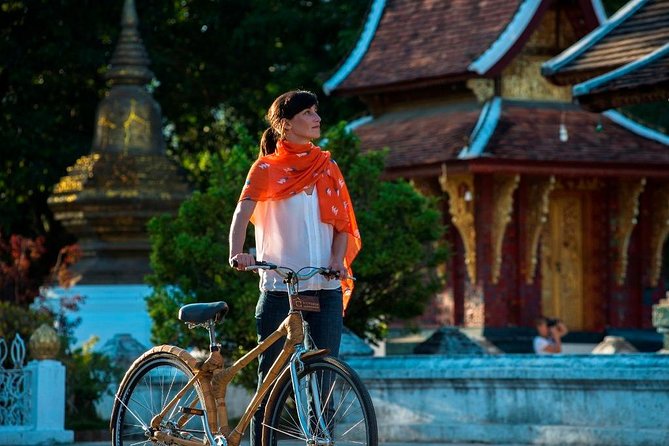
- Two ways to get around: Choose the easy cycling option with a quality bike and safety equipment, or take the walking version.
- Lao food beyond the usual menu: Try Neam Khao, Khao Piak Khao, local snacks, and a Lao pastry called Khanom.
- Crafts alongside cuisine: The experience includes a paper craft workshop and, according to the tour details, visits connected with silk weaving.
- Small-group format: The maximum group size is 15 people, which should allow room for questions and personal attention.
- A final petanque stop: Drinks and food here cost extra, giving you a chance to end the outing at your own pace.
Why this four-hour tour feels different
Many food tours in Luang Prabang focus on a meal and a few tastings. This one uses food as a doorway into the town’s daily routines. You begin where local goods arrive and change hands, then move toward prepared dishes, coffee, crafts, and social time.
That sequence matters. At the morning market, you see ingredients before they reach a cooking pot. Later, you taste dishes that use familiar items in less familiar ways. The paper workshop adds another useful layer, showing that Luang Prabang’s cultural life is not only about temples and old buildings.
I also appreciate the half-day length. Four hours gives you enough time to sample several foods without taking over your entire day. You can book a temple visit, river outing, or afternoon rest afterward.
The pace is intended to be easy. Most people can participate, and children may join when accompanied by an adult. A child rate is available only when the child shares with two paying adults, so check the final price carefully if you are booking as a family.
More Food Tours in Luang Prabang:
- Luang Prabang Evening Food Tour by Tuk-Tuk
★ 4.5 · 68 reviews - Luang Prabang: Foodie Walking Tour & Monk Blessing
★ 4.7 · 66 reviews - Luang Prabang: Mekong Meals Food Tour with 15+ Tastings
★ 4.9 · 58 reviews
Starting at the morning market
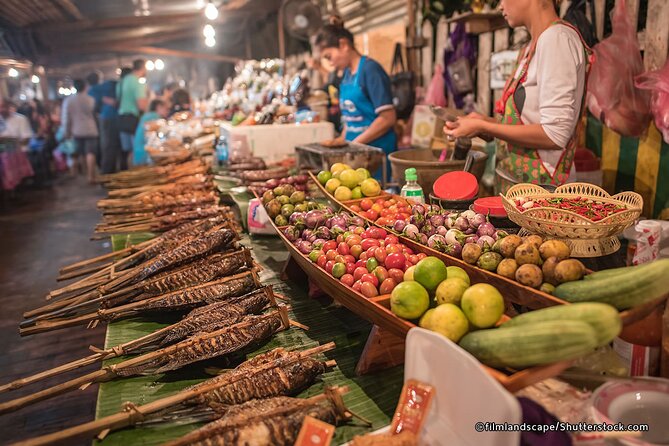
The tour begins at the meeting point and bike shop on the main street, opposite the fountain. From there, your guide walks with you to the nearby morning market.
This is the best part of the outing for anyone who wants food explained in context. You are not simply handed a plate and told what it is. You see the raw materials first: different meats, fruits, vegetables, herbs, and spices sold by people from the countryside around Luang Prabang.
Some ingredients may be new to you. That is where the guide earns the fee. A good explanation of how an herb or spice is used in Lao cooking can make a market stall far more interesting than a quick pass through with a camera.
You will also sample a few local delicacies at this stage. The exact selection can vary, so do not expect a fixed tasting menu. That flexibility is useful because it keeps the experience tied to what is fresh and available that morning.
The market is also where the tour feels most connected to local life. You are looking at food that people actually buy and use, rather than a display arranged only for visitors. Be open to unfamiliar textures and flavors, and tell your guide about allergies or foods you avoid before tasting.
Coffee and Khanom beside the Mekong
After the market, you walk to a well-known Lao coffee shop by the Mekong River. Here you sit down with coffee and a local pastry called Khanom.
This pause gives the morning some shape. Market visits can become tiring when every stop requires standing, tasting, and listening. Sitting by the river lets you slow down while your guide can continue explaining local food habits in a relaxed setting.
The coffee stop is included as part of the food experience, and it works well as a bridge between the market and the longer meal stop. If you do not drink coffee, confirm what alternatives are available before ordering, since additional drinks are not included in the tour price.
Khanom is a useful introduction to Lao sweets and pastries, especially if your meals so far have focused on savory food. You might find this stop more appealing if you enjoy trying small portions rather than committing to a large dish early in the day.
The walking option and its local dishes
The walking version continues to a local restaurant, where you try a selection of Lao dishes. The meal includes Neam Khao and Khao Piak Khao, two foods that show different sides of local cooking.
Neam Khao is described as a rice noodle crepe filled with minced meat, mushrooms, and assorted herbs. It is cut into small pieces and served with a dipping sauce made with minced nuts, lemon, chili, coriander, and sweet fish sauce.
That combination gives you several flavors in one bite. The herbs bring freshness, while the dipping sauce adds sour, spicy, salty, and sweet notes. If you like food with a lot of contrast, this should be one of the more memorable tastings.
Khao Piak Khao is a local rice soup often eaten in the morning. It is slowly cooked with pork and meat broth, then finished with crushed black pepper and chopped coriander. Depending on your taste, you can add an egg or fresh chili.
This is a more comforting dish than Neam Khao. The soup is a reminder that Lao breakfast does not have to be sweet or light. It can be warm, savory, and filling.
The restaurant portion lasts about two hours, making it the longest section of the tour. That is helpful if you want time to ask questions and eat at a calm pace. It may feel slow if you are expecting a rapid succession of street-food bites, so choose this experience for conversation and context as much as for tasting.
More weaving and handicraft workshops:
- Luang Prabang: Bamboo Weaving Workshop & Cooking Class
★ 5.0 · 96 reviews - Luang Prabang: Bamboo Experience & Kuang Si Falls Tour
★ 5.0 · 38 reviews - Day-time Bamboo weaving & Cooking Classes join-in
★ 5.0 · 38 reviews - Evening Bamboo weaving & Cooking classes join-in
★ 5.0 · 17 reviews
Choosing between bikes, walking, and a tuk-tuk
The biking option is designed for easy cycling and includes a quality bike, safety equipment, and drinking water. The route is described as safe and suitable for a half-day ride, but you should still choose the walking version if cycling is not comfortable for you.
The cycling choice gives the tour a wider feel. You can cover more ground than on foot and get a better sense of how the food stops fit into Luang Prabang. It also adds a little fun without turning the outing into a demanding exercise session.
The walking version is simpler. You do not need to manage a bike, park it, or keep pace with a group on streets. It is a practical choice for anyone who prefers to focus on the market, dishes, and crafts.
One person who took the tour requested a tuk-tuk because it made getting around easier. That is useful advice, but you should treat it as a personal arrangement rather than a standard inclusion. Ask the operator before booking if you need transport instead of walking or cycling.
The group maximum is 15 people. That is not an intimate private tour, but it is still small enough for a guide to explain ingredients and answer questions. If the full group attends, the food stops may take a little longer as everyone receives and samples dishes.
Paper craft and the village atmosphere
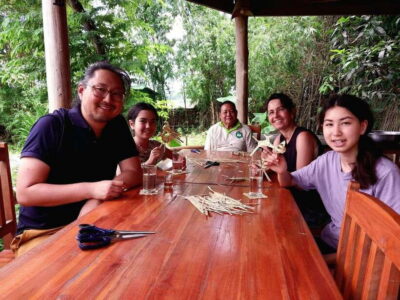
The paper handicraft portion gives the tour a welcome change of pace. You visit a paper craft workshop and get the chance to make your own paper masterpiece.
This hands-on element is more useful than simply stopping at a shop. You see the work involved in making a traditional craft and leave with a clearer idea of how much patience and skill goes into the finished pieces.
The craft visit also makes sense alongside the food stops. Both parts of the tour deal with local materials, practical skills, and goods made by hand. You are not being rushed from one major sight to another. Instead, you are seeing smaller parts of Luang Prabang life.
The tour details also mention a silk-weaving visit. Since the exact order of the craft stops is not specified, ask your guide what is planned on the day. If you care most about paper-making or silk, this quick question can help set expectations.
The workshop will suit you best if you enjoy making something, not just taking photographs. If your main goal is a long, detailed craft lesson, the four-hour format may feel brief. The strength here is variety, not specialist training.
Ending with petanque
The final stop is a petanque place. Food and drinks here are not included, so bring extra money if you want to order something.
This is a casual way to finish the outing. Petanque is popular in Laos, and the stop gives you a chance to relax after the market, meal, cycling, and craft visit. You can treat it as an optional social ending rather than another required tasting.
The extra cost is worth noting when comparing the $46.90 price with other food tours. The tour includes the guide, bikes and safety gear when cycling, water, snacks, and the main food experiences. You still need to pay for any additional drinks and whatever you choose at the petanque stop.
You should also tip the guide if the service is good. Tips are not included.
Is $46.90 good value?
At $46.90 per person, this is not the cheapest way to sample Luang Prabang food. The value comes from the range of activities packed into four hours.
You are paying for an English-speaking guide, market interpretation, several tastings, coffee and Khanom, a restaurant meal featuring local dishes, a craft visit, water, and the option of a bike with safety equipment. A self-guided market visit would cost much less, but it would not give you the same help identifying ingredients or understanding recipes.
I think the price works best for first-time visitors who want an organized introduction to Lao food and crafts. It also makes sense if you have limited time in Luang Prabang and want several small experiences in one morning.
The value is weaker if you already know Lao cuisine, prefer to eat independently, or want a full-day culinary class. In that case, you may find the guided structure more than you need.
The tour is often booked about 54 days ahead, which suggests that you should not leave it until the last minute during a busy visit. Confirmation is normally received at booking. If you book within five days of the travel date, confirmation may take up to 48 hours and depends on availability.
What to know before you book
Wear comfortable clothing for walking or cycling. The route is described as easy, but you will still spend time moving between food and craft stops.
Tell the guide about dietary restrictions before tasting anything. The menu includes pork, meat broth, fish sauce, nuts, chili, and other ingredients that may matter to you.
Bring a little extra cash for drinks, the petanque stop, and a tip. Bottled water and drinking water are included, but additional beverages are not.
The booking is non-refundable and cannot be changed for any reason. That is the biggest practical risk, so only reserve once your dates are firm.
The tour ends back at the meeting point. This makes it easy to plan another activity afterward, though you should allow some flexibility if the food stop runs long.
If Ken is your guide, his relaxed and friendly manner has been singled out as a strength. A calm guide matters here because the experience depends on explanations, tasting at an unhurried pace, and making unfamiliar foods feel approachable.
Who will enjoy this Luang Prabang outing?
I would recommend it to curious eaters who want more than restaurant meals. It is especially suitable if you enjoy markets, small tastings, local recipes, and crafts made by hand.
Families may like the short length and easy pace, provided children are accompanied by an adult and the child-rate conditions work for your booking. People who are comfortable cycling can choose the bike option, while walkers can keep the route simple.
It is also a good fit for couples or small groups who want an introduction to Luang Prabang without spending a full day on a formal food program. The combination of market, meal, coffee, craft, and petanque gives you a broad sample of local life.
I would hesitate if you dislike unfamiliar ingredients, cannot eat the listed foods, or need a flexible booking. I would also choose another experience if your priority is a long cooking class, a private guide, or a tightly structured list of specific dishes.
Should you book this tour?
Book it if you want an easy half-day that links Luang Prabang food with everyday market life and local crafts. The strongest reasons are the morning market explanations, the chance to try Neam Khao and Khao Piak Khao, and the paper workshop where you make something yourself.
Choose the walking version if you want a slower, simpler outing. Choose bikes if you like covering more ground. If you need a tuk-tuk, arrange that before you go rather than assuming it is included.
For $46.90, you get a useful introduction rather than a luxury meal or specialist culinary course. I see it as good value for a first visit, particularly when your schedule is short and you want food, craft, and local conversation in one outing.
FAQ
How long does the tour last?
The experience lasts approximately four hours.
Where does the tour begin and end?
It begins in Luang Prabang at the meeting point and bike shop on the main street opposite the fountain. It ends back at the meeting point.
Is biking required?
No. You can choose the walking option instead. The biking option includes a quality bike and safety equipment.
What food is included?
The tour includes local snacks, coffee and Khanom at a Lao coffee shop, and restaurant dishes including Neam Khao and Khao Piak Khao. Food and drinks at the final petanque stop are not included.
Is water provided?
Yes. Drinking water and bottled water are included.
What is the maximum group size?
The tour accepts a maximum of 15 people.
Just added in Luang Prabang
- The Namkhan – Traditional Lao Bamboo Weaving★ 5.0 · 4 reviews
- Unwind with a Sunset Cruise on the Mekong River★ 5.0 · 4 reviews
- Night Bus to Huay Xai, Chiang Rai, Thailand – Hotel pickup★ 3.0 · 2 reviews
- Sunset Cruise in Luang Prabang with Live Performance★ 4.5 · 3 reviews
- The Namkhan – 90 Minutes Private Signature Scrub and Massage★ 5.0 · 2 reviews
- Private Tour: Half-Day City Tour of Luang Prabang★ 4.5 · 4 reviews
- Trek to Tad Sae Waterfalls, Local Village★ 4.5 · 2 reviews
- Private Full-Day Luang Prabang City Tour★ 5.0 · 1 review
Weaving and Handicraft Workshops, compared.
Day-time Bamboo weaving & Cooking Classes join-in
Read our review →
Evening Bamboo weaving & Cooking classes join-in
Read our review →
Full Day bamboo experience with cooking class & Kuang si waterfalls
Read our review →
Browse the lists this tour appears in