
Reviewed · FARMS
Luang Prabang: Authentic Lao Village & Farm Experience Day
Rural Laos begins beyond the city. This private, eight-hour outing takes you from Luang Prabang to ThaOuy, a hill village where you can fish in a farm pond, share a simple lunch, and meet families in their own community. I like the hands-on fishing lesson and the chance to see everyday farm work rather than a staged cultural show. I also like that part of the $135 fee supports the village and its school. The main drawback is the one-hour drive each way, plus the fact that rural conditions are basic and the catch of the day is never guaranteed.
This is a good choice if you want to spend time with local people and are happy with a slower, less polished day. You will see rubber trees, fruit orchards, pigs, chickens, ducks, geese, fishing ponds, traditional houses, a temple, a school, and nearby forest. It is not a checklist of Luang Prabang sights. It is a full day built around conversation, food, farm work, and village life.
In This Review
- Key points at a glance
- Leaving Luang Prabang for ThaOuy
- A working farm with rubber, fruit, and animals
- Learning traditional net fishing beside the ponds
- Lunch under the bamboo hut
- A five-minute walk into village life
- Choosing the forest walk
- Returning through the farm and back to Luang Prabang
- Is $135 a fair price?
- Who will enjoy this day most?
- What to bring for the farm and forest
- My verdict: book it for connection, not sightseeing
- FAQ
- Where does the tour take place?
- How long does the experience last?
- Is hotel pickup included?
- What type of transportation is provided?
- Is this a private tour?
- What languages can the guide speak?
- What activities are included?
- What is served for lunch?
- How long is the forest walk?
- What should I bring?
- How much does the experience cost?
- Can I cancel for a refund?
Key points at a glance
- Fish for lunch: Learn traditional net fishing from a local expert beside the farm ponds.
- Eat under a bamboo hut: Lunch includes fish, vegetables, and rice, prepared at the farm and served in the shade.
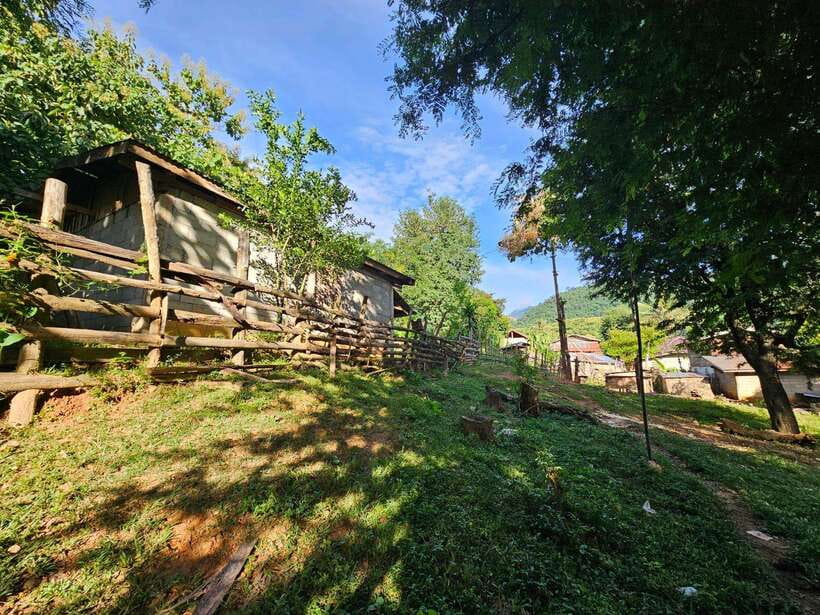
- Visit ThaOuy village: Walk among traditional homes, a temple, and a school with a guide who knows local families.
- See rural work up close: The farm includes rubber, tropical fruit, pigs, chickens, geese, ducks, and private ponds.
- Choose your forest walk: Spend about 30 minutes or up to an hour walking through native forest and small crop plots.
- Book a private outing: Pickup, an air-conditioned car, lunch, a local guide, and all activities are included.
Leaving Luang Prabang for ThaOuy
Your day begins with pickup at your Luang Prabang accommodation. You wait in the hotel lobby or reception area, then travel by air-conditioned car for about an hour into the hills outside the city.
That transfer matters. You are not simply changing neighborhoods. The tour moves from the busy river town into a smaller rural setting where farming, fishing, temple life, and village relationships shape the day. The road time also means you should treat this as a full-day commitment, not a quick morning add-on.
The air conditioning is a practical comfort, especially if the weather is hot. You may also get scenic views on the way, though the main point of the drive is reaching the farm and village rather than sightseeing from the car.
The private group format gives the day a more personal feel. You can ask questions, take your time with the fishing instruction, and choose the length of the forest walk instead of following a large group on a fixed schedule. Still, the drive can feel long if you prefer compact excursions. If you have only a short stay in Luang Prabang, compare this with a nearby half-day activity before booking.
More things to do in Luang Prabang:
- Luang Prabang: Cruise to Pak Ou Caves & Kuang Si Waterfalls
★ 5.0 · 1,769 reviews - Luang Prabang: Cruise to Pak Ou Caves & Kuang Si Waterfalls
★ 4.8 · 1,360 reviews - Half Day Mekong Cruise to Pak Ou Caves (Morning / Afternoon)
★ 4.6 · 290 reviews
A working farm with rubber, fruit, and animals
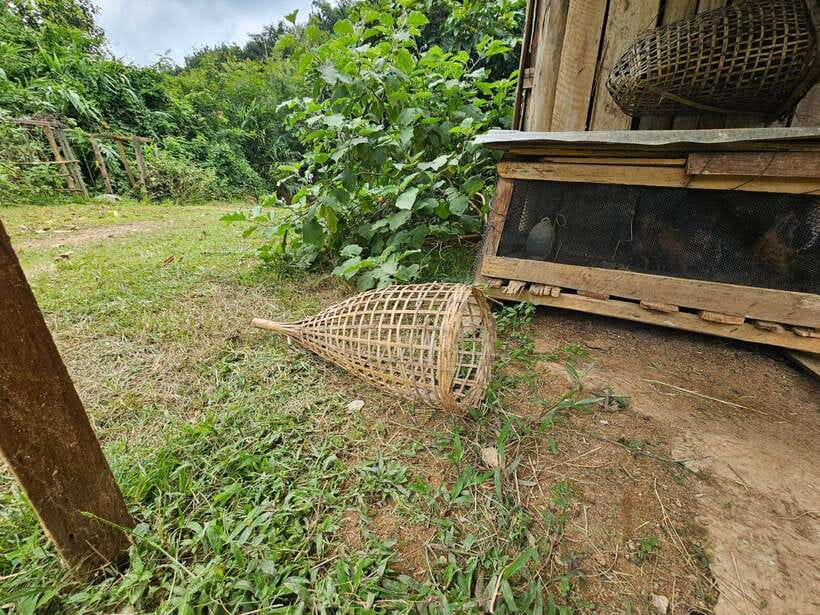
The morning takes place at a local farm where the owners live and work. This is a subsistence-style operation with several parts: a rubber plantation, an orchard of tropical fruit, animals, and private fishing ponds.
I like this part because it gives you a clearer picture of how food and income connect in the countryside. Rubber trees represent one form of farm work, while fruit, poultry, pigs, and fish add other sources of food and earnings. Instead of looking at one crop in isolation, you see a small working system.
The farm includes pigs, chickens, geese, and ducks. Those details may sound ordinary, but they help you understand the practical rhythm of rural life. You are seeing animals that are part of the household economy, not a collection assembled for tourists.
You can also see traditional Buddhist crafts made from banana leaf. This adds a spiritual and artistic note to the farm visit. Banana leaf is not just a useful plant material here. It can be shaped into items connected with Buddhist practice and temple offerings.
The setting is informal. You should expect a real farm, not a museum with labels and polished walkways. That can mean uneven ground, sun, mud, insects, and a few rough edges. Wear comfortable shoes, bring sunscreen and a hat, and keep your phone charged if you want photos.
Learning traditional net fishing beside the ponds
Fishing is the most active part of the morning. A local expert shows you how to use a traditional net, then gives you the chance to try it yourself.
You do not need to arrive as an experienced angler. The point is the instruction and the attempt. You might catch fish for lunch, but you should not treat that as a promise. The meal includes fish, yet the tour description makes clear that catching one yourself is a possibility rather than a guarantee.
That uncertainty is part of the appeal. A staged activity gives you a sure result, but this one leaves room for a genuine small adventure. You may learn quickly, or you may make a spectacularly ineffective first attempt. Either way, you get a better sense of the skill involved in local fishing.
The ponds also make a pleasant place to slow down. After the activity, you can relax near the water and watch lunch being prepared. If you are not keen on handling a net, you can still take part by watching the instruction and enjoying the farm setting, though the activity is clearly aimed at people who want to try.
Lunch under the bamboo hut
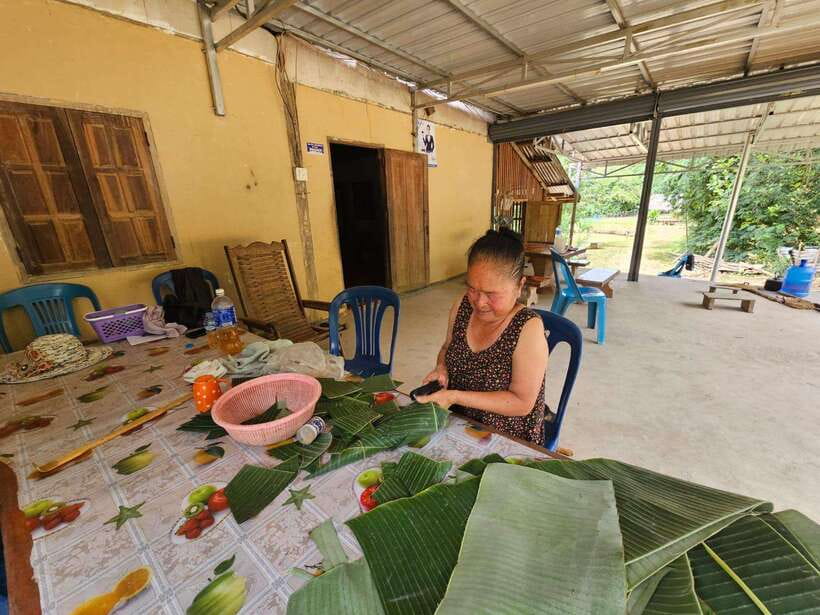
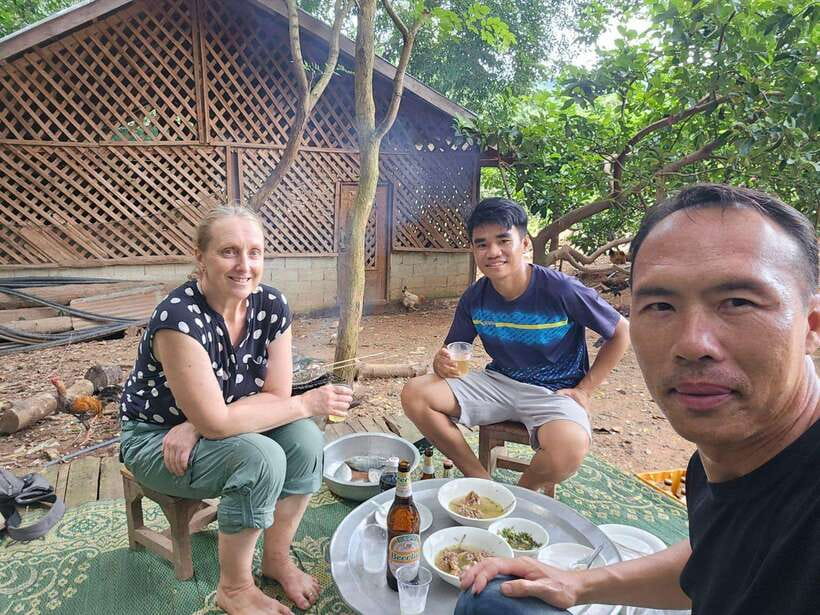
Lunch is cooked at the farm and served in the shade of a bamboo hut near the fish ponds. The meal includes a choice of fish, vegetables, and rice, prepared in a local style.
This is one of the strongest parts of the day because it ties the farm visit together. You have seen the ponds, learned about fishing, and then sit down to eat in the same rural setting. The meal is not presented as a restaurant course. It is a simple local lunch, and that is exactly the point.
You should come ready for a straightforward meal rather than a menu with many choices. The available information does not specify dietary alternatives, so tell the provider about food requirements before the tour if you have them. Do not wait until the meal is served.
The bamboo hut provides shade, but you are still outdoors. A sun hat, sunglasses, and sunscreen are useful even when you are not walking. The relaxed lunch break also gives you time to ask your local guide about the farm, the village, and the food.
A completely different kind of day:
- Luang Prabang: UNESCO World Heritage City Highlights Tour
★ 4.6 · 201 reviews - Luang Prabang: Afternoon Kuang Si Waterfalls & Sunset Cruise
★ 4.6 · 158 reviews - Luang Prabang: Evening Cooking Class & Local Baci Ceremony
★ 4.9 · 151 reviews - Luang Prabang: Kayak Tour to Pak Ou Caves
★ 4.4 · 115 reviews
A five-minute walk into village life
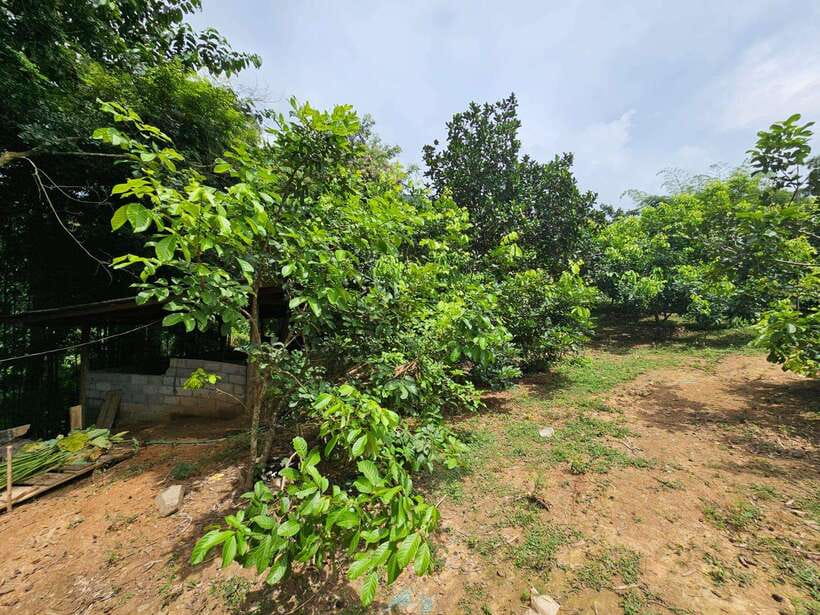
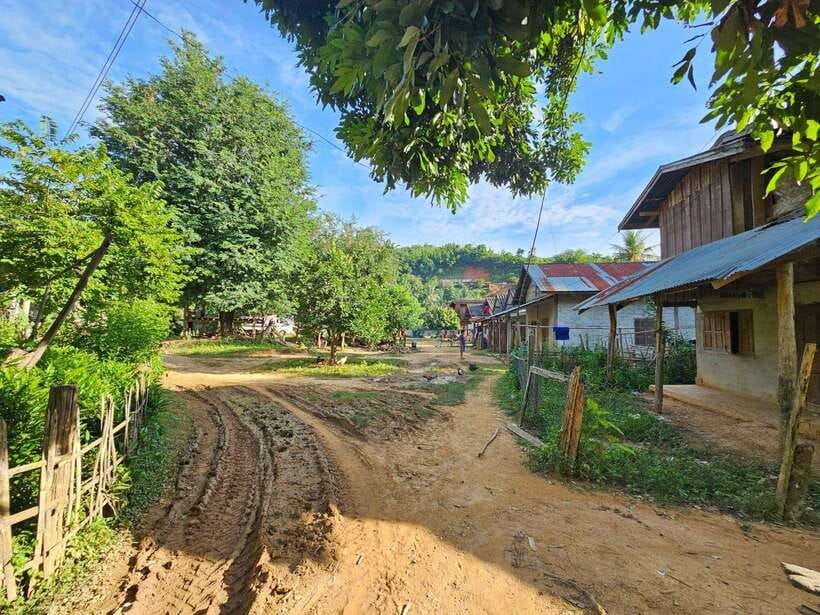
After lunch, you walk for about five minutes from the farm to the small hill village. The short distance is useful: you move directly from a working household farm into the community that surrounds it.
The walk through the village takes you past traditional houses, a temple, and a school. You will learn about local life as you go, rather than receiving all the information in a formal talk. The guide knows the people who live there as family and friends, which can make introductions feel more natural.
That relationship is important. Visiting a village can easily become a quick look from the outside. Here, the stated aim is to meet local residents and interact with them respectfully. You should still remember that this is someone’s home, not a public attraction. Listen carefully, follow your guide’s lead, and ask before taking close-up photographs.
The school gives the visit a practical connection to the tour fee. Part of the booking proceeds goes toward the village school, along with support for local enterprise and children’s education. The exact percentage is not stated, so you should not assume a particular amount. What is clear is that access to the property and village is linked to direct local benefit.
The school, temple, and houses also show three parts of community life in one short walk: education, religious practice, and home life. That combination gives the village visit more meaning than a simple photo stop.
Choosing the forest walk
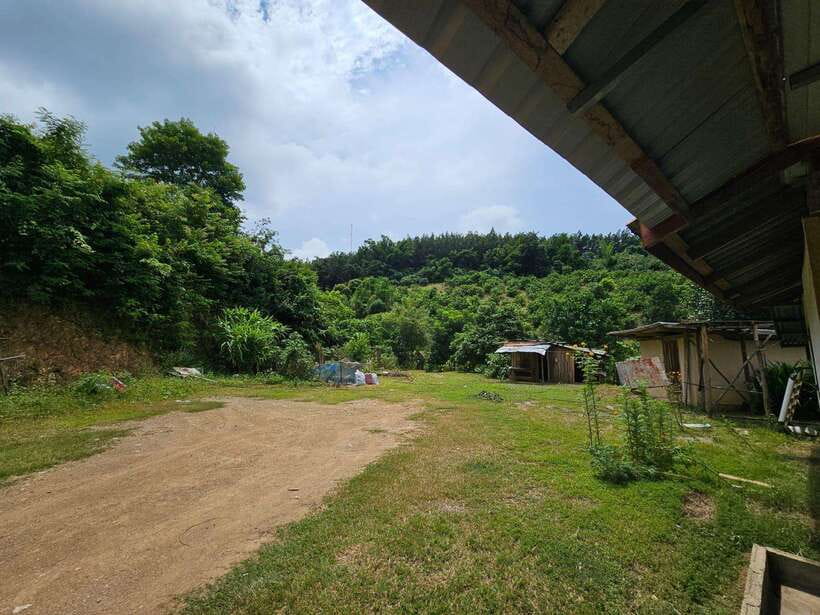
The forest area adjoins the village. You can choose a walk of about 30 minutes or up to an hour, depending on what suits you.
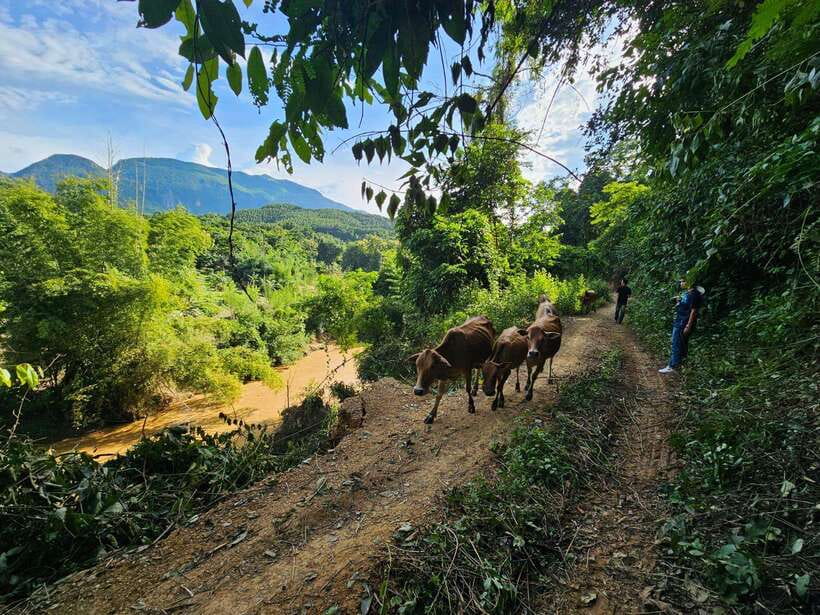
The forest is described as native and untouched, with bamboo and large teak, rosewood, and mahogany trees. Small plantations of sesame, tapioca, and rice appear among the trees. This is not just a walk through woodland. It is a look at how cultivated plots and forest areas exist side by side.
I like the choice of duration. A 30-minute walk may be enough if you want a gentle afternoon outing after lunch. An hour gives you more time among the trees and crops. Since the route can include a creek crossing, you should wear shoes that are comfortable on uneven ground and suitable for outdoor conditions.
The forest portion is also the least predictable section of the day. The exact route and walking pace depend on local conditions and your group’s preference. You might return to the village, or continue around, cross a creek, and finish back at the farm. That flexibility is useful, but it means you should not expect a tightly measured trail walk.
Returning through the farm and back to Luang Prabang
At the end of the walk, you either return to the village or complete the loop back to the farm. From there, you make the one-hour drive back to Luang Prabang.
The return transfer gives you a clear endpoint. There is no need to arrange a separate taxi from the village or find your way back after the forest walk. Pickup and drop-off at your accommodation are included, as is the air-conditioned car.
The full day runs for about eight hours: roughly two hours of driving and six hours for the farm, lunch, village, forest, and related sightseeing. That balance is worth noting when planning your Luang Prabang schedule. You will have little time for another major activity that day.
The tour is offered with guides who speak English, Laotian, or French. A French-speaking guide may be especially helpful if you prefer to discuss village customs and farming details in French. Since no individual guide names are provided, confirm the language you need when reserving.
Is $135 a fair price?
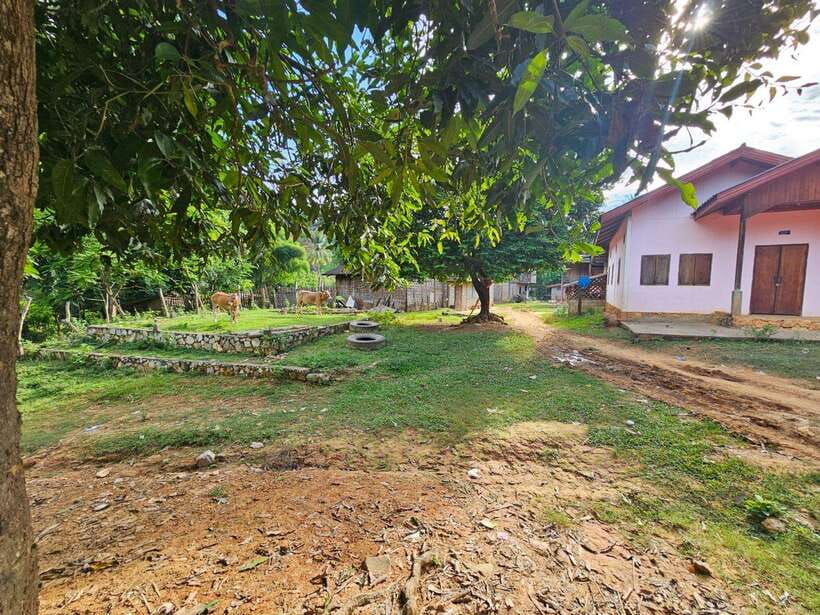
At $135 per person, this is not the cheapest way to spend a day outside Luang Prabang. The value depends on what you want to buy with your time.
You are paying for a private group experience, hotel pickup and drop-off, an air-conditioned car, a local guide from the farm and village, lunch, and all listed activities. You are also contributing to local enterprise and children’s education through the village arrangement.
If you only want scenic views or a short countryside visit, the price may feel high. You could find simpler outings that cost less. But this day includes transport, a full meal, several guided activities, and access to a private farm and village property. The local benefit is also part of the value, even though the exact share of the fee is not stated.
I would judge the price most favorably for a small private group that wants personal contact and a full rural day. For solo visitors, the per-person cost may require more thought. For people sharing the experience in a private booking, the comfort and flexibility make the fee easier to justify.
Free cancellation is available up to 24 hours before the tour for a full refund, and you can reserve now and pay later. Those terms are useful if your Luang Prabang plans may change.
Who will enjoy this day most?
I would choose this experience if you want:
- A genuine rural setting rather than a staged cultural performance
- A chance to take part in fishing and food preparation
- Direct contact with a small village community
- A private group and flexible forest walk
- A tour with a stated contribution to local enterprise and schooling
- A full day away from the city
You may want to choose something else if you dislike long road transfers, outdoor conditions, basic facilities, or uncertain activity results. The farm is active and practical, not designed as a luxury attraction.
Families may appreciate the animals, fishing, banana leaf crafts, and school visit, though the tour data does not specify a minimum age or child pricing. Ask the provider about suitability for young children before booking.
The outing also suits people who enjoy asking questions. You can learn more if you engage with the guide and local residents. If you prefer a silent sightseeing ride with a fixed sequence of famous sights, this will feel less satisfying.
What to bring for the farm and forest
Pack lightly, but bring the items that make an outdoor day easier:
- Comfortable shoes
- Sunglasses
- Sun hat
- Sunscreen
- A charged smartphone
The charged phone is useful for photos and practical communication. The shoes matter most. You will move around a farm, village, and forest area, and the route may include a creek crossing.
Because lunch is served outdoors, sun protection is sensible even if the morning begins cool. The available information does not list rain gear, insect repellent, or water, so ask the provider what is supplied and check the weather before departure.
My verdict: book it for connection, not sightseeing
I recommend the Luang Prabang Authentic Lao Village and Farm Experience if you want a personal day built around rural life. The strongest elements are the traditional net fishing, lunch beside the ponds, introductions in ThaOuy, and the chance to see farming, worship, schooling, and forest use in one small community.
The tradeoff is clear: you spend two hours in the car and pay $135 for an experience without luxury finishes or guaranteed fishing success. For me, that is a fair exchange when the goal is contact with local people and support for the village, not simply collecting another scenic viewpoint.
Book it if you are ready to get outdoors, accept a little uncertainty, and treat the village with respect. Skip it if you want a short, polished attraction close to town. For the right kind of visitor, this is the sort of day that can remain more memorable than another temple stop.
FAQ
Where does the tour take place?
The tour visits ThaOuy, a local hill village in the hills outside Luang Prabang, along with a nearby farm and forest area.
How long does the experience last?
The full activity lasts eight hours, including about one hour of travel each way between Luang Prabang and the village area.
Is hotel pickup included?
Yes. Pickup and drop-off from your accommodation in Luang Prabang are included. You should wait in the lobby or reception area.
What type of transportation is provided?
An air-conditioned car is provided for the transfers between Luang Prabang and the village and farm area.
Is this a private tour?
Yes. The activity is offered for a private group.
What languages can the guide speak?
The available guide languages are English, Laotian, and French.
What activities are included?
The day includes farm activities, traditional net fishing with local instruction, lunch, a village visit, sightseeing, walking, and a forest walk.
What is served for lunch?
Lunch is cooked at the farm and includes fish, vegetables, and rice. You eat in the shade of a bamboo hut near the fishing ponds.
How long is the forest walk?
You can choose a walk of about 30 minutes or up to one hour.
What should I bring?
Bring comfortable shoes, sunglasses, a sun hat, sunscreen, and a charged smartphone.
How much does the experience cost?
The listed price is $135 per person.
Can I cancel for a refund?
Yes. You can cancel up to 24 hours in advance for a full refund.
Just added in Luang Prabang
- The Namkhan – Traditional Lao Bamboo Weaving★ 5.0 · 4 reviews
- Unwind with a Sunset Cruise on the Mekong River★ 5.0 · 4 reviews
- Night Bus to Huay Xai, Chiang Rai, Thailand – Hotel pickup★ 3.0 · 2 reviews
- Sunset Cruise in Luang Prabang with Live Performance★ 4.5 · 3 reviews
- The Namkhan – 90 Minutes Private Signature Scrub and Massage★ 5.0 · 2 reviews
- Private Tour: Half-Day City Tour of Luang Prabang★ 4.5 · 4 reviews
- Trek to Tad Sae Waterfalls, Local Village★ 4.5 · 2 reviews
- Private Luang Prabang City Tour★ 5.0 · 3 reviews
Farms, compared.
Full Day Visit & Cook at Local family’ farm and Hiking to Kuang si waterfalls
Read our review →Browse the lists this tour appears in