
Reviewed · FARMS
Living Land Rice Farming Experience
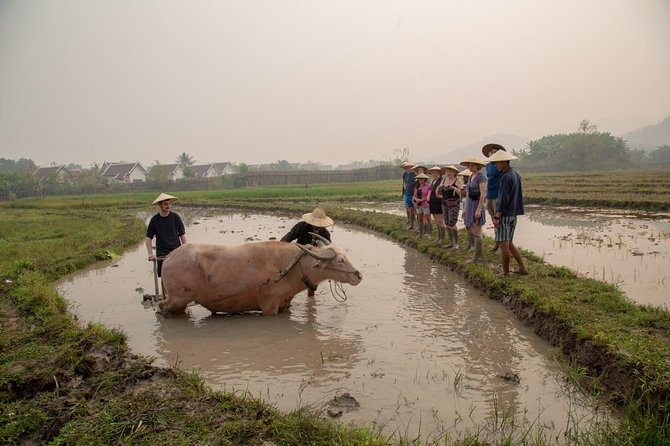
Get your feet ready for the rice paddy. The Living Land Rice Farming Experience gives you a hands-on look at how rice reaches a Lao table, from planting and plowing to harvesting and cooking. I like the chance to work through the farming process instead of simply watching it, and I like that proceeds help more than 60 local students with their studies. The main catch is simple: this is real farm work, so mud, bare feet, and physical effort are part of the deal.
The farm sits a short drive outside Luang Prabang, with rice fields and mountains around it. I also like the friendly guides, including Johnny, Kham, Sai, and Geo, who explain the work through family stories and practical demonstrations. Check your booking carefully for lunch, though, since it is included only with the package that specifically lists lunch.
In This Review
- Key points before you book
- A short ride from Luang Prabang to working fields
- Getting your hands dirty with rice
- Water buffalo, planting, and the full rice cycle
- Bamboo weaving, sugar cane, and village skills
- Rice snacks and the Luang Prabang lunch
- Is $64.17 a fair price?
- Adding waterfalls or caves after the farm
- Guides make the difference
- Who will enjoy this most?
- Practical details that matter
- Should you book Living Land Farm?
- FAQ
- Where does the Living Land Rice Farming Experience take place?
- How long does the experience last?
- Is lunch included?
- Will I get muddy?
- How many people can join the tour?
- Can I cancel for a refund?
Key points before you book
- Fourteen stages of rice production: You can take part in planting, plowing, transplanting, harvesting, threshing, and cooking rice.
- Mud is part of the experience: You may work barefoot and knee-deep in a paddy, so shorts and clothes that can get dirty make sense.
- A working community farm: The experience supports village education, including studies for more than 60 students and free English classes.
- More than rice: Bamboo weaving, sugar cane pressing, and blacksmithing add a wider look at rural life.
- Lunch needs checking: A meal of Luang Prabang dishes and fruit is available, but not with every booking option.
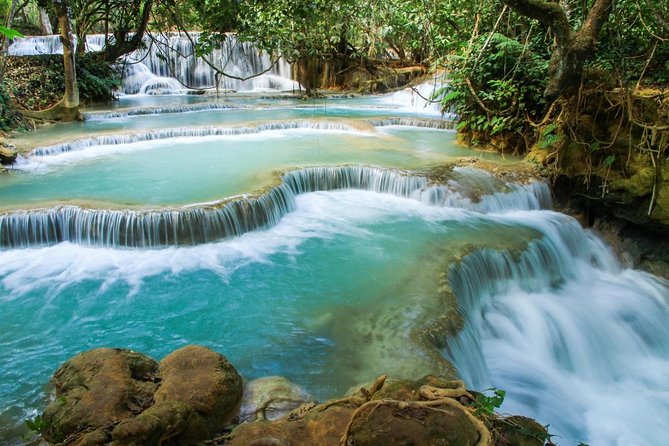
- Optional add-ons require care: Waterfalls and caves can be added, but transport arrangements have caused delays for some visitors.
A short ride from Luang Prabang to working fields
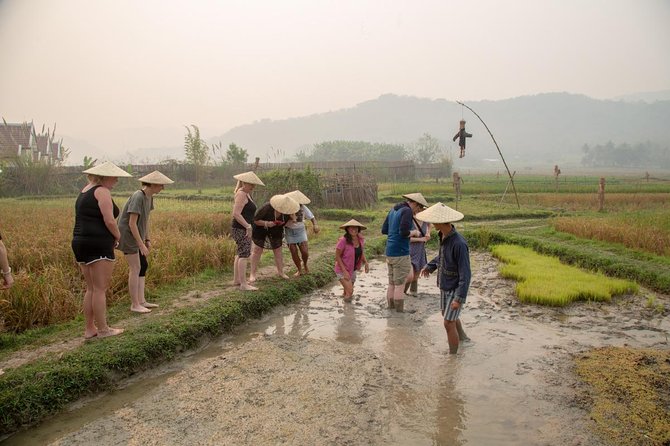
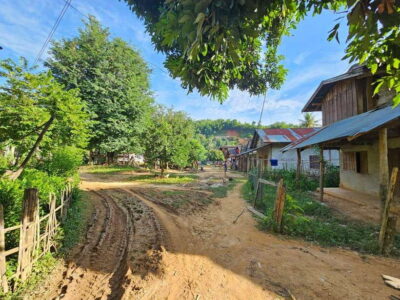
Living Land Farm is just outside Luang Prabang, close enough for a half-day outing but far enough to feel rural. The setting includes rice fields and mountain views, which gives the experience a pleasant sense of place before the work even begins.
Pickup is offered, and the stated start time is 8:00 a.m. The farm program itself is described as beginning at 8:30 and lasting about three hours and 20 minutes. With transport and any meal included, you should allow roughly five hours in total.
The group limit is 20 people. That is large enough to keep the outing social, but small enough for hands-on stations to work reasonably well. If you want personal attention from the guide, arriving ready to participate matters more than hanging back with a camera.
The farm supports local education in a direct way. Proceeds help more than 60 students continue their studies, and the organization also provides free English classes for the village. That gives the price more meaning than a standard sightseeing ticket, provided you choose a package whose inclusions are clear.
More things to do in Luang Prabang:
- Luang Prabang: Cruise to Pak Ou Caves & Kuang Si Waterfalls
★ 5.0 · 1,769 reviews - Luang Prabang: Cruise to Pak Ou Caves & Kuang Si Waterfalls
★ 4.8 · 1,360 reviews - Half Day Mekong Cruise to Pak Ou Caves (Morning / Afternoon)
★ 4.6 · 290 reviews
Getting your hands dirty with rice
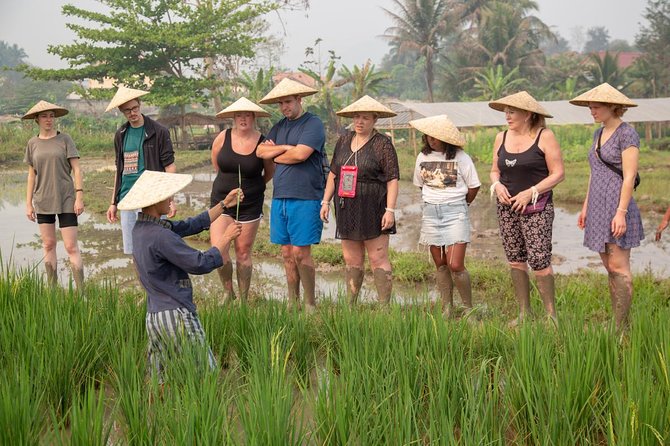
The heart of the experience is the rice field. You do not just hear that rice farming is hard work. You get to try the physical steps yourself.
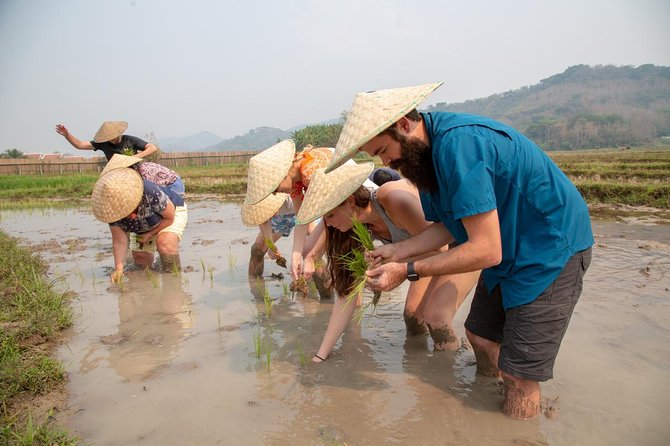
The exact farm tasks depend on the season and field conditions, but the program covers the rice cycle from seed to meal. You may help prepare a planting trench, work with a water buffalo to till the field, plant seeds, transplant young rice, harvest mature stalks, and process the grain.
One of the most useful features is the focus on all 14 steps of traditional rice production. It is easy to think of rice as a simple crop: plant it, wait, and harvest it. The farm shows how much labor comes between those points and the final bowl of rice.
Expect to remove your shoes before entering the field. Some activities involve mud around your feet and legs, and one account describes working knee-deep in it. Wear shorts or clothes that can be washed easily. I would also avoid bringing anything you cannot afford to drop, stain, or splash.
The physical work is manageable for most people, but it is not a passive cultural talk. The additional information says most people can participate, yet you should still tell the operator about any limits before booking if bending, muddy ground, or farm tools could be difficult for you.
Water buffalo, planting, and the full rice cycle
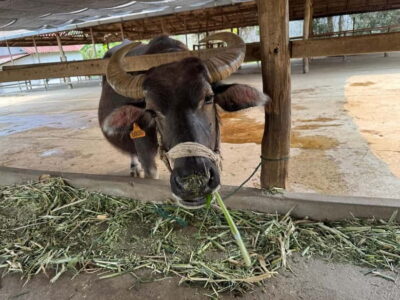
The water buffalo is a memorable part of the demonstration. You may help prepare the soil behind the animal, giving you a better feel for how traditional farming works without engines or large machines.
The guides make the process easier to understand by connecting each task to village life. Johnny has been praised for explaining rice farming through family stories, while Kham has been described as friendly, fun, and clear in his teaching. Sai and Geo have also received strong praise for making the activities easy to follow.
The tone is practical. You learn by doing, then by seeing how the next step follows from the last one. Planting is connected to harvesting. Harvesting leads to processing. Processing leads to cooking and eating.
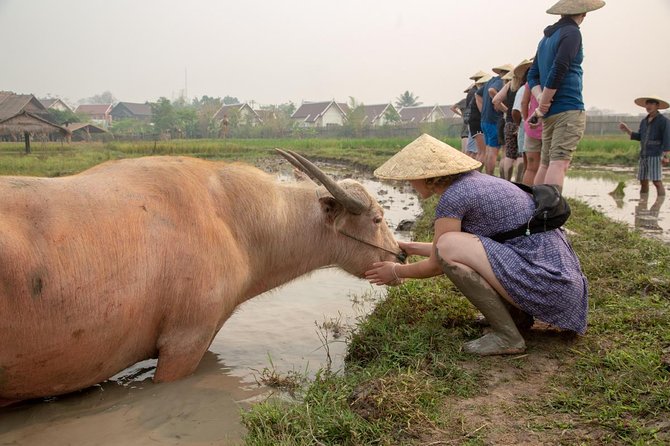
The animal interaction may not be the main reason to book. One person found an interaction with a water buffalo named Bentley unnecessary, while another found a buffalo called Suzanne gentle and charming. If you are mainly interested in farming, you can treat this as a short part of the wider program rather than the central attraction.
Bamboo weaving, sugar cane, and village skills
Rice is the main subject, but the farm adds several other activities that widen the picture. Bamboo weaving shows how a common local material becomes a useful household item. Sugar cane pressing demonstrates another traditional food process and gives you a break from the muddy field.
Blacksmithing is also included in the activity list. It is a small but useful reminder that rural life depends on many skills, not just farming. The experience works best when you approach these stations as working demonstrations, not polished museum displays.
The program is especially useful if you want to understand daily life around Luang Prabang beyond temples and the old town. You see the labor behind food, tools, and household goods. You also have the chance to ask questions in a setting connected to the local community.
Some details will depend on the guide and the day. The strongest reports describe an interactive program with plenty of chances to try each task. If you prefer a highly scripted tour with every minute fixed, this may feel more informal.
A completely different kind of day:
- Luang Prabang: UNESCO World Heritage City Highlights Tour
★ 4.6 · 201 reviews - Luang Prabang: Afternoon Kuang Si Waterfalls & Sunset Cruise
★ 4.6 · 158 reviews - Luang Prabang: Evening Cooking Class & Local Baci Ceremony
★ 4.9 · 151 reviews - Luang Prabang: Kayak Tour to Pak Ou Caves
★ 4.4 · 115 reviews
Rice snacks and the Luang Prabang lunch
The farm program ends with a tasting of rice-based snacks. This is a welcome finish after the field work, and it lets you experience rice in forms beyond the familiar bowl served with a meal.
Lunch is available as part of the option that includes it. The meal is described as a selection of typical Luang Prabang dishes and fruit, and it has been one of the most praised parts of the outing. I would include lunch if your schedule allows and the added cost is reasonable.
There is an important booking detail here. The general description presents lunch as part of the experience, while the inclusions specify that lunch is provided only when you select the lunch option. Do not assume the basic price includes a meal. Confirm the exact package before paying.
The meal also gives the farming lesson a satisfying purpose. You have just seen how much work goes into rice, and then you sit down to eat local food made with the products and traditions being explained. That connection is the best reason not to rush away after the field activities.
Is $64.17 a fair price?
At $64.17 per person, this costs more than a simple half-day visit to a farm. The value comes from the combination of instruction, practical activities, community support, and possible transport. You are paying for a structured cultural experience rather than admission to a field.
I consider the price reasonable if the package includes pickup and lunch, especially for someone who wants a meaningful activity rather than another viewpoint or temple stop. It is less attractive if lunch is excluded, transport is unclear, or you plan to leave after only the first part.
The farm itself is the strongest value. The work is unusual, memorable, and tied to local life. A guide who can explain the family and village connections adds a level of detail you would not get by walking past rice fields on your own.
There is also a serious price warning. One person reported being charged more than the direct farm price through a third-party booking channel, especially noticeable for a family of four. Compare the $64.17 rate with the farm’s direct price before booking, and decide how much convenience, pickup, and customer support are worth to you.
Adding waterfalls or caves after the farm
The rice experience can be combined with extra trips to waterfalls, caves, and other sights around Luang Prabang. On paper, that makes an appealing full-day plan: farming in the morning, then a natural attraction in the afternoon.
I would handle this add-on with care. Transport problems have caused wasted time, including a case where a group was taken back to the hotel after lunch before being driven out past the farm again to reach the waterfall. Another outing involved waiting for a guide and dealing with confusing vehicle arrangements.
If you add a waterfall or cave excursion, confirm the order of stops before departure. Ask specifically if the vehicle will go directly from the farm to the extra attraction, and clarify the return plan. Do not assume that an all-day booking means the day will run as one continuous route.
The farm experience and the add-on transport are not necessarily the same in quality. The farm program has received strong praise for its teaching and organization, while the wider transport arrangements have been less dependable. For a smoother day, I would book the farm first and add another stop only after the driver and schedule are clear.
Guides make the difference
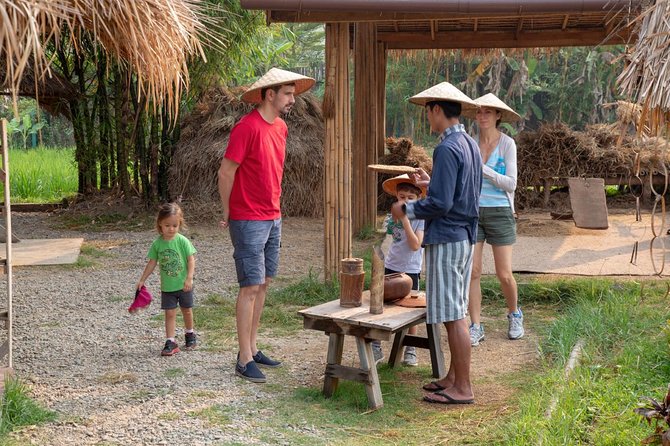
A good guide turns a set of farm tasks into a useful lesson. Johnny has been praised for his family stories and explanations of organic rice farming. Kham has been singled out as a friendly teacher who made the work both fun and informative.
Sai and Geo have also been praised for clear instruction and a warm manner. These names suggest that the quality of the day can depend on who leads your group, but the experience has a strong record overall, with a 4.9 rating from 93 reviews and a 97 percent recommendation rate.
The best approach is to ask questions as you work. How long does each rice stage take? Which tasks are done by hand? How does the village use water buffalo? What happens to the rice after harvest? The farm setting gives you a much better chance to discuss these subjects than a quick photo stop beside a field.
I would not expect a formal lecture at every station. The program is active and social. You learn through demonstrations, family examples, and your own attempts with the tools and materials.
Who will enjoy this most?
I recommend the experience to anyone who wants a practical connection to Laos. It suits couples, families, and small groups who enjoy trying local work and do not mind getting dirty.
Children may find the mud, buffalo, and hands-on tasks memorable, though parents should decide if the physical work and field conditions suit them. The group maximum is 20, so the outing can include a mix of ages and energy levels.
This is also a good choice for anyone who has already seen Luang Prabang’s major temples and wants a different side of the area. Instead of looking at rural life from a road, you take part in a few hours of it.
I would skip it if you strongly dislike mud, removing your shoes, bending in a field, or informal rural activities. I would also think twice if you have a tightly packed day, since the farm takes about five hours with transport and lunch, and add-on excursions may run late.
Practical details that matter
Confirmation is sent within 48 hours of booking, subject to availability. The experience accepts mobile tickets, offers pickup, and allows group discounts.
The tour requires good weather. If poor weather forces cancellation, you are offered another date or a full refund. It also requires a minimum number of participants, so a cancellation for low enrollment leads to another date or experience, or a full refund.
Your own cancellation terms are stricter. The booking is non-refundable and cannot be changed for any reason if you cancel or request an amendment. Check your plans before paying, especially during a short visit to Luang Prabang.
For clothing, choose shorts or lightweight clothes that can get muddy. Bring a change of clothes if your schedule continues afterward. The supplied information does not list specific footwear, towels, or toiletries, so confirm those points if you need them.
Should you book Living Land Farm?
Yes, if you want an active cultural experience and are happy to work for your lunch. The rice lesson is the main reason to go, and the best parts are the muddy field work, the many stages of rice production, the friendly teaching, and the clear benefit to local students.
Choose the lunch option if you want the full farm-to-table connection. Compare prices with direct booking, then confirm pickup, lunch, and any add-on route in writing.
I would book the farm as a stand-alone half-day activity unless the waterfall or cave transport is carefully explained. For $64.17, it offers good value when the package includes the elements you want and when you treat it as a real rural activity, not a polished sightseeing show.
FAQ
Where does the Living Land Rice Farming Experience take place?
It takes place at Living Land Farm just outside Luang Prabang, overlooking rice fields and mountains.
How long does the experience last?
The overall experience is approximately five hours. The farm program itself lasts about three hours and 20 minutes, beginning around 8:30 a.m., with the stated meeting time at 8:00 a.m.
Is lunch included?
Lunch is included only when you choose the booking option that specifically includes lunch. That meal consists of typical Luang Prabang dishes and fruit.
Will I get muddy?
Yes, you should expect to work in the rice field, remove your shoes, and possibly stand in mud up to your knees. Wear clothes that can get dirty.
How many people can join the tour?
The activity has a maximum group size of 20 people.
Can I cancel for a refund?
The experience is normally non-refundable and cannot be changed after booking. If the operator cancels because of poor weather or because the minimum number of participants is not reached, you are offered another date or experience, or a full refund.
Just added in Luang Prabang
- The Namkhan – Traditional Lao Bamboo Weaving★ 5.0 · 4 reviews
- Unwind with a Sunset Cruise on the Mekong River★ 5.0 · 4 reviews
- Night Bus to Huay Xai, Chiang Rai, Thailand – Hotel pickup★ 3.0 · 2 reviews
- Sunset Cruise in Luang Prabang with Live Performance★ 4.5 · 3 reviews
- The Namkhan – 90 Minutes Private Signature Scrub and Massage★ 5.0 · 2 reviews
- Private Tour: Half-Day City Tour of Luang Prabang★ 4.5 · 4 reviews
- Trek to Tad Sae Waterfalls, Local Village★ 4.5 · 2 reviews
- Private Luang Prabang City Tour★ 5.0 · 3 reviews
Farms, compared.
Full Day Visit & Cook at Local family’ farm and Hiking to Kuang si waterfalls
Read our review →Browse the lists this tour appears in