
Reviewed · ALMS GIVING AND MONASTERY VISITS
Luang Prabang: Almsgiving Ceremony Offering
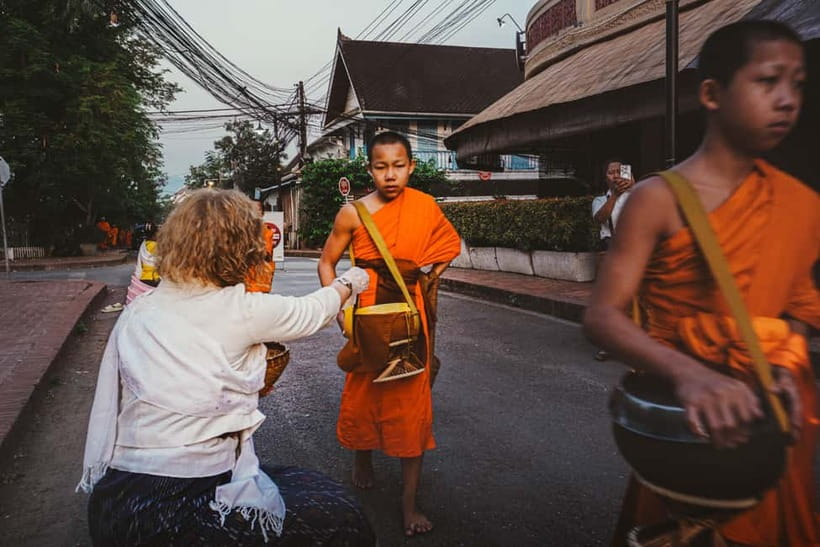
The morning begins before Luang Prabang fully wakes. This one-hour experience gives you a respectful way to witness Tak Bat, the daily almsgiving ceremony in which saffron-robed monks walk silently through the streets while receiving food. I like the included Lao offering set and the visit to a nearby temple, which add meaning beyond simply watching from the roadside. The main concern is reliability: two customers reported being unable to find the guide or experiencing a no-show.
I also like the chance to meet Johnny, a guide who was a monk for 10 years and can explain Buddhist practice from personal experience. The quiet meeting point near Wat Nong, described by one participant, can make the ritual feel less crowded and more reflective. Still, confirm the meeting details before setting out, since the stated starting point is L’Elephant and transport to the ceremony spot is not included.
In This Review
- Key details before you book
- Why Tak Bat matters in Luang Prabang
- Starting early at L’Elephant
- Receiving the traditional offering set
- Watching the saffron-robed procession
- Visiting a nearby temple after Tak Bat
- What the $25 price really buys
- Guide quality and the risk of a missed meeting
- Who will enjoy this one-hour experience
- Practical etiquette for a respectful morning
- Should you book the Luang Prabang almsgiving ceremony?
- FAQ
- Where does the experience start?
- How long does the experience last?
- What food is included?
- Is a scarf provided?
- What should I wear?
- Can I take photographs?
- What languages are available?
Key details before you book
- The ceremony happens at sunrise: You will need to be ready early, when Luang Prabang’s streets are quiet and the light is soft.
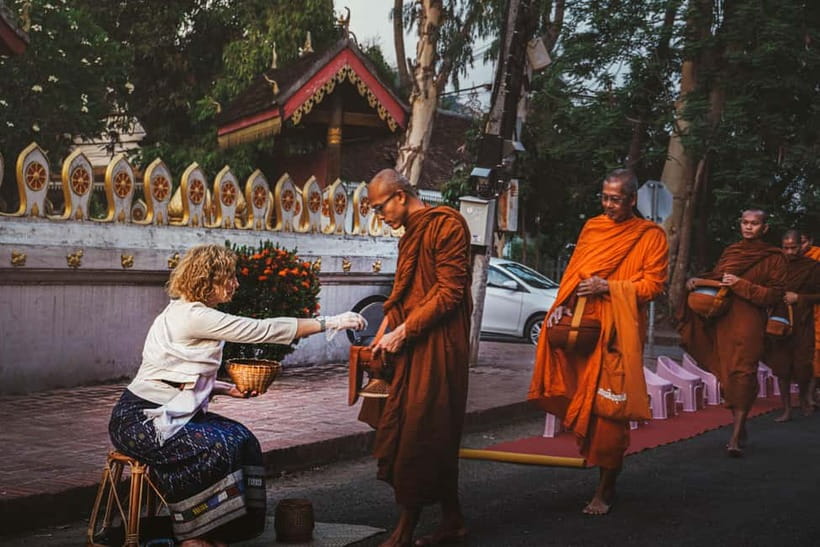
- Food is supplied: Your traditional offering set includes sticky rice, bananas, and snacks, so you do not need to arrange the alms yourself.
- Modest clothing is required: Cover your shoulders and knees, and bring a scarf or use the local-style scarf provided.
- The temple visit adds context: After the almsgiving, you visit a nearby temple to learn more about Buddhist practices.
- Guidance quality can vary: Johnny receives strong praise for explaining Buddhism and monastic life, but two people reported difficulty locating the guide.
- The price is $25 per person: That is fair if you value the food, cultural explanation, and temple visit, but less attractive if you only want to watch the procession.
Why Tak Bat matters in Luang Prabang
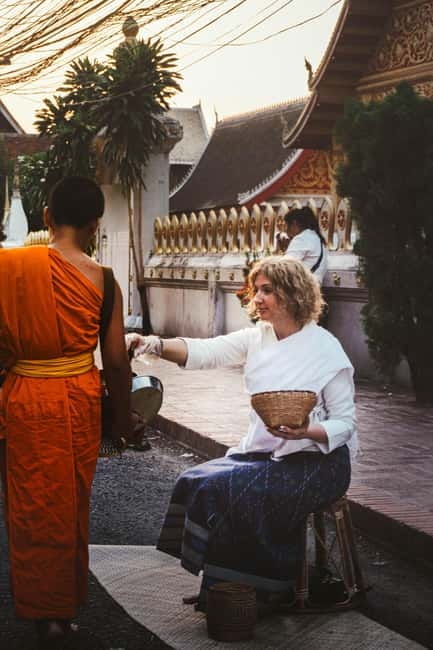
Tak Bat is not a staged show arranged for sightseeing. It is a daily religious practice in which Buddhist monks receive food from local people as they make their morning rounds. The ritual links the monastic community with householders, who gain the chance to make an offering and support the monks.
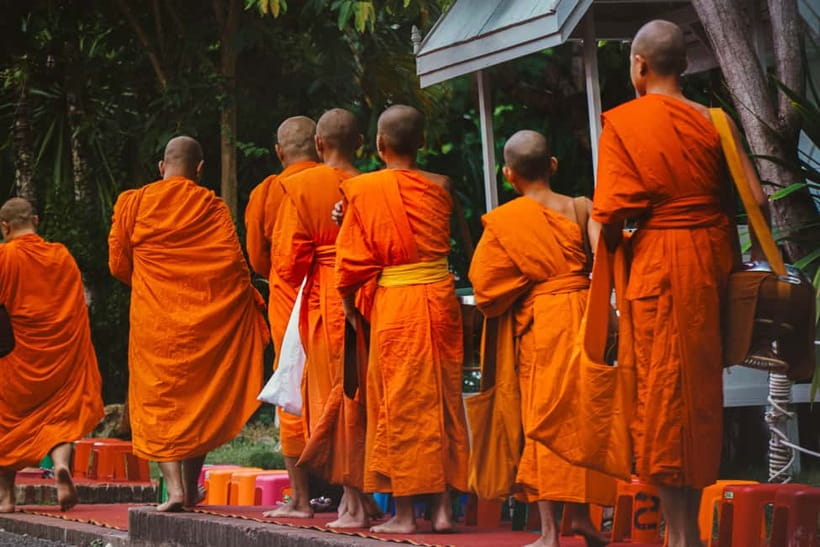
You will see monks in saffron robes walking in a line, often in silence, carrying alms bowls. People offering food sit or kneel along the route. The mood is calm and serious, and the quiet is part of what gives the ceremony its force.
Your role matters here. You are not simply lining up for a photograph. You are taking part in a ritual that calls for modest dress, stillness, and care. The provided scarf helps you dress in a local style, but you still need to make sure your shoulders and knees are covered.
The activity includes guidance on respectful behavior and traditions. That is useful because the ceremony has rules that are easy to miss if you arrive alone. Do not touch the monks or their alms bowls. Keep flash switched off. Let the ceremony happen without trying to direct it for your camera.
More alms giving and monastery visits:
- Luang Prabang: Evening Cooking Class & Local Baci Ceremony
★ 4.9 · 151 reviews - Luang Prabang: Foodie Walking Tour & Monk Blessing
★ 4.7 · 66 reviews - Home-cooked dinner & Baci ceremony with Villagers in Ban Nasang
★ 5.0 · 12 reviews
Starting early at L’Elephant
The listed starting location is L’Elephant, and the total activity lasts about one hour. Since this is a sunrise experience, you should plan your morning around an early start and allow time to reach the meeting point without rushing.
There is one practical wrinkle. A participant described meeting the guide near Wat Nong on a quiet side road, while the stated starting location is L’Elephant. Since transfers to the ceremony spot are not included, I would confirm the exact meeting point and walking instructions before the morning begins.
That small check could save you from missing the most important part. Two people reported that they could not locate the guide, and one said the guide did not arrive. Those reports are a clear reason to keep your booking details close and make sure you understand where to go.
Once you meet the group, the first part is an explanation of Tak Bat and the meaning of the offerings. The activity is listed with English and Thai language support. Johnny, also spelled Jonny in some customer comments, is praised for his explanation of Buddhism and monastic tradition. One person specifically noted that he had spent 10 years as a monk, which gives his teaching a personal point of view.
The listing also describes a live guide, but it says a guide is not included for explaining every step. That wording is confusing. In practical terms, you should expect some guidance, but do not assume a long formal lecture or constant narration. The best part of this format is likely the opportunity to ask questions at the right moments without having the ceremony talked over.
Receiving the traditional offering set
The price includes a traditional Lao offering set with sticky rice, banana, and snacks. You also receive a local-style scarf to wear during the ceremony.
Sticky rice is especially fitting here because it is a familiar Lao food and a practical alms offering. You are not left wondering what to buy or how much food is suitable. The prepared set also helps keep the experience orderly, which matters when the monks pass in a quiet line.
Your participation should be simple. Follow the guide’s instructions, keep your movements gentle, and place the food in the alms bowl only as directed. Do not touch the monks. Do not touch their bowls. If you are uncertain, pause and watch the person beside you rather than guessing.
A traditional offering can make the ceremony feel more personal than standing several steps away with a camera. At the same time, you should be honest with yourself about the purpose. This is not a food tasting or a photo session. The food is part of a religious act, and the calm pace may feel slow if you are expecting a busy sightseeing stop.
The included scarf is helpful, but you are also asked to bring a scarf. I would pack one anyway, especially if your clothing leaves your shoulders exposed. It is an easy way to avoid a last-minute problem.
Watching the saffron-robed procession
The monks’ procession is the central moment. You will see long lines of saffron-robed monks collecting sticky rice and other offerings as they move through Luang Prabang.
The setting is one of the experience’s strongest features. Luang Prabang is a UNESCO town, and the early morning brings a quieter side of it. Sunrise light, temple buildings, and silent movement can create beautiful photographs without turning the ritual into a spectacle.
The supplied information does not promise a particular street, group size, or exact number of monks. That is worth keeping in mind. The ceremony is a living local practice, so the scene may change from morning to morning. You might find a longer line, a shorter procession, or a different level of activity along the route.
One participant especially liked meeting near Wat Nong, away from the main crowd. That detail matters. A quieter side road may give you more room to behave properly and pay attention. It can also reduce the pressure to compete for a clear photograph.
Photography is allowed, but flash photography is not. Bring your camera, yet treat it as secondary. Frame your photos from a respectful distance, avoid touching anyone, and do not interrupt the line. The best pictures here are likely to come from patience rather than rapid shooting.
One customer said Johnny took some good photos during the offering. That can be useful if you are participating and cannot photograph yourself. Still, do not assume a personal photo service is guaranteed. The main purpose is the ceremony, not posed portraits.
More things to do in Luang Prabang:
- Luang Prabang: Cruise to Pak Ou Caves & Kuang Si Waterfalls
★ 5.0 · 1,769 reviews - Luang Prabang: Cruise to Pak Ou Caves & Kuang Si Waterfalls
★ 4.8 · 1,360 reviews - Half Day Mekong Cruise to Pak Ou Caves (Morning / Afternoon)
★ 4.6 · 290 reviews - Luang Prabang: UNESCO World Heritage City Highlights Tour
★ 4.6 · 201 reviews
Visiting a nearby temple after Tak Bat
After the almsgiving, the itinerary continues to a nearby temple for sightseeing and further discussion of Buddhist practice. This second stop gives the morning more shape. Without it, the activity would be over soon after the procession, and you might leave with only a surface impression.
At the temple, you can connect what you just saw with the wider role of Buddhist practice in Luang Prabang. The setting offers a calmer place to ask questions about monks, offerings, and monastic tradition. A guide with Johnny’s background can make this conversation more useful than a quick walk around a temple without context.
The temple visit is also a good reason to dress properly from the beginning. You will not need to change after the ceremony if your shoulders and knees are already covered.
The information provided does not name the temple included, aside from the meeting reference near Wat Nong. For that reason, ask which temple you will visit and how much time is planned there. The advertised duration is only one hour, so this should be a compact visit rather than a long temple tour.
What the $25 price really buys
At $25 per person, this experience is reasonably priced if you want a structured introduction to Tak Bat. You receive the offering food, a scarf, cultural guidance, the ceremony, and a temple stop. For someone visiting Luang Prabang for the first time, that removes several small barriers.
You do not need to search for suitable sticky rice before sunrise. You do not need to guess where to stand or how to behave. You also get a chance to ask about the ritual instead of leaving with only photographs.
The price is less compelling if you already understand Buddhist almsgiving and plan to watch independently. The ceremony itself is a local daily practice, not an attraction that requires a ticket. Your payment is mainly for organization, food, guidance, and the added temple explanation.
Transport is not included. That matters because the experience starts early and the exact meeting point needs confirming. If you are staying far from the center of Luang Prabang, factor in the effort of reaching L’Elephant or the final confirmed meeting spot.
The activity allows free cancellation up to 24 hours before departure and offers reserve-now, pay-later booking. Those terms make it easier to fit into a changing itinerary. They do not solve the meeting-point concern, so I would still confirm the arrangements shortly before the event.
Guide quality and the risk of a missed meeting
The strongest praise is directed at Johnny. People describe him as friendly, professional, and clear when discussing Buddhism. His former monastic experience is the sort of detail that can turn a short morning activity into a useful cultural lesson.
One person particularly valued the way he explained monastic tradition. Another liked talking with him about Buddhism. Those comments suggest that the discussion after the ceremony may be as valuable as the procession itself.
But you should not ignore the two serious complaints. One person said the guide did not show up. Another could not find the guide or hear from the organizer and ended up walking alone after paying.
That is a small number of negative reports compared with the positive ones provided, but the consequence is serious because the activity lasts only one hour. If you miss the meeting, the main event is difficult to recover.
I recommend checking the booking message for the latest meeting instructions, confirming the start point, and arriving early. Save the provider’s contact details before leaving your accommodation. If the meeting point is L’Elephant, ask whether you will then walk to the ceremony or meet somewhere else, since transfers are not included.
Who will enjoy this one-hour experience
I would choose this for you if you want a short, guided introduction to Luang Prabang’s religious life. It suits first-time visitors who want to participate rather than only observe, especially if buying the right food and understanding local etiquette feels uncertain.
It is also a good match for photographers who can work quietly and without flash. Sunrise in the UNESCO town can produce lovely images, but you need to accept that respectful behavior comes before getting the perfect shot.
The experience may suit visitors who prefer a small cultural activity that leaves the rest of the day open. One hour is short, and the nearby temple adds substance without taking over your schedule.
It is less suitable if you dislike early starts, want a long guided temple tour, or expect guaranteed transport. It may also disappoint anyone looking for a large sightseeing program with many stops. This is one ceremony, one nearby temple, and a focused explanation.
The activity is listed as wheelchair accessible, which is useful information for planning. Conditions along the specific ceremony route are not described, so you should confirm the meeting and walking arrangements if you need detailed access information.
It is listed as not suitable for babies under one year or people with altitude sickness. Luang Prabang is not presented here as an altitude-focused destination, but those restrictions are part of the booking information and should be taken seriously.
Practical etiquette for a respectful morning
Dress modestly before you leave. Cover your shoulders and knees, and bring a scarf even though a local-style scarf is provided.
Keep your voice low during the procession. Tak Bat depends on quiet movement, and a loud conversation can disturb both monks and people making offerings.
Do not touch the monks or their alms bowls. This rule is simple and important. If you are unsure when to offer the food, follow the guide’s signal.
Turn off your flash before the procession begins. A camera with a quiet setting is useful, but you should still take only a few photos and avoid blocking the route.
Bring your camera, a scarf, and your booking details. Because the activity begins early and transport is not included, the meeting information is just as important as the clothing advice.
Should you book the Luang Prabang almsgiving ceremony?
I would book this $25 experience if you want respectful participation, prepared offerings, and clear cultural context in a short format. The included sticky rice, banana, snacks, scarf, and nearby temple visit give the price real value, while Johnny’s former monastic experience could make the explanation especially worthwhile.
I would pause if your plans depend on flawless meeting arrangements. The no-show and missed-guide reports are the main weakness, so confirm the location and contact details before sunrise. If those details are clear, this is a thoughtful way to approach Tak Bat. If they are not, you may prefer to observe the ceremony independently and avoid the risk of missing the start.
FAQ
Where does the experience start?
The stated starting location is L’Elephant. One participant described meeting near Wat Nong, so confirm the exact meeting point before the activity.
How long does the experience last?
The experience lasts one hour and includes the almsgiving ceremony, sightseeing, sunrise views, and a visit to a nearby temple.
What food is included?
The traditional Lao offering set includes sticky rice, a banana, and snacks.
Is a scarf provided?
Yes. A local-style scarf is provided for the ceremony. You are also advised to bring a scarf.
What should I wear?
Dress modestly with your shoulders and knees covered.
Can I take photographs?
Yes, but flash photography is not allowed. You should also avoid touching the monks or their alms bowls.
What languages are available?
The activity is offered with live guidance in English and Thai.
Just added in Luang Prabang
- The Namkhan – Traditional Lao Bamboo Weaving★ 5.0 · 4 reviews
- Unwind with a Sunset Cruise on the Mekong River★ 5.0 · 4 reviews
- Night Bus to Huay Xai, Chiang Rai, Thailand – Hotel pickup★ 3.0 · 2 reviews
- Sunset Cruise in Luang Prabang with Live Performance★ 4.5 · 3 reviews
- The Namkhan – 90 Minutes Private Signature Scrub and Massage★ 5.0 · 2 reviews
- Private Tour: Half-Day City Tour of Luang Prabang★ 4.5 · 4 reviews
- Trek to Tad Sae Waterfalls, Local Village★ 4.5 · 2 reviews
- Private Luang Prabang City Tour★ 5.0 · 3 reviews
Alms Giving and Monastery Visits, compared.
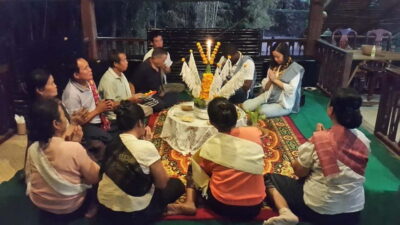
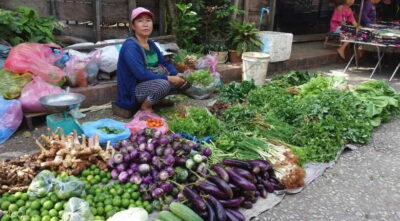

Home-cooked dinner & Baci ceremony with Villagers in Ban Nasang
Read our review →
Luang Prabang Foodie Walking Tour and Monk Blessing
Read our review →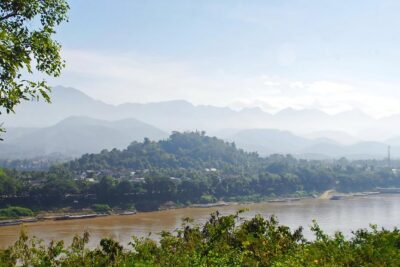
Luang Prabang Early Morning Alms Giving and Wet Market
Read our review →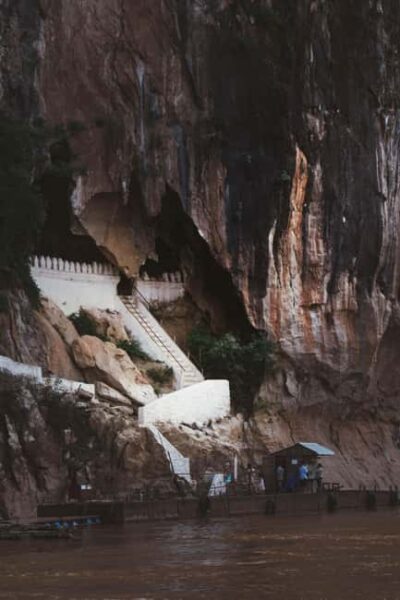
Browse the lists this tour appears in