
Reviewed · ALMS GIVING AND MONASTERY VISITS
Home-cooked dinner & Baci ceremony with Villagers in Ban Nasang
Bamboo music, village food, and a blessing. This evening experience takes you beyond Luang Prabang’s restaurant tables and into Hmong home life, with a market visit, hands-on Lao cooking, and dinner shared in traditional style. I like the small maximum of eight people, and I like that the Baci ceremony and khen performance give the evening real cultural weight. You are not simply watching a cooking demonstration.
The main consideration is timing. The experience starts at 4:00 pm and lasts about three and a half hours, so it fills most of your evening. Alcohol is not included, and the meal centers on local food, which may require flexibility from picky eaters.
In This Review
- Key points at a glance
- Why this Ban Nasang evening feels different
- Starting at the fresh food market
- Entering village life in Ban Nasang
- Cooking a traditional Lao dinner
- Sharing the feast with local hosts
- Hearing the Hmong khen
- What $68 gets you
- Who will enjoy this experience most
- Practical planning for the 4:00 pm start
- Should you book this Ban Nasang experience?
- FAQ
- Where does the experience take place?
- What time does the experience start?
- How long does the experience last?
- How many people can join?
- Is pickup available?
- Is dinner included?
- Are alcoholic beverages included?
- Can I cancel for a full refund?
Key points at a glance
- A market visit begins the evening: You learn about local ingredients before cooking them.
- The Baci ceremony is central: You take part in a Lao blessing with villagers in Ban Nasang.
- Dinner is hands-on: You help prepare a traditional multi-course meal, then eat it with local hosts.
- The khen adds a special local touch: You see musicians play this bamboo instrument.
- The group stays small: A maximum of eight people allows for a more personal exchange.
- The price covers more than cooking: At $68, you are paying for food, instruction, music, and a cultural meeting rather than only a meal.
Why this Ban Nasang evening feels different
Luang Prabang has no shortage of cooking classes. Many begin in a market, chop a few vegetables, and end with lunch or dinner. This experience takes a wider view of Lao food. Cooking is only one part of an evening that also includes Hmong culture, a Baci blessing, music, and a shared meal.
That mix is the strongest reason to book it. You get something practical, since you learn how local food is prepared, but you also get a ceremonial and social experience that a standard class may not offer. The setting in Ban Nasang, a village outside the center of Luang Prabang, helps shift the focus away from sightseeing and toward meeting people.
I also appreciate the maximum group size of eight. A small group matters when you are working around an outdoor kitchen or taking part in a ceremony. You have a better chance to follow what is happening, ask questions, and take part instead of standing at the back with a camera.
The evening has earned a perfect rating from 12 submitted ratings, with full recommendation from those who rated it. That is a small sample, so I would not treat it as proof that every visitor will have the same experience. Still, the praise is consistent on the same points: the food feels personal, the Baci ceremony is memorable, and the whole evening offers more than a basic cooking class.
More alms giving and monastery visits:
- Luang Prabang: Evening Cooking Class & Local Baci Ceremony
★ 4.9 · 151 reviews - Luang Prabang: Foodie Walking Tour & Monk Blessing
★ 4.7 · 66 reviews - Luang Prabang: Almsgiving Ceremony Offering
★ 4.1 · 13 reviews
Starting at the fresh food market
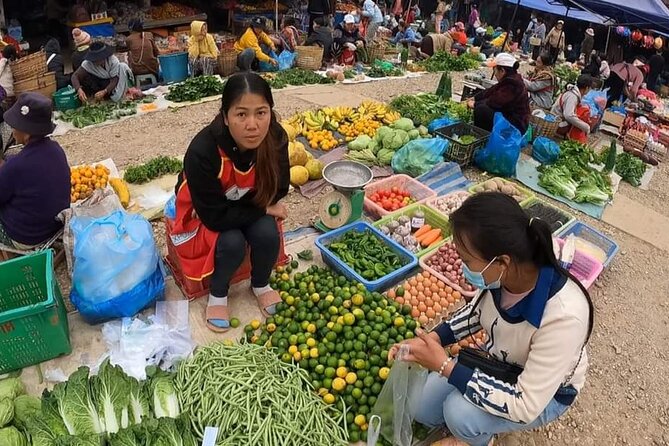
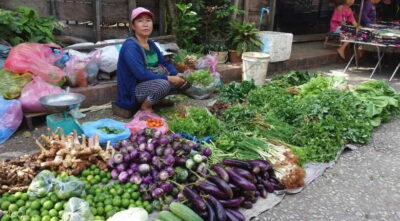
The first planned stop is a fresh food market. You visit with a Hmong guide and learn about the ingredients used in Lao cooking before heading to the village meal.
This is a useful beginning because food can seem mysterious when it arrives already prepared. At the market, you can connect the finished dishes with the raw ingredients and local shopping habits. The experience is designed to explain the flavors of Lao cuisine, not simply hand you a recipe card.
Do not expect a polished cooking-school setup at this stage. A fresh market is a working place, and the appeal is its everyday character. You might find unfamiliar produce or ingredients that need explanation. That is part of the value, though it also means the experience may feel less controlled than a class in a purpose-built kitchen.
The market visit also gives you a first chance to speak with the guide. Since the group is limited to eight, this should be a more direct introduction than you would get on a large bus tour. If you care about food culture, pay close attention here. The shopping stop sets up the rest of the evening.
Entering village life in Ban Nasang
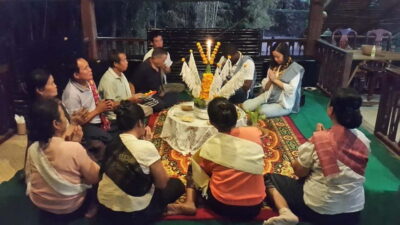
The Baci ceremony takes place with local villagers in Ban Nasang. This is not a decorative performance added at the end of dinner. It is one of the main reasons the experience feels distinct.
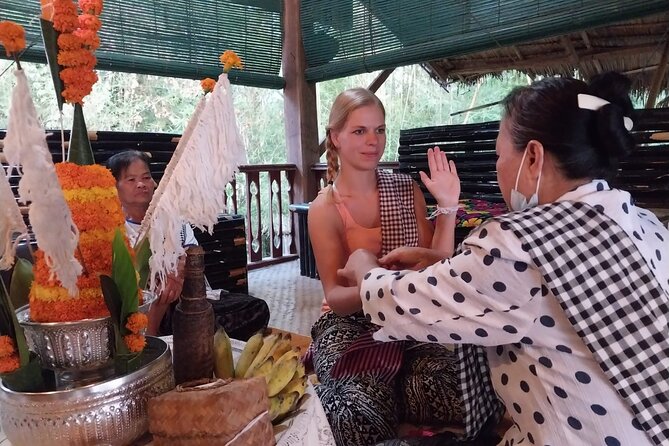
Baci is a Lao blessing ceremony. It is used to wish someone well and call good fortune and good spirits into their life. Here, you have the opportunity to participate rather than only watch from a distance.
The ceremony may feel quieter and more formal than the cooking portion. Give it your attention. Follow the guide’s direction, watch what the villagers do, and treat the moment with respect. You do not need to know every detail in advance to appreciate it, but it helps to arrive with patience and an open mind.
This part may not suit someone who wants a fast sequence of activities. The Baci ceremony asks you to slow down. For me, that is a benefit, since it places the meal in a social and cultural setting rather than presenting Lao food as an isolated attraction.
The experience description does not provide a precise list of ceremony customs, so you should not expect a fixed script or a particular form of participation beyond what the local hosts and guide arrange. The best approach is to let the guide explain what is happening on the evening.
Cooking a traditional Lao dinner
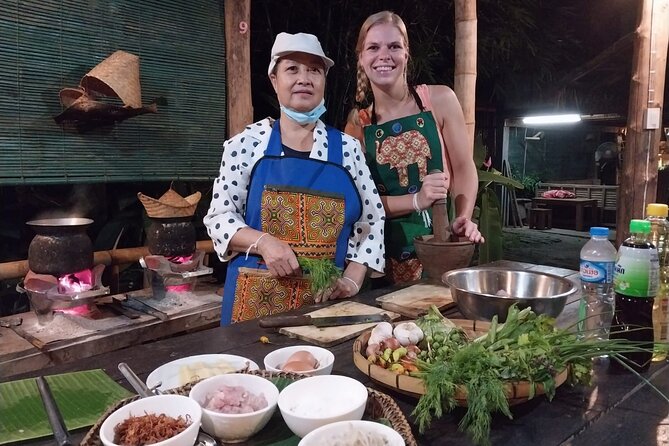
After the ceremony, you help prepare a home-cooked dinner in an outdoor kitchen. The available information does not name each dish, and that is worth noting. You should book this for the chance to learn local food preparation, not for a guaranteed menu.
The cooking is hands-on. You are not only watching someone prepare food while you sit at a table. You help with the meal, then eat what the group has created with local hosts. This gives the class a pleasant sense of purpose: your work leads directly to dinner.
The meal is described as traditional Lao food and a multiple-course feast. It is served in a traditional Lao style, which makes the dinner more than a simple plate of food. Sharing the meal with local people is the point. The evening is built around conversation, participation, and hospitality.
Families can do well here. One detailed account described a family with children enjoying both the food and the cultural side of the experience. Children who like practical activities may find chopping, preparing, and sharing dinner more engaging than a formal museum visit. Parents should still consider the late afternoon and evening timing, along with the fact that the food and ceremony may be unfamiliar.
Food allergies, dietary restrictions, and menu substitutions are not addressed in the supplied information. If food is a major concern for you, ask the provider before booking rather than assuming changes are available. Alcoholic beverages are not included, so plan on a meal without drinks from the bar.
More places to eat in Luang Prabang:
- Luang Prabang: Mekong Sunset Cruise & Lao Tasting Dinner
★ 4.3 · 27 reviews - Luang Prabang Mekong Sunset Cruise and Hot Pot Dinner
★ 5.0 · 9 reviews - Luangprabang: Dinner with Lao Traditional Dance Performance
★ 4.0 · 3 reviews
Sharing the feast with local hosts
The dinner is the payoff, but it is not just a reward after class. Eating together lets you see how the ingredients and preparation fit into ordinary hospitality.
I like this format because it avoids the usual cooking-class problem: you learn a dish, take a few photos, and leave without much sense of place. Here, the hosts and villagers remain part of the evening. You share the food you helped prepare, in a setting connected to the community you have been learning about.
The phrase home-cooked is important. It suggests a personal meal rather than restaurant service. That may mean the evening feels informal, and it may also mean the pace and presentation are not highly polished. If you need a predictable dining room, exact menu, or quick service, this is probably not your best choice.
If you enjoy food as a way to meet people, the value is strong. You receive dinner, but you also take part in the work behind it and the social customs around it. That is the sort of memory that lasts longer than another restaurant meal in town.
Hearing the Hmong khen
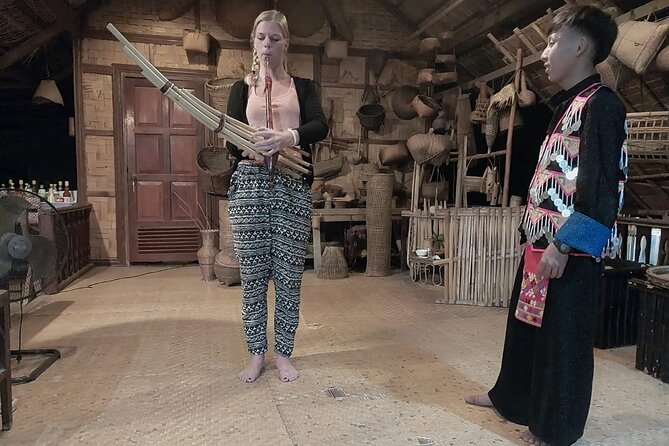
The evening includes a Hmong khen performance. The khen is a bamboo musical instrument, and hearing it in the same setting as the Baci ceremony and village dinner gives the music context.
This is not presented as a long concert. Think of it as one element in a three-and-a-half-hour cultural evening. The performance helps show that Hmong culture is not being reduced to food alone.
For music lovers, this may be one of the most distinctive parts of the experience. The supplied details do not promise a particular number of musicians or a set performance length, so keep your expectations practical. You will see the instrument played, but this is not a dedicated music tour.
The khen performance also gives the evening a gentle change of pace. After market shopping, ceremony, and cooking, you can listen and take in the atmosphere before or during the meal.
What $68 gets you
The price is $68 per person. That is more than the cost of a basic Lao dinner, but the comparison is not quite fair. You are paying for several connected parts: a guided market visit, cooking instruction, dinner, participation in a Baci ceremony, and Hmong music.
The small group improves the value. With no more than eight people, the fee supports a more personal experience than a large group class. You have a better chance to handle ingredients, understand the ceremony, and speak with the people hosting the evening.
Dinner and the Hmong musical performance are included. Tips and alcoholic beverages are not included. Tipping is worth remembering because the experience involves a guide, food preparation, hosts, and cultural presentation. The exact tipping practice is not stated, so ask your guide if you are unsure about the appropriate amount.
You can also look at the price in terms of time. The tour lasts about three hours and 30 minutes, beginning at 4:00 pm. That is a full evening activity, not a quick add-on. If you were already planning to pay for dinner and a separate cultural show, this may offer better value by combining both with a market visit and cooking class.
Who will enjoy this experience most
I would recommend this to you if you want direct contact with local food and village customs. It suits people who prefer small groups, family-style meals, and cultural activities that ask for participation.
It is especially appealing if you have already seen Luang Prabang’s main temples and want an evening with a different rhythm. The Baci ceremony and khen performance provide cultural depth, while the cooking keeps the experience active.
Families can also consider it. The small group and hands-on meal may hold children’s attention, and the experience has already worked well for a family with kids. Still, each child is different. A young person who dislikes unfamiliar food, quiet ceremonies, or a long evening may not enjoy every part.
This is less suitable for you if you want a luxury cooking school, a guaranteed menu, or a private tour. The maximum group is eight, but it is still a group experience. You are sharing the evening with other people, and the home and village setting will likely be informal.
You should also think about the weather. The experience requires good weather, and poor conditions can lead to a new date or a full refund. That policy is helpful, but it means you should keep some flexibility in your Luang Prabang schedule.
Practical planning for the 4:00 pm start
Pickup is offered, and the meeting time is 4:00 pm. The activity is near public transportation, which gives you another option if pickup arrangements do not suit your plans.
Because the start time is fixed, do not schedule a distant attraction immediately beforehand. Leave room for returning to your hotel, collecting anything you need, and arriving ready for an evening away from the center.
Wear clothing you can work in. The meal preparation takes place in an outdoor kitchen, so practical clothes make more sense than anything delicate or formal. The supplied details do not specify equipment, footwear, or conditions, so ask the provider if you need special arrangements.
Confirmation arrives at booking, and mobile tickets are accepted. Group discounts are available, which may help if you are booking with family or friends. The experience has a maximum of eight people, so a larger party should check how the discount and group limit apply before paying.
Free cancellation is available if you cancel at least 24 hours before the start time. Inside that window, the amount paid is not refunded, and changes are not accepted. Since weather can also affect the activity, keep the cancellation deadline and weather policy in mind when arranging your week.
Should you book this Ban Nasang experience?
Book it if you want your Luang Prabang dinner to include a real sense of place. The best features work together: the market explains the ingredients, the cooking lets you take part, the Baci ceremony introduces a local blessing tradition, and the khen performance adds music and character.
At $68, the experience is good value for a small group that wants more than a meal. I would be comfortable recommending it to families, food lovers, and curious first-time visitors who can accept an informal setting and an unspecified menu.
Skip it if you need a polished restaurant evening, alcoholic drinks, or strict control over what you eat. But if your idea of a good night involves learning, helping prepare dinner, and sharing it with local hosts, this is one of the more meaningful ways to spend an evening near Luang Prabang.
FAQ
Where does the experience take place?
The experience is based in Luang Prabang and includes a visit to local villagers in Ban Nasang.
What time does the experience start?
The stated start time is 4:00 pm.
How long does the experience last?
It lasts approximately three hours and 30 minutes.
How many people can join?
The activity has a maximum of eight travelers.
Is pickup available?
Yes, pickup is offered.
Is dinner included?
Yes. Dinner is included, along with the Hmong musical instrument performance.
Are alcoholic beverages included?
No. Alcoholic beverages are not included.
Can I cancel for a full refund?
Yes, if you cancel at least 24 hours before the experience start time. Cancellations within 24 hours are not refunded. If poor weather causes the activity to be canceled, you will be offered another date or a full refund.
Just added in Luang Prabang
- The Namkhan – Traditional Lao Bamboo Weaving★ 5.0 · 4 reviews
- Unwind with a Sunset Cruise on the Mekong River★ 5.0 · 4 reviews
- Night Bus to Huay Xai, Chiang Rai, Thailand – Hotel pickup★ 3.0 · 2 reviews
- Sunset Cruise in Luang Prabang with Live Performance★ 4.5 · 3 reviews
- The Namkhan – 90 Minutes Private Signature Scrub and Massage★ 5.0 · 2 reviews
- Private Tour: Half-Day City Tour of Luang Prabang★ 4.5 · 4 reviews
- Trek to Tad Sae Waterfalls, Local Village★ 4.5 · 2 reviews
- Private Full-Day Luang Prabang City Tour★ 5.0 · 1 review
Alms Giving and Monastery Visits, compared.
Luang Prabang Foodie Walking Tour and Monk Blessing
Read our review →
Luang Prabang Early Morning Alms Giving and Wet Market
Read our review →
Browse the lists this tour appears in