
Reviewed · GUIDED
Guided Exploring Luang Prabang Full-Day Tour
Luang Prabang rewards slow looking. This full-day tour gives you a clear introduction to the city’s royal past, Buddhist temples, ethnic traditions, and hilltop views, all with a local English-speaking guide to explain what you are seeing. I especially like the mix of major sights and smaller cultural stops, plus the fact that hotel pickup, drop-off, and lunch are included.
I also like the small group limit of seven people. That should make it easier to ask questions and keep the day moving at a comfortable pace. The main drawback is the long schedule, which includes temple visits, museum time, walking, 328 steps up Mount Phousi, and an evening market. Families with very young children may need a slower pace, though the operator did adjust the tour for one family traveling with a three-year-old.
- Royal Palace and sacred temples: See the former royal residence, Wat Mai, Wat Xieng Thong, Wat Visoun, Wat Aham, and Wat That.
- A guide who adds local context: Learn about Lao customs, history, and indigenous hill-tribe communities rather than simply ticking off monuments.
- Small-group format: The tour accepts a maximum of seven people, making it more personal than a large coach outing.
- A full day on foot and by tuk-tuk: Pickup and drop-off are included, while much of the central sightseeing takes place on foot.
- Mount Phousi at sunset: Climb 328 steps for views over Luang Prabang and the surrounding hills.
- Useful first-day orientation: The tour covers the city’s most important sights in one organized day.
In This Review
- Starting at the Royal Palace beside the Mekong
- Wat Mai, Wat Sensoukarahm, and the city’s golden details
- Wat Xieng Thong, Luang Prabang’s great temple
- Wat Visoun and the Watermelon Stupa
- Wat Aham and Wat That in the old center
- Learning about Laos at the Traditional Arts and Ethnology Centre
- Lunch, walking, and the practical rhythm of the day
- Climbing Mount Phousi for sunset
- The hill-tribe evening market around 5 p.m.
- Is $119 a fair price?
- Who should book this Luang Prabang tour?
- Final verdict: a strong first day in Luang Prabang
- FAQ
- What time does the tour start?
- Is hotel pickup included?
- What is included in the price?
- Are drinks included with lunch?
- Is the Traditional Arts and Ethnology Centre open every day?
- Can I cancel for a full refund?
Starting at the Royal Palace beside the Mekong
The day begins at 8:00 a.m. with hotel pickup by tuk-tuk. That is a sensible start in Luang Prabang, where the old center is compact but packed with temples, museums, and traffic-free or restricted streets. You will not need to spend your first morning sorting out local transport.
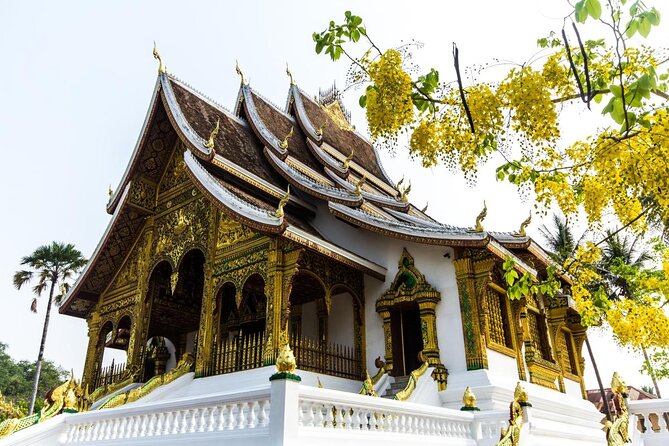
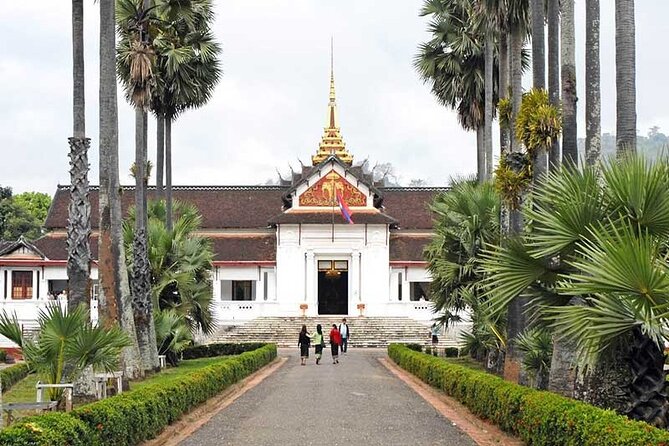
The first stop is the Royal Palace Museum, known locally as Haw Kham, or Golden Palace. The former palace sits beside the Mekong River and faces Mount Phousi, giving you an immediate sense of how geography shaped Luang Prabang’s royal center.
Allow about an hour here. The palace contains historical objects connected with Laos’ monarchy and political past. A guide matters at this stop because individual rooms and objects can mean little without explanation. You will get more from the visit if you listen for the link between royal life, Buddhism, and Lao identity.
The palace is not just an attractive building to photograph. It helps explain why Luang Prabang feels different from a normal provincial town. This was a royal capital, and its religious buildings and civic spaces developed around that role.
Wat Mai, Wat Sensoukarahm, and the city’s golden details
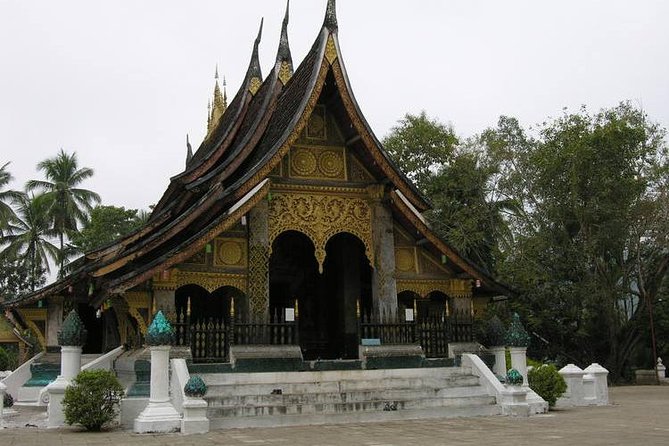
The tour continues on foot to Wat Mai Suwannaphumaham. This temple is known for its gold bas-relief, and the detailed surface rewards close viewing. I would take your time here rather than treating it as a quick photo stop. Look at how the decoration covers the building and how the light changes the gold as you move.
You will also pass Wat Sensoukarahm, noted for its bright golden façade. These early temple visits provide a useful introduction to the design language you will see throughout the day: layered roofs, carved surfaces, gilded decoration, and strong links between religious art and daily life.
The walking distance between sights is part of the appeal. Luang Prabang’s old center is best understood at street level, where temples sit beside homes, shops, and small local businesses. Still, you should wear comfortable shoes and dress respectfully. Shoulders and knees need to be covered when entering religious sites.
More things to do in Luang Prabang:
- Luang Prabang: Cruise to Pak Ou Caves & Kuang Si Waterfalls
★ 5.0 · 1,769 reviews - Luang Prabang: Cruise to Pak Ou Caves & Kuang Si Waterfalls
★ 4.8 · 1,360 reviews - Half Day Mekong Cruise to Pak Ou Caves (Morning / Afternoon)
★ 4.6 · 290 reviews
Wat Xieng Thong, Luang Prabang’s great temple
The morning’s temple route reaches Wat Xieng Thong, also spelled Wat Xiang Thong in some references. Located at the end of the peninsula near the Mekong, it was built in 1560 by King Setthathirat.
This is widely regarded as Luang Prabang’s most revered temple, and the description is easy to understand once you see its ornament. The temple includes ornate carvings and mosaics, with decoration that rewards a slow walk around the grounds.
The setting at the peninsula’s tip adds to the experience. You are not looking at an isolated monument. You are seeing a temple placed within the historic shape of the city, between two rivers and near the old royal center.
Your guide can help separate genuine religious features from the details that look decorative at first glance. That makes this stop especially useful if you are new to Lao Buddhist architecture. You will see more when you know where to look.
Wat Visoun and the Watermelon Stupa
The route then brings you to Wat Visoun, described as the city’s holiest temple. The building was rebuilt in 1887 after destruction by the Black Flags from southern China, a reminder that Luang Prabang’s past includes conflict as well as royal ceremony and religious devotion.
The temple courtyard contains the Watermelon Stupa, whose rounded shape resembles the fruit. It is one of the easiest landmarks to remember from the day, and its unusual form gives the visit a bit of visual variety after the more heavily gilded temples.
Plan on about 30 minutes here. That is enough for an introduction and a look around, but not enough for a very slow architectural study. If you are passionate about temple art, you may wish you had more independent time. The benefit is that the schedule keeps the day moving and lets you see several important sites.
Wat Aham and Wat That in the old center
Wat Aham comes next. It was first built in the 1500s and adds another layer to the city’s religious story. The visit is brief, but the temple fits naturally into the walking route and gives your guide another chance to explain how older religious sites remain part of modern Luang Prabang.
You then continue to Wat That, where the ashes of King Sisavang Vong are kept inside the large central stupa. This stop connects the city’s Buddhist tradition with its more recent royal past.
The sequence is well chosen. You move from the royal palace to major temples, then see how monarchy and religion overlap in the city’s monuments. By this point, you will have a much clearer sense of Luang Prabang’s layout and why the historic center has such a strong identity.
A few more options to weigh up in Luang Prabang
- From Luang Prabang: Guided Mountain Bike Tour with Lunch
★ 4.7 · 72 reviews - Luang Prabang: Audio-Guided City Tour in Electric Car
★ 4.7 · 14 reviews - Full-Day Private Guided Pak Ou Caves & Ethnic Village Tour
★ 5.0 · 2 reviews - Vientiane Cultural Tour with Private Guide
★ 5.0 · 80 reviews
Learning about Laos at the Traditional Arts and Ethnology Centre
The Traditional Arts and Ethnology Centre shifts the focus from palaces and temples to the people of Laos. The museum examines the country’s ethnic minorities through traditional clothing, tools, artifacts, written histories, and explanations of local customs.
This may be the most important stop for anyone who wants to understand Laos beyond its architecture. The country includes many ethnic communities, each with its own traditions and material culture. A museum visit gives you a more grounded way to learn about those differences than a quick stop at a souvenir market.
The center is closed on Mondays, so check your tour date carefully. If your visit falls on a Monday, the planned cultural balance may change. The scheduled visit lasts about 30 minutes, which is enough for an introduction but fairly short if you like reading every display.
I also value the guide’s role here. The tour specifically includes discussion of indigenous hill tribes and Lao cultural traditions. Those explanations can help you approach the evening market with more respect and curiosity, rather than seeing its goods as simple shopping items.
Lunch, walking, and the practical rhythm of the day
Lunch is included, while drinks are not. Bring or buy water so you are not relying on the next stop to meet your needs. The tour lasts roughly six to eight hours, but the sunset climb and evening market can push the day toward the longer end of that range.
The schedule combines tuk-tuk transport with walking. You will ride from your hotel at the beginning and return there at the end, but the historic center is explored on foot. That is the right approach for Luang Prabang, though it does mean the day is not a relaxed vehicle tour.
A good lunch location was one of the most praised parts of the experience, described as one of the prettiest settings encountered during a wider trip. The exact restaurant is not specified, so I would not book this solely for a particular meal. Still, the inclusion of lunch adds real value at this price, especially on a long sightseeing day.
The tour is suitable for most people, and the minimum age is two. A family with a three-year-old had the schedule adjusted to fit its needs, which suggests that the operator can be responsive when you explain your requirements in advance. Mention dietary needs when booking.
Climbing Mount Phousi for sunset
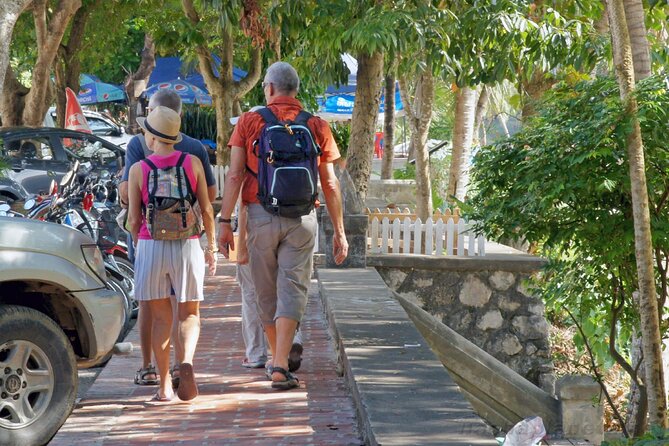
Later in the day, you climb Mount Phousi using 328 steps. The summit offers views over Luang Prabang and the surrounding hills, with sunset as the main reward.
This is the most physically demanding part of the experience. The climb is not suitable for everyone at the same pace, and the steps may feel tiring after a full day of temples and museum visits. If you have mobility concerns, ask the operator about the practical arrangements before booking. The available information says most people can participate, but it does not promise an alternative to the stairs.
The timing also depends on the season and local conditions. The tour requires good weather, and poor weather can lead to a different date or a full refund. It is worth keeping your evening flexible rather than scheduling a tight dinner reservation immediately afterward.
I like the inclusion of Mount Phousi because it changes your view of the city. After spending hours among royal rooms and temple courtyards, you can look down over the peninsula and surrounding hills. It gives the day a natural finish instead of ending at the last museum.
The hill-tribe evening market around 5 p.m.
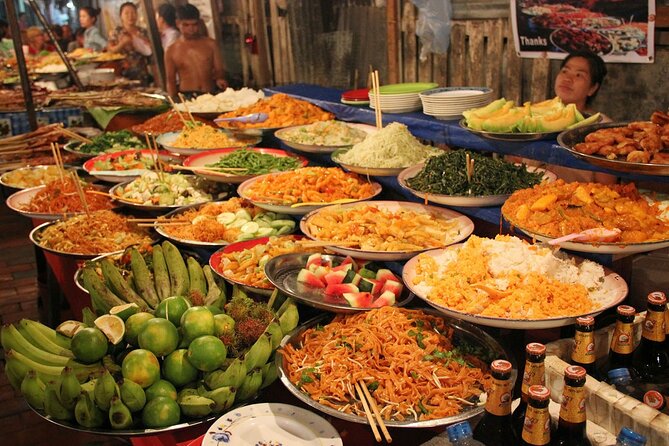
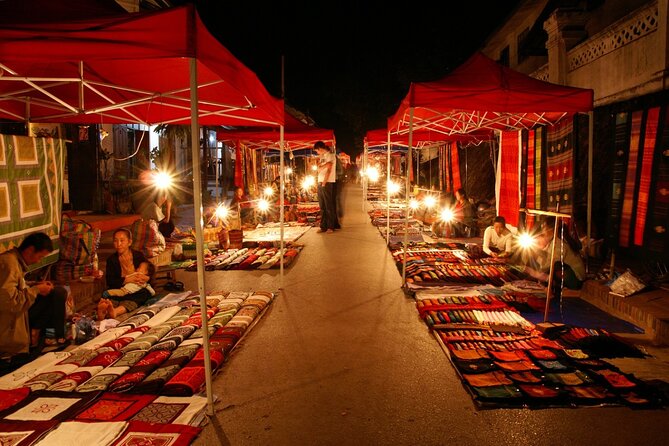
After the climb, the tour visits the evening market, which takes place along the main streets around 5:00 p.m. You will have a chance to browse souvenirs and see the market’s hill-tribe goods and local handicrafts.
This is a good place to use what you learned earlier at the Traditional Arts and Ethnology Centre. Take a moment to consider the origin and meaning of items before buying. A guide can help explain what you are seeing and may make the shopping experience less confusing.
The market is also a practical stop. You can look for small gifts without adding a separate shopping trip to your schedule. Still, shopping is not the main reason to choose this tour. The strongest part of the day is the combination of cultural explanation, historic sites, and a guided walk through the city.
Is $119 a fair price?
At $119 per person, this is not the cheapest way to see Luang Prabang. You are paying for a full-day private-style format with a maximum of seven people, hotel tuk-tuk transfers, an English-speaking guide, entrance tickets, and lunch.
The value improves if you are visiting for the first time and want the city explained rather than simply photographed. Admission is included at the Royal Palace Museum, Wat Mai, Wat Xieng Thong, Wat Visoun, Wat Aham, Wat That, and the Traditional Arts and Ethnology Centre. You also avoid arranging several separate rides.
The price may feel high if you prefer independent sightseeing or already know Luang Prabang well. You may also want more free time at individual temples than this structured route allows. For a short stay, though, the tour covers a lot in one day and gives you a useful base for returning to favorite places later.
Who should book this Luang Prabang tour?
I would recommend it most strongly for first-time visitors, families, and anyone who wants cultural context without spending days researching each monument. The small group size is helpful if you have questions or need some flexibility.
It is also a good choice if you have only a few days in Luang Prabang. In one organized day, you see the former royal palace, the city’s leading temples, an ethnic museum, Mount Phousi, and the evening market.
You should think twice if you dislike walking, stairs, fixed schedules, or temple visits. The day is full, and the 328-step climb comes after several hours of sightseeing. You should also check the Monday closure at the Traditional Arts and Ethnology Centre before confirming.
Bravo Indochina Tours received praise for being responsive and for adapting the experience for a family with a young child. The guide, Mr. Vong, was singled out for taking pride in showing his country and its people. That personal touch is important here because the tour’s value depends as much on explanation as on transportation.
Final verdict: a strong first day in Luang Prabang
I would book this tour if I were arriving in Luang Prabang without much background and wanted to get my bearings fast. The temples and palace provide the visual highlights, while the Traditional Arts and Ethnology Centre and the guide’s discussion of ethnic communities add the human side.
The best features are the small group, included transport and lunch, wide range of stops, and sunset view from Mount Phousi. The main trade-off is a long day with plenty of walking and a demanding stair climb.
Book at least 24 hours before the start time if you need to cancel without penalty. The tour is often reserved well ahead, with bookings averaging 95 days in advance, so early planning is sensible for a fixed Laos itinerary.
FAQ
What time does the tour start?
The tour starts at 8:00 a.m.
Is hotel pickup included?
Yes. Hotel pickup and drop-off by tuk-tuk are included.
What is included in the price?
The price includes a professional English-speaking guide, hotel tuk-tuk transfers, lunch, and admission tickets for the listed attractions.
Are drinks included with lunch?
No. Drinks are not included.
Is the Traditional Arts and Ethnology Centre open every day?
No. The center is closed on Mondays.
Can I cancel for a full refund?
Yes, if you cancel at least 24 hours before the experience start time. Cancellations made less than 24 hours in advance are not refunded, and changes within that period are not accepted. Poor weather may lead to a different date or a full refund.
Just added in Luang Prabang
- Kayaking Nam Khan river and Tad Sae Waterfal Luang Prabang tour★ 4.0 · 1 review
- Luang Prabang Cooking, Pottery & Candle Experience★ 5.0 · 4 reviews
- Highlights Of Luang Prabang 4 Days 3 Nights★ 5.0 · 2 reviews
- Half-Day Travelling Laos from Luang Prabang★ 5.0 · 1 review
- Morning food tour with market Temples option Kuangsi waterfall★ 5.0 · 1 review
- Full Day Visit & Cook at Local family’ farm and Hiking to Kuang si waterfalls★ 5.0 · 1 review
- A Relaxing Day at the Kuang Si Falls★ 4.5 · 3 reviews
- Luang Prabang A Venerable Cruise to the Pak Ou Caves with Lunch★ 4.0 · 2 reviews
Guided, compared.
One Day Guided Tour: Kayaking, Zipline & Tubing In The Cave from Vang Vieng
Read our review →
Guided Vientiane City and Buddha Park Full-Day Tour
Read our review →
Browse the lists this tour appears in