
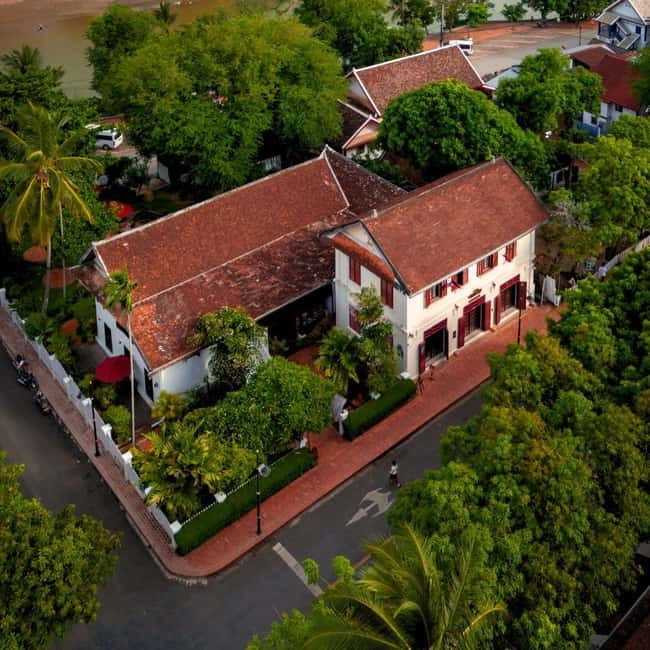
Reviewed · CITY TOURS
Luang Prabang: Audio-Guided City Tour in Electric Car
A quiet ride reveals Luang Prabang. This one-hour electric car tour gives you an easy introduction to the city’s monasteries, French-colonial houses, wooden homes, and everyday streets without asking your feet to do all the work. I like the comfortable small-group format and the choice of audio commentary in nine languages. The main catch is simple: one hour gives you an overview, not time to visit the buildings or study each site in depth.
I also like that the car carries up to four passengers, so this feels more personal than a large bus circuit. At $15 per person, it is fair value if you want orientation, a rest from walking, or a gentle way to see the peninsula soon after arriving. Just remember that entrance fees, food, drinks, personal spending, and hotel transfers are not included.
In This Review
- Key points to know before booking
- Starting at Wine & Co on Sakhaline Road
- Crossing Luang Prabang’s historic peninsula
- Listening to 13 buildings through the audio guide
- Monasteries, colonial houses, and Lao homes
- What the one-hour pace feels like
- Is $15 fair value?
- Who will enjoy this electric car tour?
- Practical advice for making the hour count
- Should you book the Luang Prabang electric car tour?
- FAQ
- How long is the Luang Prabang electric car tour?
- Where does the tour begin?
- How many people can join the electric car?
- Which languages are offered for the audio guide?
- Are entrance fees included?
- Can I cancel the booking?
Key points to know before booking
- Eleven landmarks pass by during the ride: Expect monasteries, French-colonial houses, Lao wooden homes, and less obvious buildings along the peninsula and nearby residential streets.
- The audio guide covers 13 historical buildings: You receive recorded commentary in English, Italian, Spanish, French, German, Japanese, Korean, Chinese, or Russian.
- The car carries up to four passengers: This is a small-group outing, with a private group option available.
- The ride lasts exactly one hour: It works best as a first look at Luang Prabang, not as a substitute for entering museums or monasteries.
- The meeting point is Wine & Co on Sakhaline Road: Hotel pickup and drop-off are not normally included, so plan your way to the starting point.
- The car is quiet and electric: You can watch street life without the noise and fumes of a conventional vehicle.
Starting at Wine & Co on Sakhaline Road
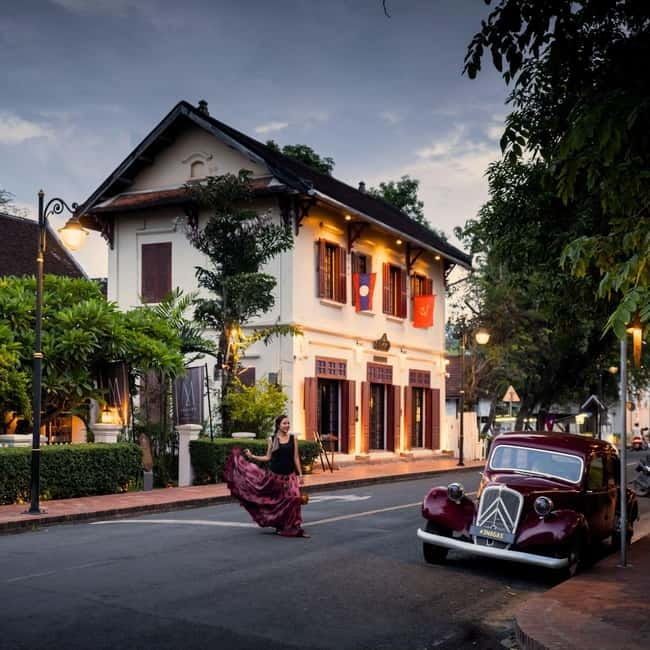
The tour begins at Wine & Co shop on Sakhaline Road. That fixed meeting point matters because hotel pickup is not included unless arranged separately. I would build in a little extra time to find the shop, especially if you are still getting used to Luang Prabang’s streets.
Once you meet the driver and safety escort, you settle into an electric car for a slow circuit through the city. The setup is practical rather than grand: you are not joining a long excursion with multiple transfers, and you do not need to prepare for a full day in the sun.
The small capacity is one of the best details here. With room for up to four passengers, the car avoids the crowded feel of a large sightseeing vehicle. If you book the private option, you can keep the outing limited to your own party, which may suit couples, families with older children, or a small group of friends.
The activity is not suitable for babies under one year. Bikes, backpacks, alcohol, drugs, and audio recording are not allowed. A camera is the one item specifically recommended, and you will want one for the architecture and street scenes.
Other trips worth a look in Luang Prabang:
- Luang Prabang: Cruise to Pak Ou Caves & Kuang Si Waterfalls
★ 5.0 · 1,769 reviews - Luang Prabang: Cruise to Pak Ou Caves & Kuang Si Waterfalls
★ 4.8 · 1,360 reviews - Half Day Mekong Cruise to Pak Ou Caves (Morning / Afternoon)
★ 4.6 · 290 reviews
Crossing Luang Prabang’s historic peninsula
The route takes you through the peninsula and its residential streets at a relaxed speed. That is important in Luang Prabang, where the appeal is not limited to a single famous monument. The streets themselves show how several periods of the city’s past sit beside ordinary local life.
You pass 11 iconic buildings and landmarks, though the exact order and names of individual stops are not provided. The route includes majestic monasteries, French-colonial houses, traditional Lao wooden homes, and less noticed places that many people could walk past without understanding their importance.
Because the car moves slowly, you have a better chance to look up at rooflines, balconies, timber details, and street-facing homes. You will not be rushing from one major sight to the next. The tradeoff is that you are viewing these places from the vehicle, rather than stopping for a full visit.
This is a sightseeing loop, not an admission-based tour. If a monastery or attraction charges an entrance fee, that cost is separate, and the one-hour format does not promise entry into the sites. Think of the route as a moving introduction that helps you decide where to return on foot later.
Listening to 13 buildings through the audio guide
The audio guide is the core of the tour. As you pass the landmarks, it provides stories about 13 historical buildings. That number is slightly higher than the 11 landmarks specifically described along the route, so you may hear about buildings beyond the main set of visible points or receive extra context during the circuit.
The recorded format gives you a steady flow of information without requiring a live guide to speak over traffic or manage a large group. It also makes the tour accessible to a broad range of visitors, with nine language choices: English, Italian, Spanish, French, German, Japanese, Korean, Chinese, and Russian.
I would choose your language before setting out and pay attention to how the commentary lines up with the buildings outside. Since the tour lasts only an hour, the information is designed to be general and useful rather than a long academic lecture. One particularly positive assessment described the tour as good information in one hour, which is exactly the right expectation.
The audio guide also helps explain why a plain-looking house or side street deserves a second glance. Without context, you may notice only a nice facade. With the stories, the mix of colonial architecture, Lao wooden homes, monasteries, and local streets becomes easier to understand.
Still, recorded commentary has limits. You cannot ask follow-up questions in the way you could with a live guide. If you want detailed answers about religious customs, construction, family life, or the history of a specific building, you may need a separate walking tour or a return visit.
Monasteries, colonial houses, and Lao homes
The monasteries are likely to be the visual high points of the ride. You can expect to see grand religious buildings from outside, with their distinctive forms and decorative details passing slowly enough for photographs. The tour introduces their place in Luang Prabang’s culture, but it does not include stated admission or an extended visit inside.
The French-colonial houses offer a different view of the city. Their presence reflects the period when European influence shaped parts of Luang Prabang’s architecture. Set beside traditional Lao wooden homes, they help you see the city as a meeting point of architectural traditions rather than as a collection of isolated monuments.
The residential streets are just as useful for orientation. You get a look at the parts of the peninsula beyond the best-known sights, where daily life continues away from the main sightseeing stops. That contrast is one reason I would take this ride early in a stay. Afterward, you are less likely to walk past a building without realizing its place in the city’s story.
The phrase hidden gems is often overused in tourism, but here the idea has a practical meaning: the route includes places that can be missed when you follow only the main pedestrian paths. You should not expect dramatic discoveries at every turn. Instead, you get a broader sense of how the city’s heritage appears in ordinary streets and side roads.
More things to do in Luang Prabang:
- Luang Prabang: UNESCO World Heritage City Highlights Tour
★ 4.6 · 201 reviews - Luang Prabang: Afternoon Kuang Si Waterfalls & Sunset Cruise
★ 4.6 · 158 reviews - Luang Prabang: Evening Cooking Class & Local Baci Ceremony
★ 4.9 · 151 reviews - Luang Prabang: Kayak Tour to Pak Ou Caves
★ 4.4 · 115 reviews
What the one-hour pace feels like
The electric car moves at a comfortable pace, giving you a restful way to see the city. It is a good choice if you have already spent hours walking, if heat makes long strolls tiring, or if you simply want to look around without constantly checking a map.
The clean, quiet vehicle is another advantage. Its low-noise operation lets you watch the streets with less mechanical distraction, and the electric format reduces the environmental impact compared with a standard petrol vehicle. That does not transform the tour into an environmental program, but it is a sensible choice for a short urban circuit.
The pace also affects photography. You have more time than you would from a fast-moving bus, but the car will not stop at every building for a long photo session. Keep your camera ready and accept that some pictures will be quick views from the seat.
One hour is long enough to learn the basic shape of the city and short enough to fit around a morning or afternoon plan. It is especially useful on your first day. You can note which monasteries, houses, or streets deserve a closer look, then return independently with more time.
If you already know Luang Prabang well, the tour may feel too basic. The commentary provides a general overview, and the route is designed for easy sightseeing rather than specialist study. For a first visit, that simplicity is useful. For a repeat visit, its value depends on whether you want a calm refresher.
Is $15 fair value?
At $15 per person, the price is reasonable for a one-hour ride with a driver, safety escort, electric vehicle, and multilingual audio guide. You are paying for convenience and orientation as much as for transportation.
The value improves if you share the car with a small party and would otherwise pay for separate transport around the city. The maximum of four passengers keeps the group manageable, and a private option is available if you want the ride reserved for your own group.
The price is less attractive if you expect admission to monuments, hotel transportation, or a full guided visit. None of those extras are included. Food, drinks, souvenirs, shopping, and other personal expenses are also your responsibility.
I would compare it to the cost of an hour spent wandering without context. If you are confident finding your way and happy to read about the buildings later, you may prefer a self-guided walk. If you want an easy introduction with stories delivered as you ride, $15 is a modest cost for saving time and effort.
The strongest value comes from doing it at the start of your stay. One assessment specifically recommended it early in a trip because the information helps you recognize historical places during later walks. That is good advice. You get more from the tour when it shapes the rest of your visit rather than repeating sights you already understand.
Who will enjoy this electric car tour?
I would recommend it most strongly to first-time visitors who want a quick overview before exploring on foot. It also suits anyone who prefers a seated activity, including people who find long walks tiring or who want a quiet break between more active plans.
The tour can work well for couples and small groups because the car holds up to four passengers. Families should note the restriction for babies under one year. Since backpacks are not allowed, you should also avoid arriving with a large day bag.
It is a good match for visitors who enjoy architecture, local streets, cultural background, and short audio stories. You do not need to be a history specialist. The commentary is meant to give you a general understanding of the city in a short time.
It is less suitable if you want to enter every monastery, stop for long photographs, ask many questions, or spend an hour in one particular neighborhood. The driver takes you on a set circuit, and the audio guide cannot adapt the content to your personal interests.
The tour also makes sense for a hot or rainy part of the day, though the available conditions and vehicle protection are not specified. I would not book it solely as a weather guarantee. Book it because you value a quiet, seated overview.
Practical advice for making the hour count
Choose the language you understand best and keep your camera ready. Since the car passes 11 landmarks in a limited period, you will get more from the ride if you listen actively and note any buildings you want to revisit.
Arrange your route to Wine & Co on Sakhaline Road before the start time. Hotel pickup is not included unless you make a separate arrangement, so do not assume the vehicle will collect you from your accommodation.
Do not bring a backpack or bike. Leave alcohol and other prohibited items behind, and do not try to record the audio guide. A camera is welcome, but the supplied information does not promise dedicated photo stops.
If you want to enter a site after spotting it, set aside extra time and money for a later visit. Entrance fees are not part of the $15 price. The ride gives you the background; your own walking time provides the slower look.
Flexible booking is another useful feature. You can cancel up to 24 hours before departure for a full refund, and the reserve-now, pay-later option lets you hold a place without paying immediately. Starting times vary, so check availability when choosing your date.
Should you book the Luang Prabang electric car tour?
Book it if you want a short, quiet, informative first look at Luang Prabang. The combination of 11 visible landmarks, audio stories about 13 historical buildings, nine language options, and a four-person vehicle gives you a lot of orientation for $15.
I would place it near the beginning of your stay, then use the rest of your time to walk back to the monasteries, colonial houses, and residential streets that caught your attention. If you want a deep site visit or a question-and-answer guide, choose something longer. If you want a comfortable overview without spending half a day, this tour makes a sensible start.
FAQ
How long is the Luang Prabang electric car tour?
The tour lasts one hour. Starting times vary, so you need to check availability for your chosen date.
Where does the tour begin?
The meeting point is Wine & Co shop on Sakhaline Road in Luang Prabang.
How many people can join the electric car?
The small-group vehicle accommodates up to four passengers. A private group option is also available.
Which languages are offered for the audio guide?
The audio guide is available in English, Italian, Spanish, French, German, Japanese, Korean, Chinese, and Russian.
Are entrance fees included?
No. Entrance fees to sites or attractions, when applicable, are not included in the tour price.
Can I cancel the booking?
Yes. You can cancel up to 24 hours in advance for a full refund. A reserve-now, pay-later option is also available.
Just added in Luang Prabang
- The Namkhan – Traditional Lao Bamboo Weaving★ 5.0 · 4 reviews
- Unwind with a Sunset Cruise on the Mekong River★ 5.0 · 4 reviews
- Night Bus to Huay Xai, Chiang Rai, Thailand – Hotel pickup★ 3.0 · 2 reviews
- Sunset Cruise in Luang Prabang with Live Performance★ 4.5 · 3 reviews
- The Namkhan – 90 Minutes Private Signature Scrub and Massage★ 5.0 · 2 reviews
- Private Tour: Half-Day City Tour of Luang Prabang★ 4.5 · 4 reviews
- Trek to Tad Sae Waterfalls, Local Village★ 4.5 · 2 reviews
- Private Full-Day Luang Prabang City Tour★ 5.0 · 1 review
City Tours, compared.


Vientiane City Highlights Tour with Buddha Park & Lunch
Read our review →
Private Tour: Vientiane City Tour Full Day with Buddha Park
Read our review →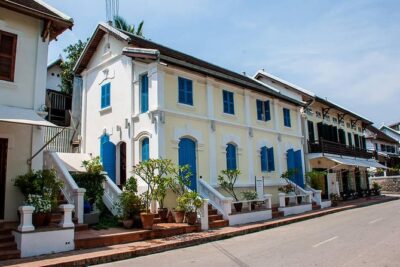
Browse the lists this tour appears in