
Reviewed · PLAIN OF JARS
3 Days The Plain of Jars and Xieng Khouan (Depart from Luang Prabang)
Jars, caves, and wartime scars await. I like the private format and the chance to see rural Laos beyond Luang Prabang, especially the Hmong villages, village silk work, and unexploded ordnance history. The main drawback is the long road journey to Phonsavan, with meals and accommodation not included.
This is a useful three-day route for you if you want the Plain of Jars without arranging several separate transfers. Guide quality appears to be a major strength, with Vone, Tin, and Mr. Latte all praised for kindness, English, care, and local insight. Still, confirm your guide, pickup time, lodging, and final drop-off before paying.
In This Review
- Five things to know before you book
- Why the Plain of Jars deserves three days
- Day one: the long road from Luang Prabang
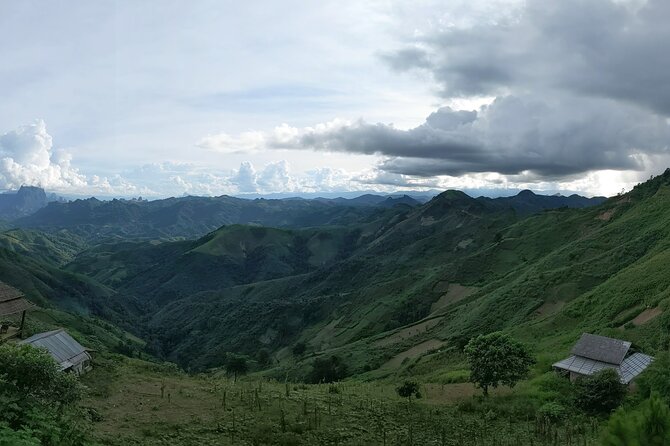
- Phou Khoun and the hill-country route
- Tham Phra, the Buddha Cave
- Day two: stone jars and the scars of war
- Jar Site 2 and Ban Na Pia
- Muang Khoun and Wat Phiawat
- MAG UXO Center
- Day three: markets, silk, and the trip home
- The private vehicle and guide make a real difference
- What the $540 price really covers
- Who should book this tour
- Should you book the Plain of Jars tour?
- FAQ
- Where does the tour begin?
- What time does the tour start?
- How long is the tour?
- Is this a private tour?
- Is pickup available?
- Does the price include accommodation?
- Are meals included?
- What does the price include?
- Can I cancel for a full refund?
Five things to know before you book
- The first day is mostly a road journey: You travel about 260 kilometers from Luang Prabang toward Phonsavan, with village and cave stops along the way.
- You get a full day at the Plain of Jars: The schedule includes jar sites, Ban Na Pia, Muang Khoun, Wat Phiawat, and the MAG UXO Center.
- The tour is private: Only your own group participates, which gives you more room to adjust the pace and ask questions.
- Accommodation and meals cost extra: The $540 price includes sightseeing, transport, fees, and taxes, but not hotels or food.
- The war story is part of the trip: The MAG center and Ban Na Pia connect the ancient jars with Laos’s more recent and painful past.
- The final day is short but distinctive: A morning market and organic silk farm offer a closer look at ordinary work and trade in the region.
Why the Plain of Jars deserves three days
The Plain of Jars is not a quick side trip from Luang Prabang. Phonsavan and Xieng Khouang lie far enough away that you need time for the road, the sites, and the return journey. A rushed visit would give you photographs of stone vessels but little sense of the people and events around them.
This tour takes a broad approach. You see hill tribe villages on the road, an old Buddha cave, several Plain of Jars locations, the former Phuan capital of Muang Khoun, a silk farm, and a center explaining unexploded ordnance. That mix gives the trip more weight than a single archaeological stop.
I also like the private setup. You are not tied to the pace of a large bus group, and you can ask your guide to explain details that interest you. The supplied feedback gives special praise to Vone for keeping a demanding program on track, Tin for gentle insight and attentive service, and Mr. Latte for strong service on other Manifa trips. These comments suggest that the guide can shape the quality of the whole journey, so ask in advance who will lead your departure.
The price is $540 per person. That is not a small amount, but it covers a private, air-conditioned vehicle, sightseeing, taxes, and entrance-related fees listed in the program. You must still budget for three days of meals and accommodation. Ask for the available lodging price before you confirm, since accommodation can be arranged on request.
More Plain of Jars trips:
- Plain of jars tour with local guide
★ 4.5 · 8 reviews - Plain of jars share group tour
★ 5.0 · 4 reviews - Plain of jars private tour
★ 5.0 · 3 reviews
Day one: the long road from Luang Prabang
The departure point is the Manifa Travel office on Sakkaline Road in Vat Sene Village, opposite Villa Santi Hotel. The general meeting information gives an 8:00 am start, while the first day description says the vehicle leaves at 7:30 am. Treat that difference seriously. Confirm the exact pickup time and location before the morning of departure.
Your first day heads toward Phonsavan, about 260 kilometers away. This is the day when you need patience. Even with an air-conditioned vehicle, a long mountain road can feel tiring, and the stops are important partly because they break up the drive.
The route includes Hmong and other hill tribe villages. The description presents these communities as friendly and welcoming, but you should still approach respectfully. Ask before photographing people, avoid treating homes as scenery, and let your guide explain what is appropriate. These short stops offer something a standard city tour cannot: a look at rural life along the route rather than only at famous monuments.
Phou Khoun and the hill-country route
Phou Khoun is scheduled as a one-hour stop with no admission fee. The value here is less about a major ticketed attraction and more about seeing the changing countryside and meeting local communities during the journey.
You should not book this tour expecting a relaxed first afternoon. The road to Phonsavan is a central part of the experience. If you prefer slow travel with long stops, ask how much time is available in each village. If you want to reach the Plain of Jars with transport and a guide already arranged, this road day is a practical trade.
Tham Phra, the Buddha Cave
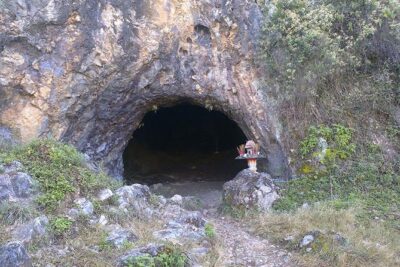
The route then continues to Nong Tang, where you visit Tham Pha, also called Tham Phra or Buddha Cave. The site contains Buddha images more than 200 years old. The cave also served as a hospital and shelter during the Indochina War period.
That combination makes the stop especially useful. You are not looking only at old religious images. You are seeing how a sacred place later became part of wartime survival. The visit is listed as about one hour and has no admission fee.
The name appears in slightly different forms in the supplied details, including Tham Phra and Tham Pha. If exact spelling matters for your notes or photographs, ask your guide to confirm it. After the cave, the route continues to Phonsavan, where you spend the night if accommodation has been arranged separately.
More things to do in Luang Prabang:
- Luang Prabang: Cruise to Pak Ou Caves & Kuang Si Waterfalls
★ 5.0 · 1,769 reviews - Luang Prabang: Cruise to Pak Ou Caves & Kuang Si Waterfalls
★ 4.8 · 1,360 reviews - Half Day Mekong Cruise to Pak Ou Caves (Morning / Afternoon)
★ 4.6 · 290 reviews - Luang Prabang: UNESCO World Heritage City Highlights Tour
★ 4.6 · 201 reviews
Day two: stone jars and the scars of war
Day two is the heart of the tour. You spend the day visiting the Plain of Jars and Xieng Khouang, then return to Phonsavan around 4:00 pm for the MAG UXO Center.
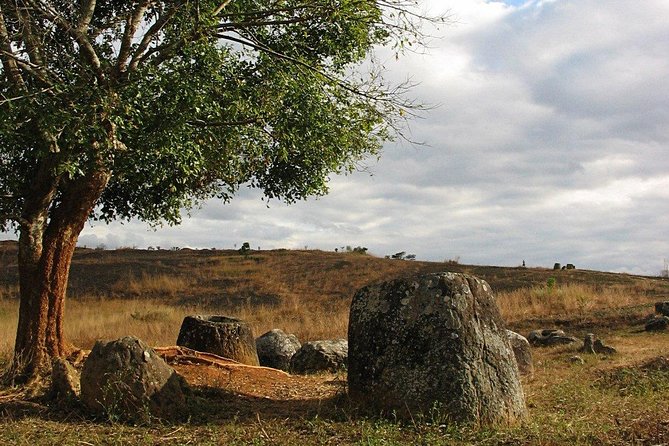
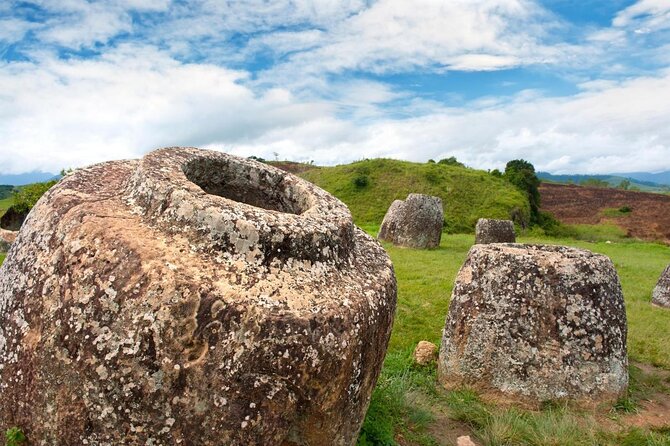
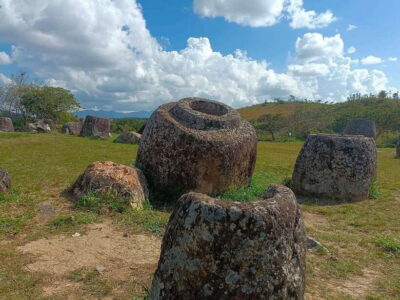
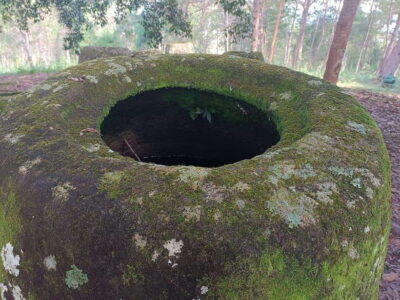
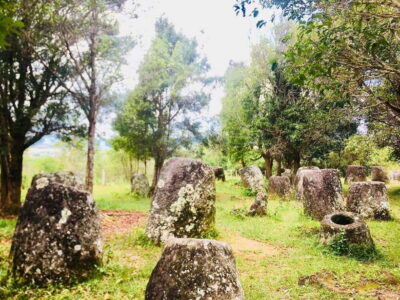
The jars are linked to old local legends, but the exact purpose of the stone vessels remains part of the mystery surrounding the sites. The program gives you more than one jar location, which matters because each site adds another view of the area rather than repeating the same stop.
You should wear practical shoes and be ready to follow your guide’s safety instructions. The tour description does not provide detailed terrain information, so ask what walking is required at each site. Also ask how long you will remain at each location. The schedule gives about one hour per stop, but the total timing can shift during a full day of road travel and sightseeing.
Jar Site 2 and Ban Na Pia
Jar Site 2, known as Hai Hin Hoo Sarat, is about 20 kilometers southwest of Phonsavan. The site gives you another chance to see the famous stone jars in their wider setting, away from the town itself.
Near Site 2, you visit Ban Na Pia. Here, villagers reuse scrap metal from unexploded bombs to make spoons sold as souvenirs. This is one of the most striking parts of the route because it connects the recent past with daily village work. The objects are practical, but the material carries a difficult story.
I would give this stop your full attention rather than treating it as a shopping break. Ask your guide to explain how the metal is collected and prepared, but do not assume that every detail is covered by the short schedule. If you buy something, the purchase supports local craft work, while also reminding you how much war debris remains part of life in Laos.
Muang Khoun and Wat Phiawat
In the afternoon, the vehicle heads to Muang Khoun, the former capital of the Phuan Kingdom. The town was an important center from the 14th century and later served as a French colonial provincial city.
Wat Phiawat is included during this section. The stop helps you connect the jars with the region’s later religious and political life. The program describes Muang Khoun as once being a major city, so your guide’s explanation will matter here. Without context, old ruins can look like scattered stones. With context, they show how power and settlement shifted over time.
The visit is listed at about one hour. That is enough for a focused introduction, but not a long archaeological study. If ancient architecture is your main interest, ask in advance how much time can be spent at Wat Phiawat and the former capital.
MAG UXO Center
You return to Phonsavan around 4:00 pm to visit the MAG UXO Center and the official tourist information center. This is an important counterweight to the ancient sites. The Plain of Jars is famous for its mystery, but Xieng Khouang is also closely tied to the Second Indochina War and the continuing danger from unexploded ordnance.
The center helps explain the scale and human cost of that legacy. It also gives more meaning to the reused bomb scrap at Ban Na Pia. I consider this visit essential, not an optional extra. It turns a scenic archaeological day into a fuller picture of the province.
The scheduled visit lasts about one hour. Since the stop comes after a full day, you may be tired. Still, do not skip it unless you have a strong reason. This is where the separate pieces of the route begin to make sense.
Day three: markets, silk, and the trip home
The final morning starts with a short visit to a morning market and Mulberries Organic Silk Farm. The schedule says you can observe silk weaving from cocoons through to colorful scarves.
This is a quieter end to the trip. After ancient sites and war history, you see a working craft process and local commerce. The farm’s fair-trade focus gives the visit a practical purpose, and the scarves provide a more meaningful souvenir than a generic shop purchase.
The available details do not give the exact length of the final drive, the end point, or the full list of day-three stops. They do state that the activity ends in a different location from the starting point. Confirm the final drop-off before booking onward transport from Luang Prabang or Phonsavan.
The private vehicle and guide make a real difference
The tour includes an air-conditioned vehicle, which is valuable on a three-day route with a long first day and several road sections. Air conditioning will not shorten the journey, but it makes the vehicle a more comfortable base between stops.
Because this is a private activity, your group is the only group participating. That can be especially helpful at the villages, the cave, and the historical sites, where you may want extra explanation. It also means the price should be judged against the size of your party. For one person, $540 is a serious expense. For several people sharing a private vehicle and guide, the value improves.
Guide service seems to be the most praised part of the Manifa operation. Vone is described as exceptionally kind and good at keeping a packed, sometimes challenging program moving. Tin is praised for excellent English, professionalism, care, and willingness to go the extra mile. Mr. Latte is also singled out for excellent service on other trips.
These names do not guarantee who will lead your tour. Ask for your guide’s name, language ability, and experience with the Plain of Jars. A good guide is especially useful here because the sites need explanation, and the war history deserves careful treatment.
What the $540 price really covers
The listed price includes:
- Sightseeing described in the program
- Air-conditioned transport
- All fees and taxes
It does not include accommodation or meals. Accommodation is available on request, but the price is not given. You should ask for a complete cost before booking, including the room arrangement and whether the accommodation is private or shared.
The price also makes more sense if you value convenience. You are paying for a prepared route from Luang Prabang, a private vehicle, a guide, and several connected sites. If you arrange each transfer yourself, you may reduce the headline cost, but you would also need to coordinate the long road journey, local transport, site visits, and return arrangements.
Group discounts are available, though no discount amount is stated. If you are traveling with friends or family, request a group quotation. The private format could make this a better deal for a small group than for a solo visitor.
Who should book this tour
I would choose this trip if you want to understand the Plain of Jars in context. It suits you if you are interested in archaeology, rural communities, religious sites, silk production, or modern war history. It also works well if you prefer a guide and private transport instead of piecing together a difficult regional route.
You should think twice if you dislike long drives, need a slow schedule, or want every meal and hotel included in one price. The first day is a substantial transfer, and the second day packs several important stops into a single schedule.
The tour is described as suitable for most participants, but no detailed accessibility information is provided. Ask about walking surfaces, cave access, and the amount of time spent on your feet if mobility is a concern.
You can cancel for a full refund at least six full days before the local start time. A cancellation two to six full days before departure receives a 50 percent refund, while cancellations less than two full days ahead are not refunded. Changes follow the same cutoffs, so book only after checking your transport and accommodation plans.
Should you book the Plain of Jars tour?
Book it if the Plain of Jars is high on your Laos wish list and you want more than a quick photograph. The best parts are the private vehicle, the range of stops, the Ban Na Pia connection to unexploded ordnance, and the chance to see silk production and village life alongside ancient sites.
Before paying, confirm four practical details: the exact 7:30 or 8:00 am pickup, accommodation cost, meals, and final drop-off. Also ask which guide will accompany you. If those points are clear, this is a thoughtful three-day introduction to Xieng Khouang, with enough local and historical context to make the long road worthwhile.
FAQ
Where does the tour begin?
It begins at the Manifa Travel Luang Prabang office on Sakkaline Road, in Vat Sene Village, opposite Villa Santi Hotel.
What time does the tour start?
The meeting information lists an 8:00 am start, while the first-day schedule says the group leaves at 7:30 am. Confirm the exact pickup time with Manifa Travel.
How long is the tour?
The tour lasts approximately three days.
Is this a private tour?
Yes. Only your own group participates.
Is pickup available?
Yes, pickup is offered. The listed meeting point is the Manifa Travel office in Luang Prabang.
Does the price include accommodation?
No. Accommodation is not included, but it is available on request.
Are meals included?
No. Meals are not included in the listed price.
What does the price include?
The $540 price includes the sightseeing described in the program, an air-conditioned vehicle, and all fees and taxes.
Can I cancel for a full refund?
Yes. You must cancel at least six full days before the local start time for a full refund. Cancellations two to six full days before departure receive a 50 percent refund, and cancellations less than two full days before departure are not refunded.
Just added in Luang Prabang
- The Namkhan – Traditional Lao Bamboo Weaving★ 5.0 · 4 reviews
- Unwind with a Sunset Cruise on the Mekong River★ 5.0 · 4 reviews
- Night Bus to Huay Xai, Chiang Rai, Thailand – Hotel pickup★ 3.0 · 2 reviews
- Sunset Cruise in Luang Prabang with Live Performance★ 4.5 · 3 reviews
- The Namkhan – 90 Minutes Private Signature Scrub and Massage★ 5.0 · 2 reviews
- Private Tour: Half-Day City Tour of Luang Prabang★ 4.5 · 4 reviews
- Trek to Tad Sae Waterfalls, Local Village★ 4.5 · 2 reviews
- Private Full-Day Luang Prabang City Tour★ 5.0 · 1 review
Plain of Jars, compared.
Browse the lists this tour appears in